The Best Places to See the Northern Lights
Things to do
Things to do

There are very few natural phenomena that inspire the same sense of wonder as the Northern Lights. Ribbons of green, pink and violet ripple across the night sky, and for many travelers, watching them is a bucket-list moment. The aurora borealis occurs when charged particles from the sun collide with gases in the atmosphere, and it is most often seen in a band around the Arctic Circle.
Where you go makes a big difference to your chances. This guide covers six of the best destinations, including how likely you are to see the lights in each place and the best spot to stand and admire the sky.
Northern Norway is located directly beneath the auroral oval, making it one of the most reliable places on Earth for a sighting. Coastal weather can bring clouds, but the region’s fjords, mountains and islands make even waiting for a clear patch of sky feel like part of the adventure.
Likelihood of seeing the Northern Lights: Very high. On clear nights between late September and March, sightings are very common.
Best location: Tromsø is the classic base, with plenty of guided tours that chase clear skies by minivan, boat or even on a dog-sled. For fewer crowds and dramatic scenery, head to the Lofoten Islands or Alta.
If you would rather build a longer journey, our perfect Norway road trip guide is a great starting point for planning the route. Arriving from Scandinavia by sea? Here is how to travel from Denmark to Norway.
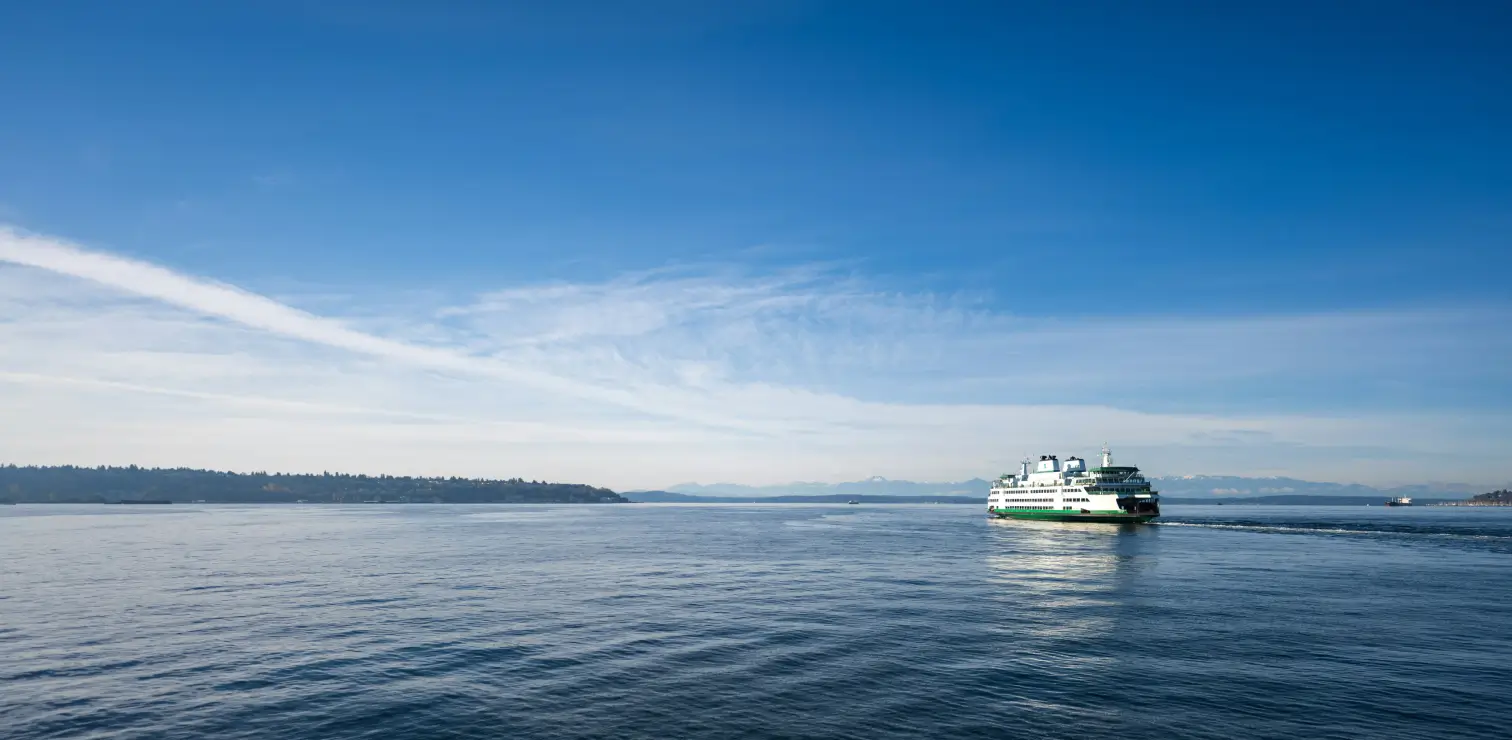
Please keep in mind that the Arctic is far north of Kristiansand, Oslo, Larvik and Stavanger, so many visitors combine a ferry crossing with a domestic flight or an extended drive. You can also pair your trip with a stop in the west, and our guide to visiting Bergen in the autumn and winter shows what this fjord capital has to offer. Unfortunately, Bergen is too far south for regular aurora displays, but it's a charming addition to a Norway holiday itinerary.
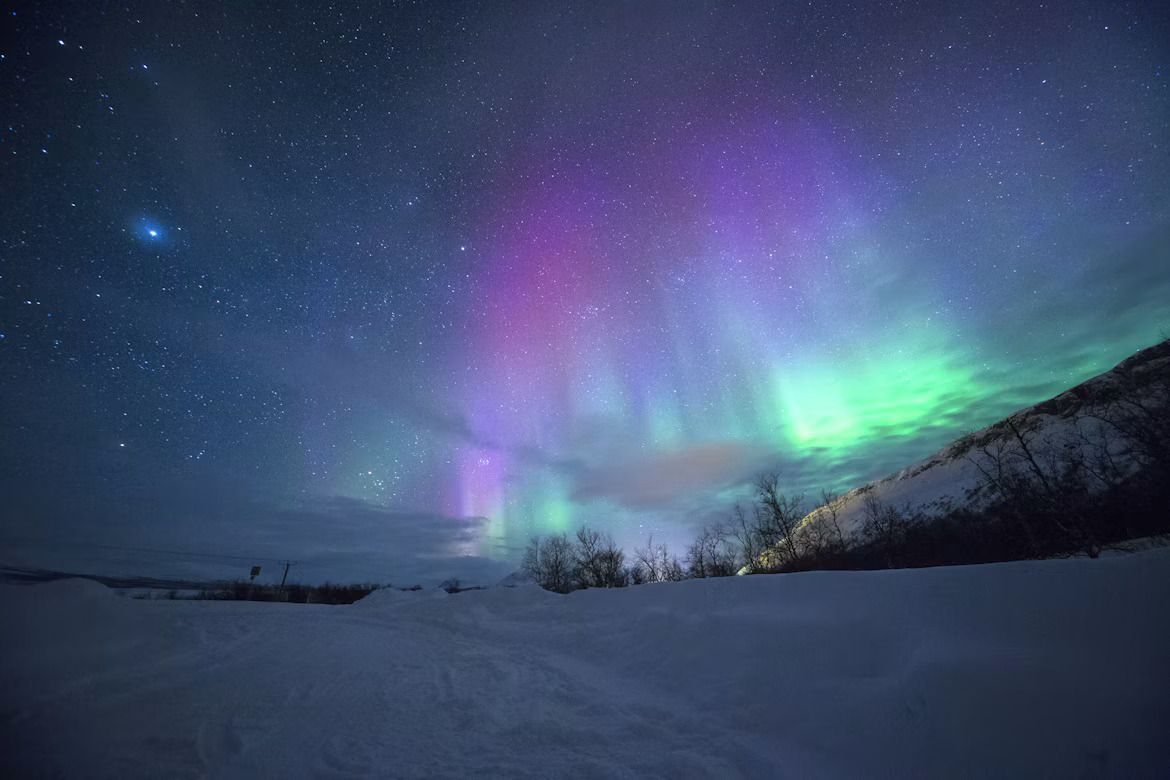
Iceland may be famous for glaciers and geysers, but its location just below the Arctic Circle also delivers regular aurora activity. The main challenge is the weather, which changes quickly. The good news is that the island is relatively small, so tour guides can often drive you out from under the clouds to a clearer patch of sky.
There are also many ferry routes connecting the different regions of Iceland, including the Brjanslaekur to Flatey ferry and Stykkisholmur to Flatey ferry, giving visitors easy access to the best sightseeing locations.
Likelihood of seeing the Northern Lights: Moderate to high. The season runs from roughly September to mid-April, and a stay of several nights greatly improves your odds.
Best location: Þingvellir National Park provides an atmospheric, dark setting less than an hour from Reykjavik. For a more photogenic scene, try the glacier lagoon at Jökulsárlón on the south coast, where the lights can reflect off drifting icebergs. If you are staying in Reykjavik, skip the city center and head to the Grótta lighthouse, where there is far less light pollution.
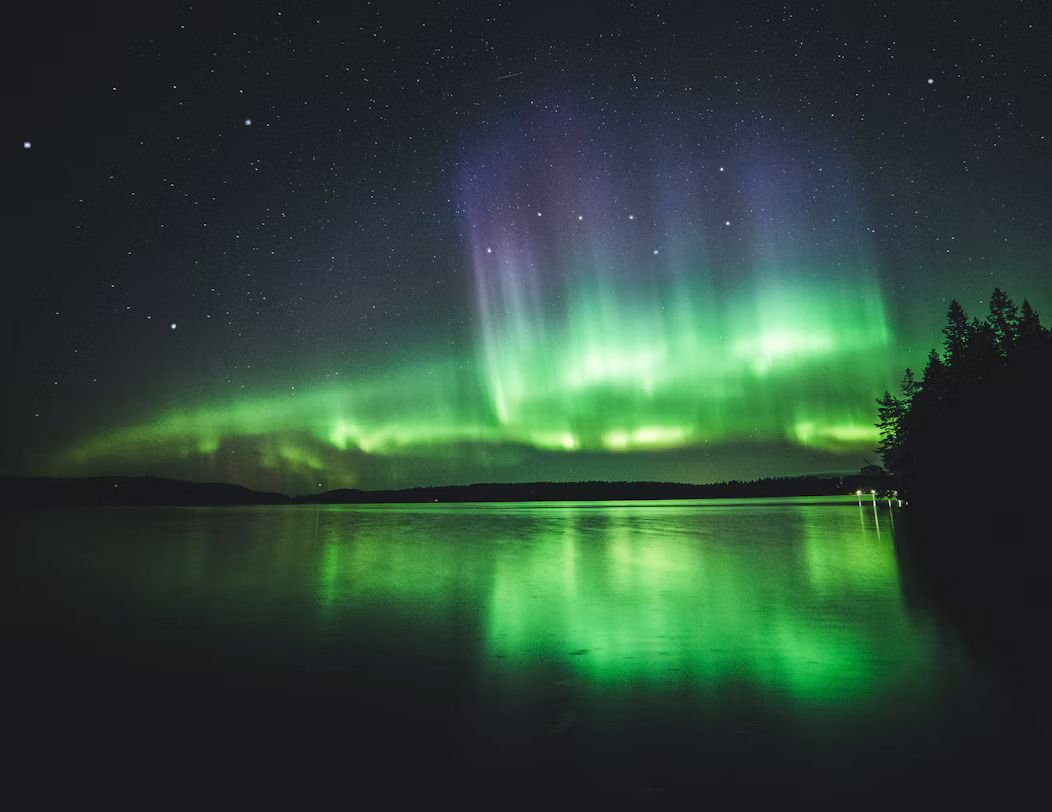
Finnish Lapland has built a reputation for memorable aurora viewing. Imagine glass-roofed igloos, heated cabins and lakeside saunas, all set in quiet forest away from city lights. The region is known for displaying the aurora on around 200 nights a year, which is among the best odds anywhere in Europe.
Likelihood of seeing the Northern Lights: Very high. Sightings are possible from late August to April, with the strongest odds on cold, clear nights in the deep winter months.
Best location: The Saariselkä and Inari area in the far north is a great location for its dark skies and vast wilderness. Further south, Rovaniemi and Levi are easier to reach and offer a wide range of tours and accommodation.
If you are visiting early, the shoulder season has its own charm, with brilliant fall colors and fewer visitors. Our guide to experiencing Finland in autumn explains what to see and do. And who knows, a clear September night could even reward you with an early aurora.
Swedish Lapland is a favorite among serious aurora watchers, largely because of one remarkable quirk of geography. Abisko National Park is located in a rain shadow created by the surrounding mountains, which often leaves a pocket of clear sky even when the region is clouded over. Locals refer to it as the “blue hole.”
Likelihood of seeing the Northern Lights: High. The season runs from about September to March, and Abisko’s unusually dry, clear conditions give it a real advantage over many other destinations.
Best location: Abisko National Park, where you can ride a chairlift up to the Aurora Sky Station for a panoramic view above the tree line. Kiruna is also a great alternative if you want a larger town with more tour options nearby.
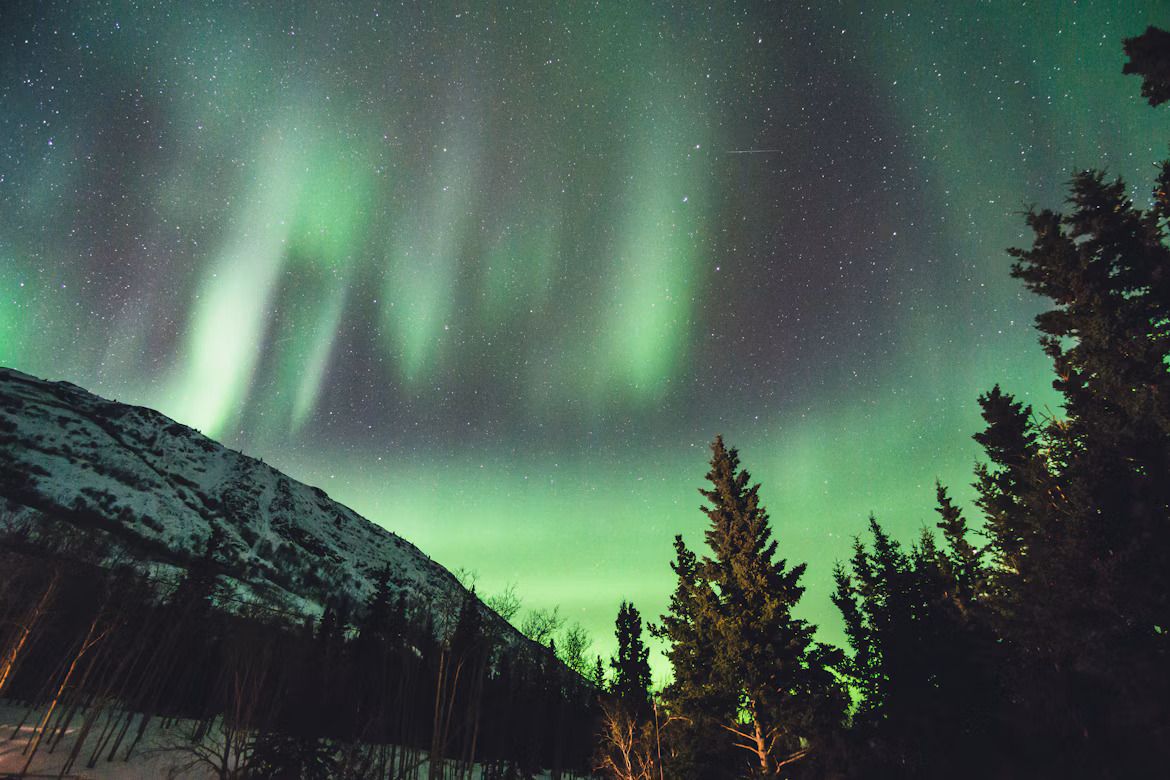
Canada offers some of the most reliable aurora viewing in the world, thanks to minimal light pollution and its enormous stretches of northern wilderness. As the northern territories like Yukon and Manitoba sit so perfectly under the auroral oval, even moderate solar activity can produce impressive displays.
Likelihood of seeing the Northern Lights: Very high. Tour operators in the far north commonly quote success rates above 90 percent for a stay of three nights or more, with the main season running from late August to April.
Best location: Yellowknife in the Northwest Territories is easily the best choice, with its dry climate and dedicated viewing lodges just outside town. Whitehorse in the Yukon and Churchill in Manitoba, where you can combine the lights with polar bear season, are also excellent options.
If you want to see more of the country while you are there, our perfect Canada road trip guide has plenty of inspiration for turning a short aurora getaway into a much bigger adventure.
You don't need to travel to the Arctic to witness the Northern Lights. Under the right conditions, they can also illuminate the skies above Scotland. Sightings depend on strong geomagnetic activity and are therefore less predictable, making an appearance all the more special. In Shetland, the Northern Lights are traditionally known as the “mirrie dancers”.
Likelihood of seeing the Northern Lights: Low to moderate. Displays are occasional rather than guaranteed, and they are most likely when forecasters report a geomagnetic storm. The darker months from fall to early spring offer the best opportunity.
Best location: For the best chance of seeing the Northern Lights, head as far north as possible and choose a spot with an unobstructed view of the northern horizon. Caithness and Dunnet Head on mainland Scotland, along with Orkney and Shetland, are particularly good options. Galloway Forest Park and the Isle of Skye are also worth considering, offering dark skies, beautiful landscapes and excellent stargazing opportunities.
Not sure where to begin? This table compares each of the six destinations so you can match the odds and the season to your own travel plans.
| Destination | Likelihood | Top spot | Typical season |
|---|---|---|---|
| Norway | High | Tromsø | Late September to March |
| Iceland | Moderate to high | Þingvellir National Park | September to mid-April |
| Finland | Very high | Saariselkä and Inari | Late August to April |
| Sweden | High | Abisko National Park | September to March |
| Canada | Very high | Yellowknife | Late August to April |
| Scotland | Low to moderate | Caithness and the northern isles | Autumn to early spring, storm-dependent |
Choosing the right destination is only half the battle. These essentials will help you set realistic expectations and make the most of your trip.
The Northern Lights are a natural phenomenon, and visibility depends on a combination of solar activity and suitable weather conditions. Even in locations known for frequent aurora displays, sightings are never guaranteed. To improve your chances, plan to spend at least three to four nights in your chosen destination and allow flexibility in your schedule. This gives you several opportunities to catch a display while making the most of any clear nights, whether or not the aurora appears.
The Sun follows an approximately 11-year cycle of activity, with periods of increased solar activity often producing stronger aurora displays. Although activity is gradually easing following the recent solar maximum, impressive displays are still possible.
Timing your trip around two additional factors can also improve your viewing conditions. Aurora activity tends to be slightly stronger around the spring and autumn equinoxes, while a new moon provides darker skies that make fainter displays easier to see. A full moon will not prevent the Northern Lights from appearing, but its brightness can make weaker displays less visible.
Camera sensors can capture more light and detail than the human eye, meaning the vivid greens and purples often seen in photographs may appear more subtle in person. During weaker displays, the aurora may initially resemble a faint gray or pale green cloud. However, stronger displays can reveal striking colors and patterns as the lights ripple, pulse and move across the night sky. Allow your eyes 15 to 20 minutes to adjust to the darkness, as this can make it easier to spot fainter displays and appreciate the full experience.
Light pollution is the biggest enemy of a good view. Move away from towns, streetlights and car headlights, and use a red-light flashlight or your phone’s red screen setting to protect your night vision. If you are on a group tour, follow the guide’s instructions about lights and flash photography so you do not spoil the view for other people.
Many of the best viewing areas are remote, icy and extremely cold. If you plan to drive yourself, rent a vehicle equipped for winter conditions, check official road and weather reports before every trip, and avoid long drives after dark if you are not used to snow and ice. Always notify someone where you are going, keep your phone charged and carry extra layers and water. For most visitors, a guided tour is the safest and most relaxing option.
Peak Northern Lights season coincides with the winter holiday period, so popular accommodation and ferry tickets can book up several months in advance. Costs across the Nordic countries and the Canadian Arctic can also be high, particularly for accommodation, flights to remote destinations and organized tours.
Scotland is generally a more affordable option, while Finland, Sweden and Norway offer a wide range of accommodation to suit different budgets, from basic cabins to luxury glass igloos. It is also worth arranging travel insurance that covers flight cancellations and winter weather disruption to help protect against unexpected travel costs.
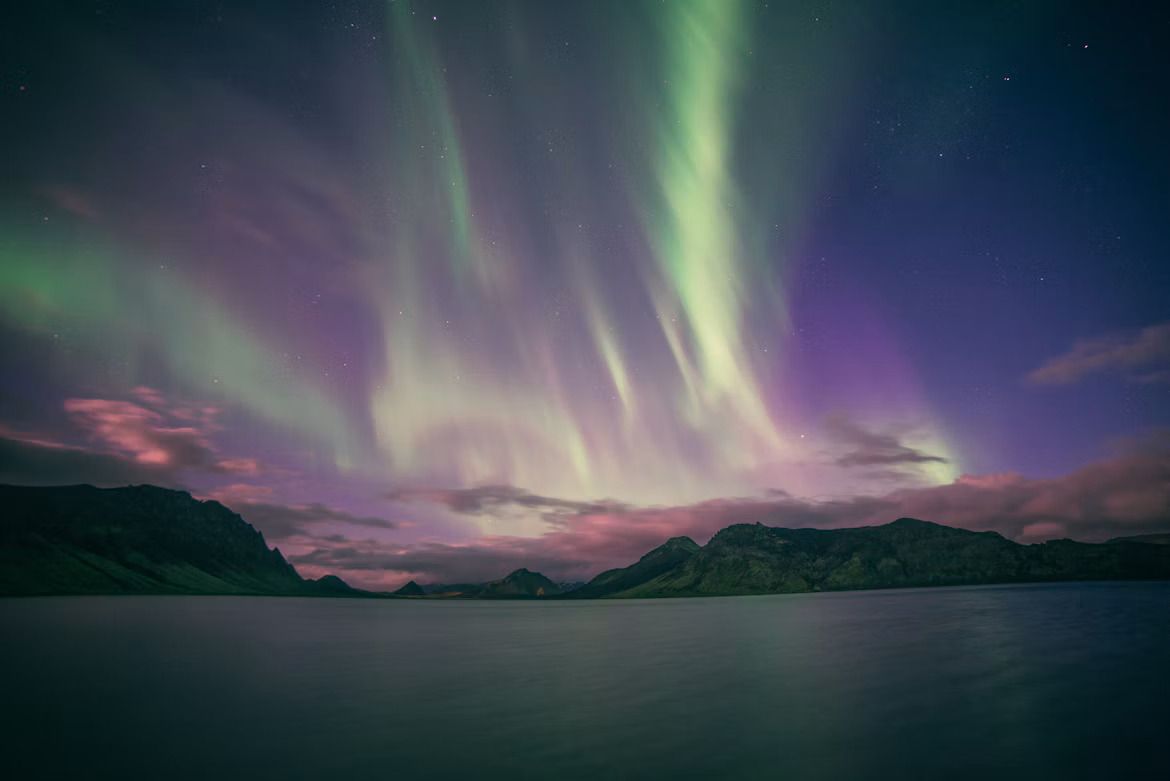
The aurora can appear at any point during darkness, but the most active window is usually between 9 p.m. and 2 a.m. local time. Plan to stay outside for a few hours, because displays usually build, fade and flare up again. Activity tends to peak around midnight, but in the far north during midwinter, when darkness falls by mid-afternoon, a display can begin as early as 5 or 6 p.m. At lower latitudes such as Scotland, where sightings depend on a passing geomagnetic storm, the timing is far less predictable, so it pays to check the night sky regularly.
Use three things together: an aurora forecast, a cloud forecast and your local darkness. Space weather services such as NOAA's Space Weather Prediction Center publish the planetary Kp index, a scale from 0 to 9 that measures geomagnetic activity in 3-hour periods. The higher the Kp, the further from the poles the aurora can be seen, so check what level is needed at your latitude. NOAA's aurora forecast map also shows where the aurora is expected. Many apps and services send alerts when activity increases, but forecasts can change, so check again during the evening.
As a rough guide, a low Kp reading can still produce a good show in the auroral zone, in places like Tromsø, Abisko or Yellowknife. In Scotland, a Kp of around 5 can bring aurora to the far north, and you generally need a higher Kp the further south you are. Forecasts several days out are only a rough indication. The most reliable alert comes from live solar wind data from spacecraft upstream of Earth, which typically gives about 15 to 60 minutes of notice, depending on solar wind speed.
Yes. Most smartphones have a night mode that works well. Rest your phone on a tripod or a steady surface, use a timer or remote to avoid shake, and let the camera take a long exposure of several seconds. A camera with manual controls will give you the best results, but a phone can still capture incredible images. Switch off the flash, choose the widest lens on your phone, and tap on a distant star or light to lock the focus, as autofocus struggles in the dark.
If you are using a camera, a wide-angle lens with a wide aperture, a high ISO and an exposure of roughly 5 to 15 seconds is a good starting point. Cold drains batteries quickly, so keep spares in an inside pocket close to your body.
Dress warmer than you think you need to, since you will be standing still in the cold for a long period of time. Layer a thermal base, an insulated mid-layer and a windproof outer shell, and add insulated boots, a hat, gloves and a scarf. Hand warmers and a flask of something hot make the wait much more comfortable.
Ready to experience the magic of the Northern Lights for yourself? Start planning your adventure and explore the spectacular landscapes of Norway, Sweden, Finland and Scotland. Whether you're chasing the aurora across the Arctic or hoping to catch a glimpse closer to home, book your ferry crossing today and make your Northern Lights adventure one to remember!