Traveling from Denmark to Norway: Your Guide to Crossing the Skagerrak
Route Guides
Route Guides
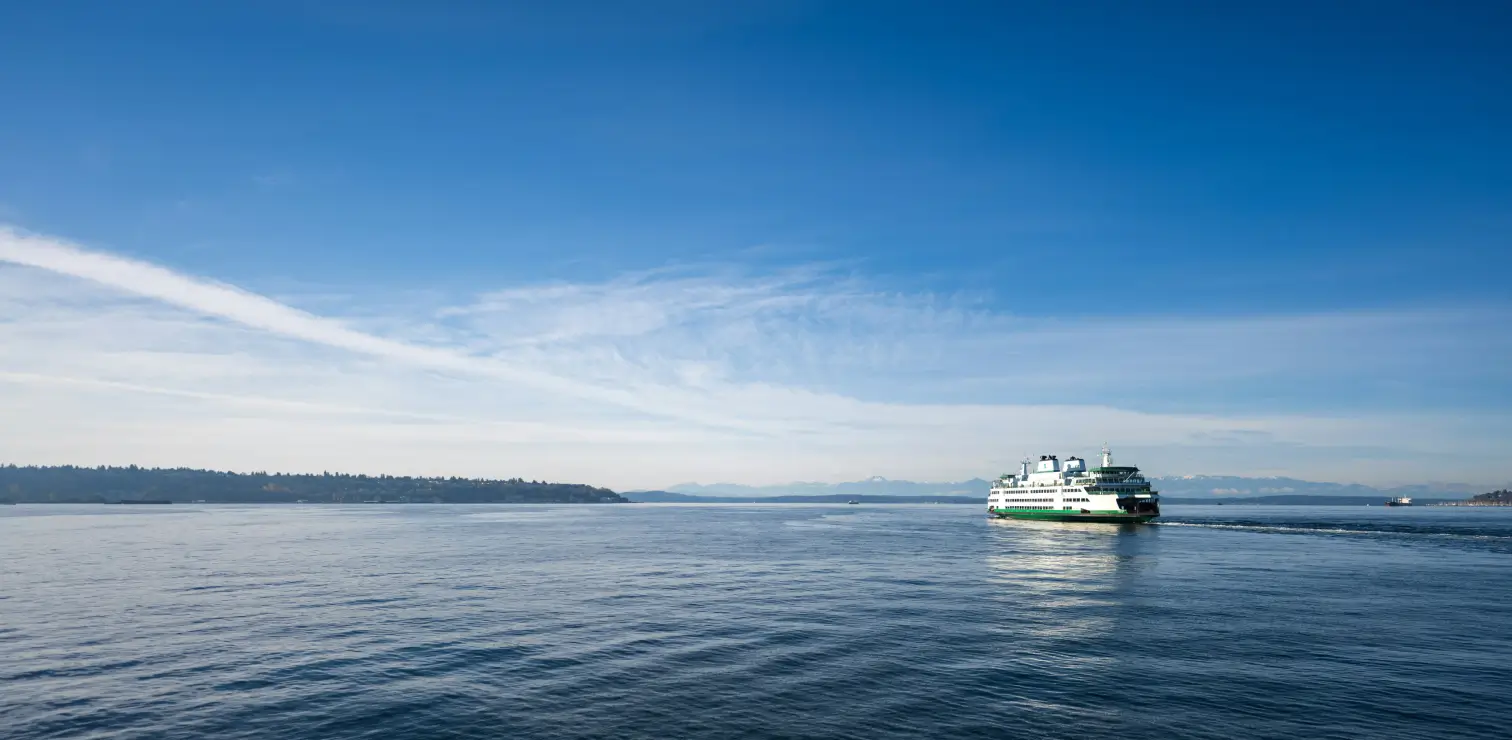

Imagine leaving Hirtshals after a late breakfast and, by lunchtime, stepping off the ferry in Kristiansand, with white wooden houses along the waterfront and forested hills rising behind the town. That is the magic of traveling from Denmark to Norway. Only 142 miles (229 km) separate the two coasts, yet the scenery changes completely: from Jutland’s dunes and farmland to granite skerries, deep fjords and mountains. Whether you want a day trip, a road trip or a gateway to the fjords, this guide will help you plan it.
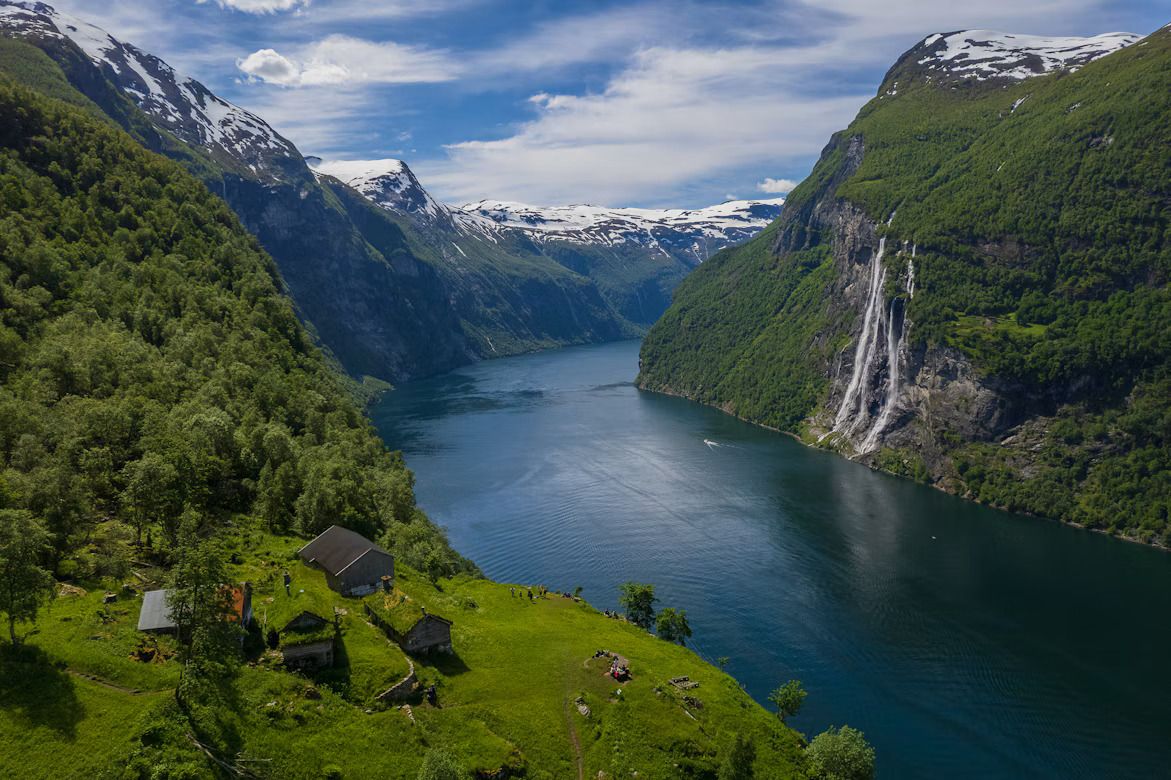
With a population of just 5.6 million, Norway is a country where nature takes center stage. Deep fjords and scattered islands shape its spectacular coastline, while inland, vast mountain plateaus, glaciers and cascading waterfalls create some of Europe's most dramatic scenery. Two of its most famous fjords, Geirangerfjord and Nærøyfjord, are UNESCO World Heritage Sites, alongside Bergen's historic Hanseatic wharf at Bryggen. Travel further north to experience the extraordinary midnight sun in summer and the magical northern lights during the darker months.
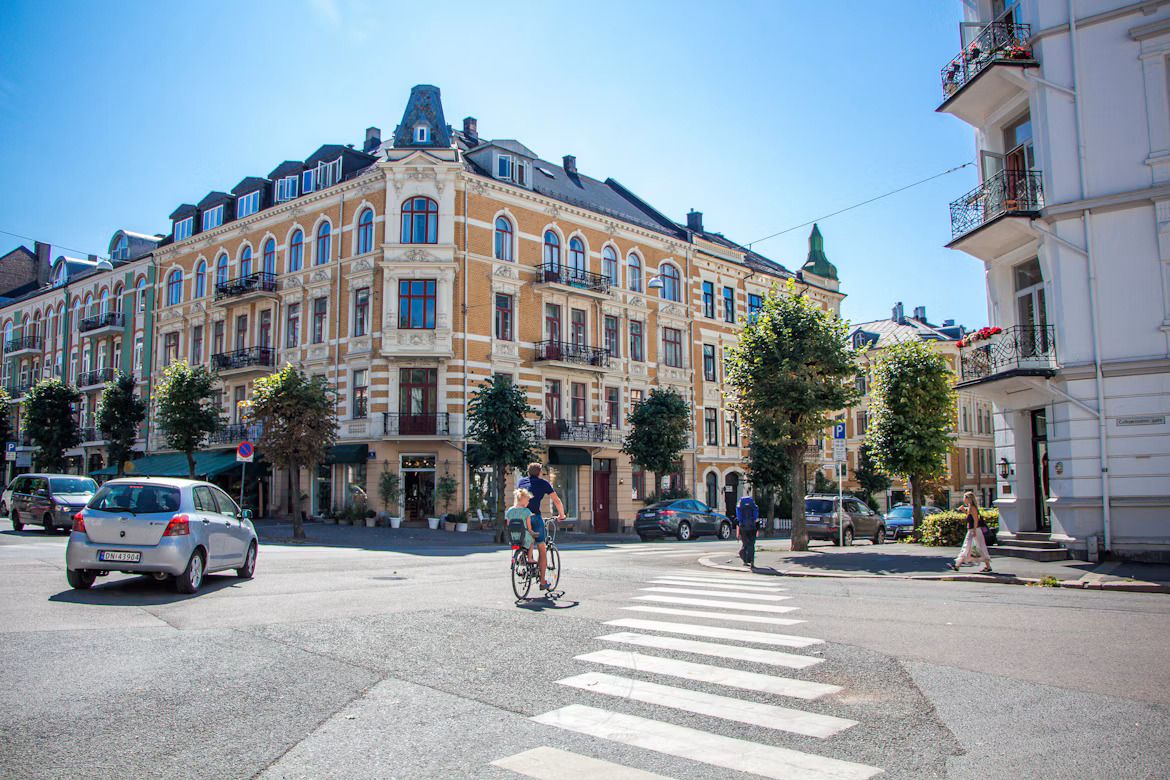
Closer to the ferry port, Oslo combines striking waterfront architecture with world-class museums and cultural attractions. Norway also embraces the tradition of allemannsretten, or the “right to roam”, which gives visitors the freedom to explore much of the countryside responsibly. However, keep in mind that Norway is generally more expensive than Denmark, so budgeting ahead can help you make the most of your trip (see our tips below).
Our guide Norway’s Moment in the Limelight explores the midnight sun, the Arctic Circle and some of the country's most remarkable natural wonders.
There are four main ways to travel by ferry from Denmark to Norway. Most ferries depart from Hirtshals in northern Jutland, which offers up to 56 sailings per week to four Norwegian ports, with services operating throughout the year. Unlike Finland and Estonia, the two countries use different currencies: Denmark uses the Danish Krone, while Norway uses the Norwegian Krone. However, both share Central European Time, so you won't need to adjust your watch when you arrive.
| Crossing | Operator | Typical time | Sailings per week | Runs |
|---|---|---|---|---|
| Hirtshals to Kristiansand | Color Line & Fjord Line | 3 hours 19 minutes (fastest 2h 25m) | 29 | All year |
| Hirtshals to Larvik | Color Line | 4 hours 0 minutes (fastest 3h 40m) | 12 | All year |
| Hirtshals to Stavanger | Fjord Line | 11 hours 45 minutes (fastest 11h 00m) | 6 | All year |
| Hirtshals to Bergen | Fjord Line | 17 hours 45 minutes (fastest 17h 00m) | 6 | All year |
Please be aware that ferry schedules and times can change throughout the year.
The Hirtshals to Kristiansand ferry is by far the most popular crossing between Denmark and Norway, available all year round with Color Line and Fjord Line. Color Line’s SuperSpeed 1 takes around 3 hours and 15 minutes, whereas Fjord Line’s cruise ferries take 3 hours and 45 to 55 minutes. The quickest option is Fjord Line’s Fjord FSTR catamaran, which makes the crossing in 2 hours and 25 minutes and typically runs in the warmer months.
Check your departure and arrival terminals before traveling, as the two ferry operators use different facilities. In Hirtshals, Color Line departs from Norgeskajen 2, while Fjord Line operates from its own terminal at Containerkajen 4. In Kristiansand, both terminals are conveniently located in the city center, with Fjord Line's terminal right next to the train and bus stations. Onboard, you'll find a range of facilities, including restaurants, cafés, duty-free shops and comfortable lounges.
The short crossing also makes this route an excellent option for a day trip. Departing from Hirtshals gives you up to approximately 9 hours to explore Kristiansand before catching the last ferry back, while traveling in the opposite direction allows up to around 13 hours in Hirtshals. However, the earliest and latest sailings may be operated by different companies depending on the day, so check the timetable when planning your journey. Otherwise, you can make this journey as part of a longer stay.
If you are heading to the capital, the Hirtshals to Larvik ferry with Color Line lands you on the Oslofjord, located around two hours from Oslo by road. It sails all year round, taking around 4 hours on the SuperSpeed 2. The Larvik terminal is at Revet, around 2 km from the town center. A day trip is also feasible, with up to about 10 hours ashore in Larvik depending on the season.
If the fjords are your priority, take an overnight ferry. The Hirtshals to Stavanger ferry takes approximately 11 hours and 45 minutes with Fjord Line and operates throughout the year. The Hirtshals to Bergen ferry is the same service extended to Bergen, with a typical sailing time of 17 hours and 45 minutes. Book a cabin and wake up in fjord country. In Stavanger, ships dock at Risavika, a 20 to 30 minute drive from the city center, whereas in Bergen they dock at Jekteviksterminalen, within walking distance of the main sights.
Direct flights between Copenhagen and Oslo take about 1 hour and 20 minutes, with SAS and Norwegian operating the route. Flying makes the most sense if you are starting in Copenhagen or already connecting via its airport, which is about 20 minutes from the city center by train or metro. When you arrive, the Flytoget Airport Express takes around 20 minutes from Oslo Airport Gardermoen to Oslo Central Station.
If you have time to explore more of Norway, here are some of the best places to visit.
The Sørlandet coast and Lindesnes is Norway’s south coast, a landscape of white clapboard towns, polished granite skerries and harbors full of sailboats. At its western end, Lindesnes Lighthouse marks the southern tip of mainland Norway, located around 30 km off the E39.
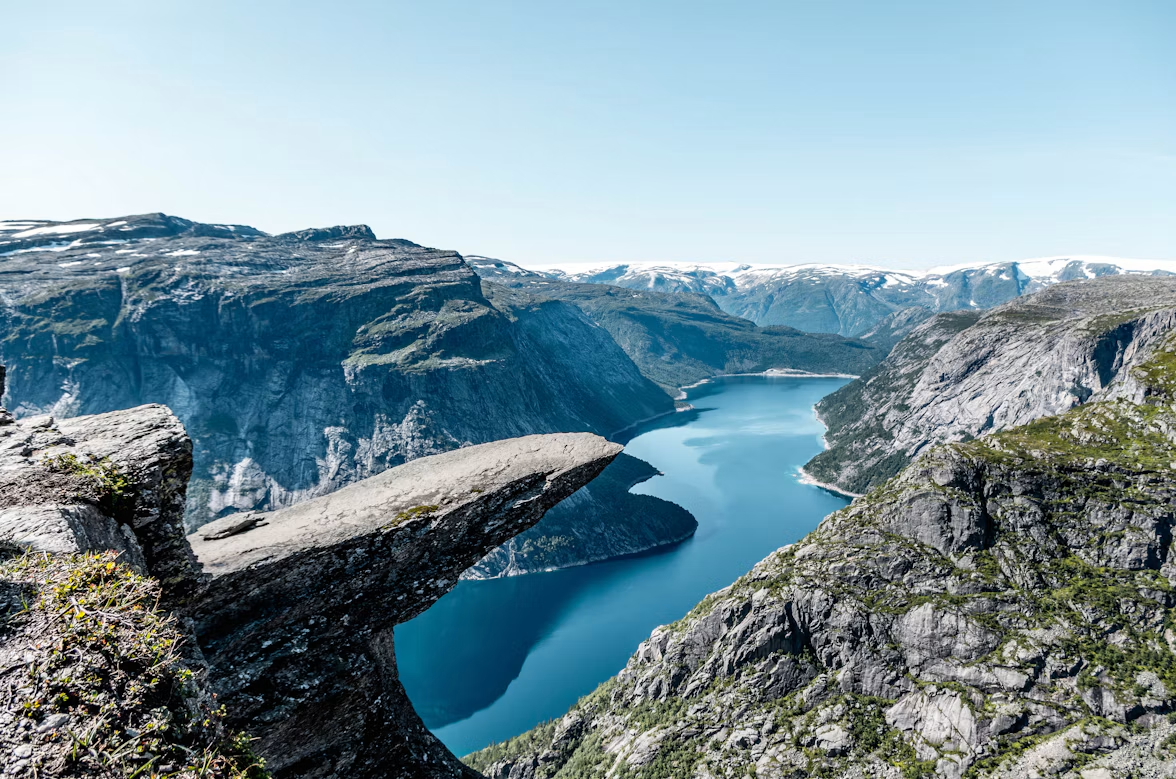
Stavanger and Preikestolen combine a maritime heritage with a beautiful old town of more than 170 white wooden houses. Nearby, Preikestolen (otherwise known as Pulpit Rock) is a flat-topped cliff that rises 604 meters above the Lysefjord.
Bergen is the gateway to the fjords, built between seven mountains and the sea. Explore the UNESCO-listed wharf of Bryggen, then ride the Fløibanen funicular up Mount Fløyen. From here, you can take multiple ferries across the fjords. The Bergen to Rosendal ferry takes 1 hour and 55 minutes year-round and works as a day trip. The Bergen to Balestrand ferry takes around 4 hours and runs all year except November and December.
Flåm and the Nærøyfjord offer some of Norway's most spectacular fjord landscapes. The famous Flåm Railway winds its way 20 kilometers through 20 tunnels, while the UNESCO-listed Nærøyfjord narrows to just 250 meters at its tightest point. Between April and October, the Bergen to Flåm ferry takes around 5 hours and 40 minutes, offering a scenic way to explore the region. For the best choice of routes and connections, plan your fjord-hopping adventure during the warmer months when there are more sailings available.
Geiranger and Trollstigen are the highlights of the western fjords, with the waterfall-lined Geirangerfjord and a mountain road of 11 hairpin bends. Both are covered in our Perfect Norway Road Trip itinerary.
Arctic Norway is a long way from the ferry port, but worth planning toward. The midnight sun shines from mid-May to late July in places like Tromsø and the Lofoten Islands, and the northern lights are best seen between late September and March.
Oslo has a four-season climate with cold winters and mild summers. The figures below are approximate typical ranges for the capital.
| Season | Typical range | What to expect |
|---|---|---|
| Spring (Mar–May) | 28 to 63°F (-2 to 17°C) | Melting snow, lengthening days, fruit blossom in the fjords by May |
| Summer (Jun–Aug) | 52 to 73°F (11 to 23°C) | Long evenings, fjord cruises, hiking and coastal weather |
| Autumn (Sep–Nov) | 30 to 61°F (-1 to 16°C) | Fall colors, crisp air, the first frosts |
| Winter (Dec–Feb) | 23 to 34°F (-5 to 1°C) | Snow, skiing, short days |
Daylight hours vary considerably throughout the year in Norway. Around midsummer, Oslo experiences almost 19 hours of daylight, with sunset well into the evening, while December brings just around 6 hours of daylight. Along the west coast, cities such as Bergen tend to have milder winters but considerably more rain. Bergen typically records at least 3 mm of rainfall on around 158 days each year, compared with approximately 77 days in Oslo. Whatever time of year you visit, pack warm clothing and bring a waterproof jacket even during the height of summer.
Autumn is a quieter, cheaper time to visit Denmark and Norway, and the fall colors in southern Norway make for beautiful drives. From late September, the nights also start to grow dark enough for the northern lights in the Arctic north.
Winter is arguably the most atmospheric time to visit, and Copenhagen and Oslo pair well on the same trip. Copenhagen’s Tivoli Gardens turns into a glittering Christmas market from mid-November to late December, as covered in our winter city break in Copenhagen guide. In Oslo, the Christmas market takes over Spikersuppa beside Karl Johans gate from around mid-November, and the Norsk Folkemuseum runs weekend markets with costumed actors.
Norwegians take Christmas very seriously, with festive work parties throughout December followed by a quiet, candlelit Christmas Eve when most shops and offices close. Each year Norway also sends a Norway spruce to London’s Trafalgar Square, a thank-you tradition dating back to 1947.
Norway is a vast country, and journeys can take longer than expected due to its mountainous terrain and deep fjords. Ferries, trains and coaches are all important parts of the transport network, particularly along the coast, where regular crossings connect communities and popular destinations.
Norway's main cities have reliable public transport networks, making it easy to get around without a car. In Oslo, trams, the metro (T-bane), buses and harbor ferries connect the city, with tickets conveniently available through the Ruter app. Kristiansand is much more compact, with most attractions within a 20-minute walk of the city center and local buses serving areas further afield. For visitors planning to explore several museums and attractions, the Oslo Pass and Bergen Card can offer good value by combining public transport with discounted or included entry.
Norway's trains offer a comfortable and scenic way to travel longer distances. The Sørlandsbanen connects Oslo and Kristiansand in around 4 hours and 30 minutes, continuing to Stavanger in another three hours. The famous Bergen Line (Bergensbanen) travels between Oslo and Bergen in roughly 7 hours, crossing the spectacular Hardangervidda plateau. With its dramatic mountain scenery, the journey is often considered an attraction in its own right.
Long-distance coaches are a useful alternative for reaching destinations inaccessible by train. In Kristiansand, the bus terminal is conveniently located right beside the ferry port, making onward connections to Oslo and Stavanger straightforward. This is particularly useful for foot passengers looking to continue their journey by public transport.
Remember that you can take your car with you. Color Line and Fjord Line both accommodate cars on their Denmark to Norway routes, and Fjord Line also takes motorhomes and trailers, so you can disembark in Norway and start your road trip straight away.
Arrive in Kristiansand and you can join our Perfect Norway Road Trip at Day 3 of its 18-day loop, finishing in Oslo. For a shorter trip, the west coast route from Kristiansand to Stavanger and Bergen is covered in A Trip to Norway’s West Coast with Fjord Line.
If you are driving in Norway, here’s some things you must know first:
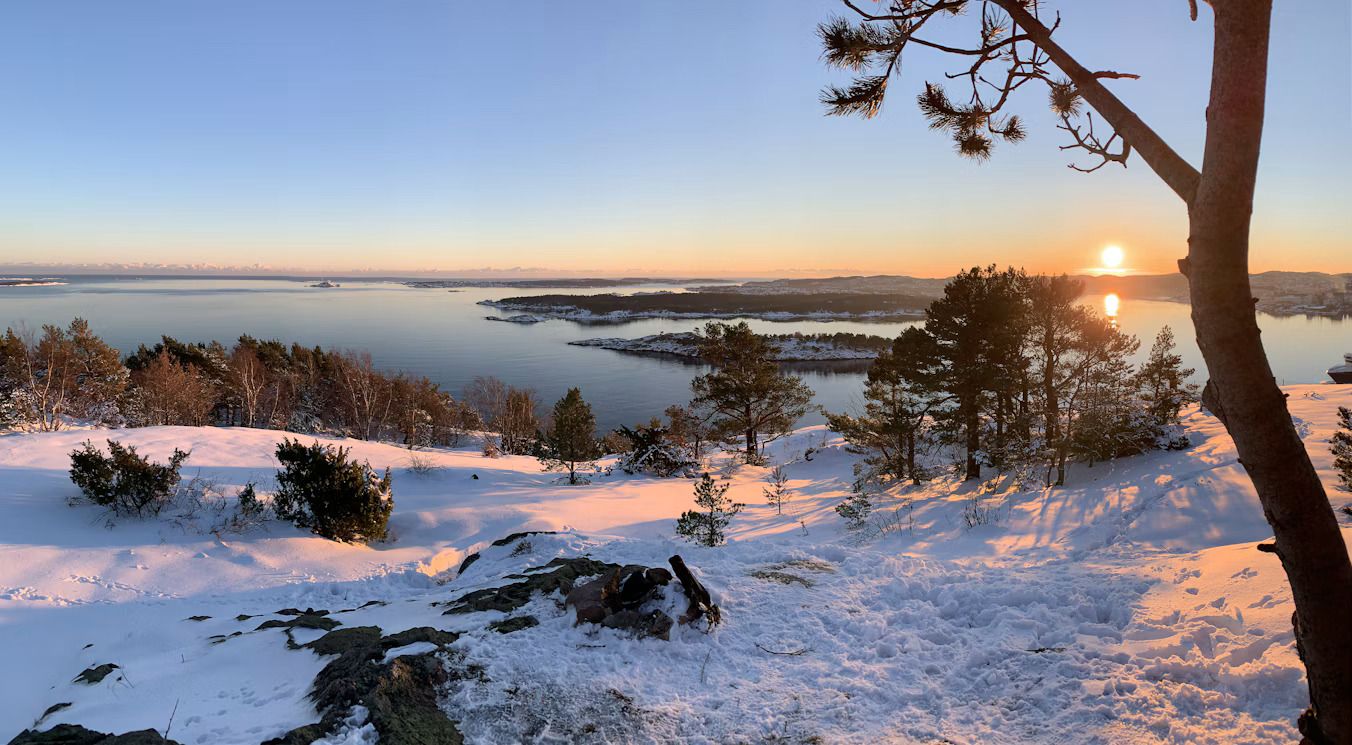
Even a short hop across the Skagerrak goes more smoothly with a few smart habits:
Both countries are in the Schengen Area, so there are normally no routine passport checks, but you should still carry a passport or national ID card for your ferry operator. Citizens of the EU and EEA can usually travel on a national ID card. Norway is not in the EU, so customs controls still apply, and visitors from outside the EU should check their entry requirements, as time spent in Norway counts toward your Schengen stay limit.
Yes, English is spoken fluently and widely, especially in cities and tourist areas. In fact, it's one of the best places to visit without speaking the language. Norwegian is the official language, written in two forms, Bokmål and Nynorsk. Learning a couple of words, such as hei (hello) and takk (thank you), is always appreciated by the locals.
It is generally very safe. As in any popular destination, keep an eye on your belongings in busy areas. The emergency numbers are 112 for police, 113 for an ambulance and 110 for the fire service. If you are considering traveling alone, our guide to the best destinations for solo travelers has more ideas.
Yes, Norway is one of the more expensive countries in Europe, particularly for dining, alcohol and accommodation. You can keep costs down by traveling in May or September, self-catering, using Norway’s right to roam for free access to the outdoors, and taking trains and coaches rather than domestic flights.
Yes, there is plenty to keep children entertained, including the Nordsøen Oceanarium in Hirtshals, Kristiansand Dyrepark and the Fram Museum in Oslo. The ferry crossing itself is an adventure for younger travelers. For more ideas, see our guide to the best destinations for families in Europe.
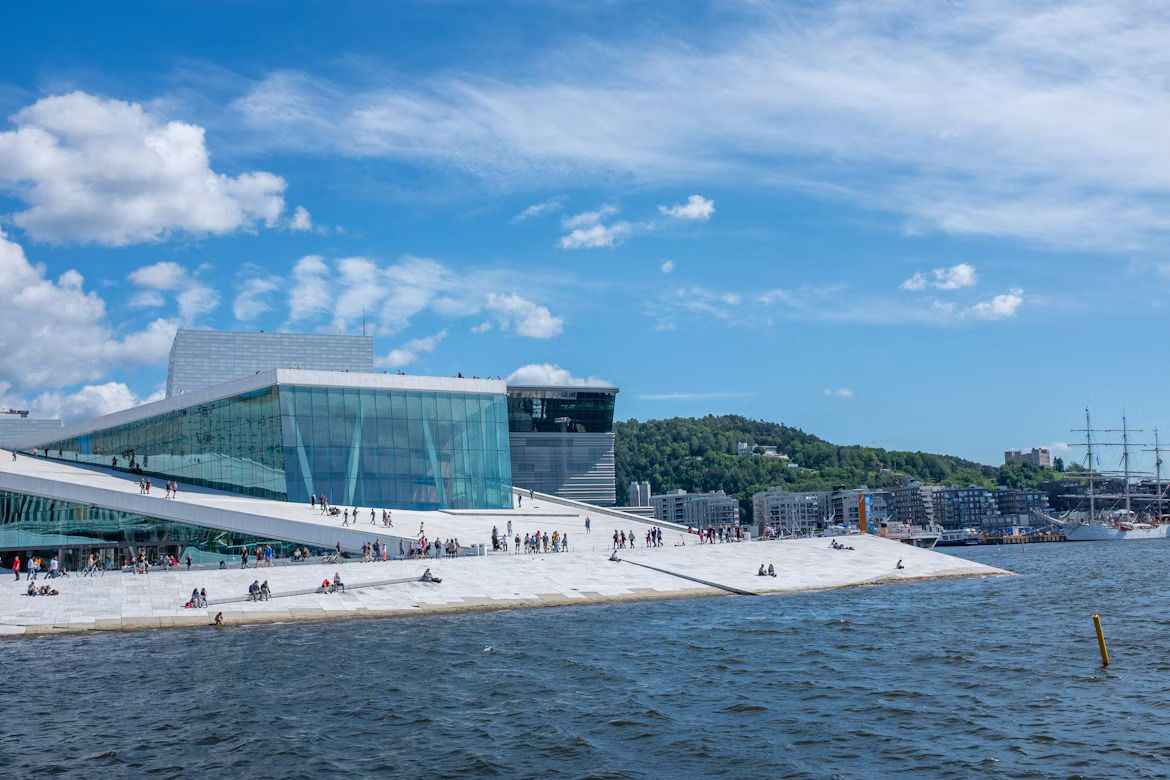
Whether you are chasing the fjords, a city break in Oslo or an epic road trip, a journey between Denmark and Norway offers an unforgettable contrast just a short crossing apart. Book your ferry tickets and start planning a trip that connects two remarkable corners of Europe.