Busan - Hakata (Fukuoka)
Ferries to Fukuoka
Busan - Hakata (Fukuoka)
Ferries to Fukuoka
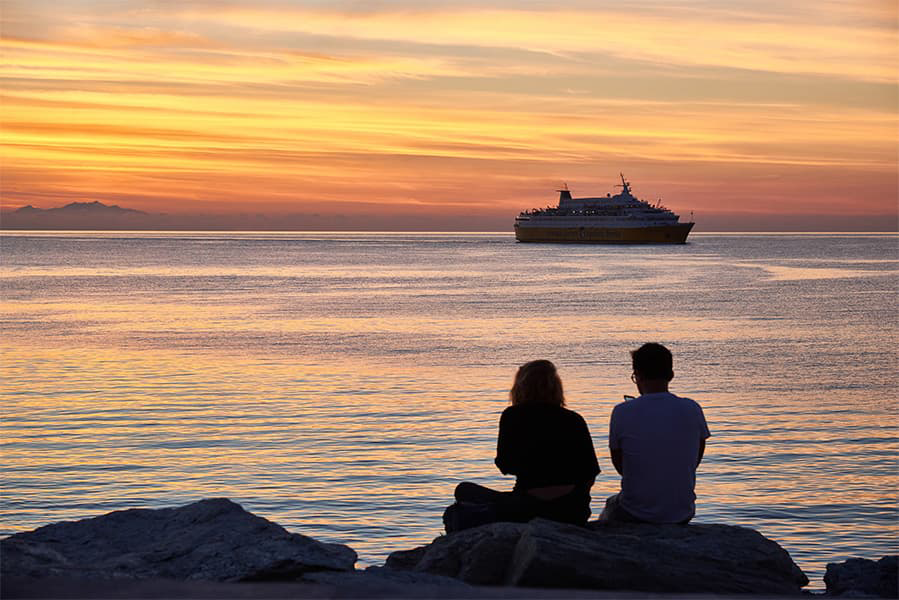
Camellia Line provides the ferry from Busan to Hakata (Fukuoka). Busan Hakata (Fukuoka) ferries cost from just $60 and vary based on season, availability and whether you’re going by foot or by car. Prices exclude any service fees. Ferry schedules change seasonally. Use our Deal Finder to get the latest ferry ticket information for Busan Hakata (Fukuoka) ferries.
Last Updated: 10/1/2026
Busan to Hakata (Fukuoka) ferry prices typically range from $60 to $363. The average ferry price from Busan to Hakata (Fukuoka) is around $153. The cheapest fares usually start from $60. The average foot passenger ticket costs $153.
Prices may vary depending on passenger numbers, vehicle type, route, and sailing time. Please be aware that pricing data excludes service fees and is based on searches from the last 30 days. This was last updated October 26.
The cheapest tickets on the Busan to Hakata (Fukuoka) ferry cost approximately $59.88. However, prices can reduce to as little as $62.20 in the winter.
Direct Ferries makes it easy to compare ferry tickets and prices worldwide, so you can find the best deal for your journey. Please visit our Special Offers page to see current discounts on selected routes and operators. Booking early is typically the most reliable way to secure lower fares and better availability.
Yes, Direct Ferries offers a range of discounts throughout the year. Where available, senior discounts are applied automatically during the search process: simply select the relevant age range when entering passenger details.
Students and recent graduates can receive a 5% discount on ferry tickets. To claim this, register with our partner Student Beans and verify your student or graduate status. Once confirmed, you'll receive a discount code to use at checkout.
Resident discounts are available on selected routes in Spain and Italy. When applicable, choose the "Residents" option during booking and the discount will be applied automatically. Please note that proof of residence or a valid ID showing the correct address must be presented at check-in.
There are around 6 weekly sailings from Busan to Hakata (Fukuoka).
Camellia Line provide 1 sailing daily, 6 sailings weekly. Please keep in mind that ferry timetables often increase during the high season.
Ferries from Busan to Hakata (Fukuoka) typically depart at around 20:00.
Due to the longer crossing time, ferries between Busan and Hakata (Fukuoka) are generally better suited to weekend breaks or longer stays. For ideas on the best things to do in Hakata (Fukuoka), please visit our blog.
The fastest ferry from Busan to Hakata (Fukuoka) is with Camellia Line in 11 hours 30 minutes.
The fastest ferries from Busan to Hakata (Fukuoka) usually cost around $153.05.
No, ferry operators currently do not allow cars on sailings between Busan and Hakata (Fukuoka). If you wish to bring your car, then you can use our Deal Finder to find alternative routes.
Whether you can take a campervan or caravan on the ferry depends on the operator and vessel used for your chosen crossing. Enter your travel details into our search bar to see which operators and vehicle options are available on the Busan to Hakata (Fukuoka) ferry.
For more advice and travel inspiration when taking a car, campervan, or caravan, please visit our blog.
Bicycles are currently not permitted on ferries sailing between Busan and Hakata (Fukuoka). Please look for alternative ferry routes that accommodate bicycles using our Deal Finder.
Yes, foot passengers are welcome on ferries from Busan to Hakata (Fukuoka) with Camellia Line.
First class is available on ferries from Busan to Hakata (Fukuoka) with Camellia Line.
Yes, you can book cabins on ferries that sail from Busan to Hakata (Fukuoka) with Camellia Line. The price of a cabin on the Busan to Hakata (Fukuoka) ferry ranges from $32.32 and $1,092.49, with an average price of $176.73. Please note that prices may vary depending on the type of cabin you book.
Whether an overnight ferry runs between Busan and Hakata (Fukuoka) depends on the operator and timetable. Enter your travel details in our search bar to check if an overnight option is available, along with current timetables and alternative daytime crossings. Please be aware that overnight crossings can sometimes take a little longer than daytime sailings.
Pets are currently not allowed on ferries traveling from Busan to Hakata (Fukuoka). Please use our Deal Finder to search for alternative routes that allow pet travel.
Please be aware that even where pets are not permitted on board, different regulations may apply to passengers traveling with guide dogs or assistance dogs. We recommend contacting our customer service team directly to confirm the specific rules for your preferred sailing. For general information, visit our Special Assistance Help page.
The Busan to Hakata ferry is a convenient way to cross between South Korea and Japan, connecting Busan's busy port with the city of Fukuoka on the northern tip of Kyushu. As most sailings operate during the day, overnight cabins aren't always necessary, but it's still worth knowing what to expect onboard, especially if you're traveling with luggage or children, or if you're making the crossing for the first time and are unfamiliar with the international border procedures involved.
Most ferries and hydrofoils offer comfortable indoor seating in an enclosed saloon. This is the standard option for the vast majority of travelers and works well whether the sea is calm or a little choppy. Immigration formalities take place onboard, so it's worth having your passport easily accessible during the crossing.
Some conventional ferries offer outdoor deck areas, though high-speed vessels and hydrofoils have limited or no outdoor access. Where available, the open deck is a good way to enjoy the views of the Korean coastline as you leave Busan, with the Japanese island chain gradually coming into view as you approach Hakata.
Some operators offer upgraded seating with extra legroom and a quieter atmosphere. This can be a good option if you want a more relaxed crossing, particularly on the longer conventional ferry services where the extra comfort is more noticeable.
Larger conventional ferries on this route usually have a restaurant or café onboard serving hot meals, Korean and Japanese dishes, snacks, and drinks. Fast ferry and hydrofoil services are less likely to offer a full meal service, so it's worth grabbing something to eat before boarding if you're traveling on one of the quicker services.
Most vessels have a bar serving drinks, along with a small duty-free retail area selling Korean and Japanese goods, snacks, and travel essentials. The duty-free element is popular with passengers traveling in both directions, and retail areas usually open once the vessel has cleared Korean territorial waters.
Open deck areas are available on conventional ferries and offer good views across the Korea Strait. The approach to Hakata Port, with the Fukuoka skyline and the wooded hills of Kyushu in the background, is well worth watching from outside if the weather allows.
There are no dedicated play areas on this route, but the crossing time is manageable for most children, especially with the novelty of an international sea crossing and the immigration process to keep older ones interested. Larger conventional ferries have more space onboard, making them a more comfortable choice for families.
There's space for luggage inside the saloon on most vessels. As this is an international crossing between South Korea and Japan, make sure to keep your passport and any immigration documents easily accessible throughout the journey, as departure checks apply at Busan and arrival controls are carried out at Hakata. Fukuoka's ferry terminal is well connected to the city center by metro and taxi, making onward travel with luggage straightforward.
You can get a direct ferry from Busan to Hakata. While flights are also available between South Korea and Japan, taking the ferry is one of the most convenient and straightforward ways to travel between Busan and Hakata, especially for short city-to-city trips.
Depending on the operator, ferries offer greater flexibility than flying, often allowing more generous luggage allowances and the option to travel with larger items. The journey is also comfortable and scenic across the Korea Strait, making it a relaxing alternative to air travel and a great way to arrive in Hakata ready to explore.
How early you need to arrive at the Busan ferry port depends on the ferry company you are traveling with and your booking type, so it's always best to check your confirmation details in advance.
Busan International Ferry Terminal is well-organized and clearly signposted, making it easy to navigate. However, as this is an international route with passport control and security checks, arriving early is essential for a smooth journey.
As a general guideline, foot passengers should arrive at least 90 minutes before departure. During peak travel periods or holidays, arriving up to 2 hours in advance is recommended to allow enough time for check-in, immigration and boarding procedures.
Yes, parking is available at Busan International Ferry Terminal, so you can leave your vehicle at the port if needed. Both short-term and long-term parking options are typically available within walking distance of the terminal.
The main parking area is located near the terminal building, making it convenient for passengers traveling with luggage.
It’s recommended to check availability in advance and arrive early, as parking spaces can fill up quickly during busy travel periods such as weekends and holidays.
If you're looking for accommodation near the port of Busan before your journey, be sure to check out our Accommodation page for the best deals and prices. You'll find a wide range of options to suit different budgets and travel styles.
Staying close to the ferry terminal can make your trip much more convenient, especially for early departures. Booking in advance is highly recommended, particularly during peak travel seasons when hotels in Busan can sell out quickly.
Many ferry operators on the Busan to Hakata route aim to accommodate passengers with reduced mobility, although facilities may vary depending on the vessel.
Ferries are typically equipped with accessible features such as ramps, lifts, designated seating areas and accessible toilets. If you require assistance during boarding or the journey, it’s important to notify the ferry operator in advance, so appropriate arrangements can be made.
Camellia Line:
Luggage allowances on ferries from Busan to Hakata vary depending on the operator, but they are generally more flexible than airline restrictions. Most operators allow reasonable personal baggage, although oversized or additional items may incur an extra charge.
If you're traveling with larger luggage, it’s best to confirm specific limits with your ferry operator before departure.
| Operator | Included Luggage | Size Limit | Weight Limit | Notes / Extra Charges |
|---|---|---|---|---|
| Camellia Line | 1 piece (carry-on) + optional checked luggage | Total dimensions ≤ 200 cm (L+W+H) | Up to 30 kg (carry-on) | Checked luggage available for a fee (20 kg per item); excess weight charged; some items restricted (e.g. bikes must be checked) |
Ferries from Busan arrive at Hakata Port (Hakata Ferry Terminal) in Fukuoka. The terminal is conveniently located close to the city center, with easy access to taxis, buses and public transport.
From the port, you can reach Hakata Station within a short time, providing excellent onward connections across Japan via the Shinkansen (bullet train) network. Local buses also operate regularly between the ferry terminal and key areas of Fukuoka, making it easy to continue your journey.
Travel requirements vary by route, so it's important to confirm which documents you need before you travel. On most international routes, you will need a valid passport to travel from Busan to Hakata (Fukuoka), and possibly a visa or national ID depending on your nationality and the destination's entry rules.
To avoid delays at check-in, see our Check-in, Travel Documents & Tickets guide and our blog post on traveling to Europe for useful tips.
Booking your Busan to Hakata (Fukuoka) ferry is very simple. Enter your departure and arrival ports along with your preferred travel date to view all available sailings and prices. You can also compare alternative routes and departure times to find the option that best suits your schedule and budget.
Look out for early-booking deals and special ticket types such as upgrades or flexi fares that allow changes or cancellations. To ensure a smooth booking process, always enter accurate passenger numbers and vehicle specifications.
The best time to book ferries from Busan to Hakata (Fukuoka) is as early as possible. Booking in advance often secures lower prices, along with a wider choice of departure times, seating, and cabin options. We recommend booking at least a few weeks ahead, particularly during peak holiday seasons. Prices can vary depending on demand and availability.
If no sailings from Busan to Hakata (Fukuoka) appear on your chosen date, this may be due to seasonal timetable changes, temporary schedule adjustments, or limited availability caused by high demand. We recommend checking alternative dates or nearby routes to find the most suitable option.
After completing your booking, you'll receive a confirmation email with your travel details. How your boarding pass is issued depends on the ferry operator you have booked with.
Some operators provide boarding passes at the time of booking, while others require check-in at the port terminal. Where available, online check-in can be completed through the Direct Ferries app.
Ticket desks are generally located near the terminal entrance. To prevent delays, we recommend arriving early to allow sufficient time for ticket collection and check-in.
At check-in you will need to present your booking confirmation and a valid photo ID, such as a passport or identity card. If travelling with a pet, relevant documentation like vaccination records, pet passport and insurance may also be required. Passengers using resident discounts must provide proof of eligibility.
| Ticket Type | From Ticket Price |
|---|---|
| Foot Passenger | $45 |
| Cabin | $32 |
More routes than anyone else.

Compare fares, times & routes in one place.
Change plans easily with flexi tickets.

Book e-tickets & manage trips in-app.
Live ship tracking & real-time updates.

Top-rated customer support when you need it.
| Busan - Hakata (Fukuoka) Ferry Route Prices | ||
|---|---|---|
| Foot Passenger | $153 | |
| Average Cabin Price | $177 | |
| Busan - Hakata (Fukuoka) Ferry Route Summary | |
|---|---|
| Origin | South Korea |
| Destination | Fukuoka |
| No. of Operators | 1 |
| Operators | Camellia Line |
| Average Price | $153 |
| Average Daily Sailings | 1 |
| Average Weekly Sailings | 6 |
| Average Sailing Duration | 11 h 30 m |
| Fastest Sailing Duration | 11 h 30 m |
| First Ferry | 20:00 |
| Last Ferry | 20:00 |
| Distance | 100 Nautical Miles |
* Prices subject to change, pricing is taken from last 30 days, last updated 1 October 2026.
The Port of Busan is South Korea’s largest ferry and container port and a major international hub for ferries from South Korea to Japan. Located in the city of Busan, the port offers regular ferry connections to Hakata (Fukuoka) and other Japanese ports, making it one of the most important sea routes between South Korea and Japan.
Busan Ferry Terminal handles a high volume of international passengers and is equipped with modern facilities designed for efficient border processing. Both foot passengers and vehicles are accommodated depending on the service. Travelers are advised to arrive well in advance to allow time for check-in, immigration and customs procedures.
Address: Busan Port International Passenger Terminal, 206 Jungang-daero, Dong-gu, Busan, South Korea
International ferry services operate from the Busan Port International Passenger Terminal, which is separate from domestic and cargo facilities. Boarding gates and levels are assigned by ferry operator and sailing, so passengers should check information screens and terminal signage.
The Port of Hakata is the main international ferry port in Fukuoka and a key gateway for ferries from Japan to South Korea. Located close to Fukuoka city centre, Hakata Port offers regular international ferry connections to Busan, making it an important link between Japan and the Korean Peninsula.
Hakata Ferry Terminal serves both foot passengers and vehicles and is well equipped for international travel. The port is known for its efficient check-in procedures and modern facilities. Passengers traveling on international routes are advised to arrive early to allow sufficient time for check-in, passport control, customs checks and boarding.
Address: Hakata Port International Terminal, 14-1 Okihamamachi, Hakata-ku, Fukuoka 812-0031, Japan
Hakata Port operates a dedicated international passenger terminal for ferry services to and from South Korea. Terminal and boarding gate assignments vary by operator, so passengers should check their booking confirmation and follow terminal signage on arrival.
Busan is South Korea’s second-largest city and its main international port, famous for its beaches, mountains and dynamic cultural scene. As a major ferry destination from Japan, Busan offers a unique mix of traditional heritage, modern city life and coastal scenery.
Hakata, located in Fukuoka City on the island of Kyushu, is one of Japan’s most important international ferry ports. Known for its modern city life, historic temples and famous street food culture, Hakata is a key departure point for ferries connecting Japan with South Korea, including regular services to Busan.

Eating Your Way Through Italy: A City-by-City Food Guide
Oktoberfest: The Complete Guide to Munich's Legendary Beer Festival
The Perfect Italy Road Trip
How to Plan a Holiday to Greece from the US: A Complete Guide
Slow Travel in France: Take the Long Way This Summer

The Biggest European & American Festivals 2026
Sailing Your Own Odyssey
Alternative Channel Ferry Routes with Brittany Ferries
The Best Coffee Spots in Italy
Take the Scenic Route to Spain with Brittany Ferries