
August 14, 2026
How to Plan a Holiday to Greece from the US: A Complete Guide
Greece is one of the most rewarding destinations for US travelers, blending ancient history, whitewashed island villages, and some of the best beaches in Greece with an easy Mediterranean pace of life. If you've never actually sat down to plan a trip here, the logistics can seem daunting at first: where is Greece exactly, how do flights to Greece from the US work, and how do you get from an airport to islands like Santorini or Crete?
The good news is that once you understand the basic route — fly into a major international airport in Europe, then continue the journey by ferry from a port like Piraeus — the rest of the trip falls neatly into place. This guide walks through every step, from booking flights to Athens, Greece, to choosing between all-inclusive resorts and island-hopping vacation packages.
Contents
Where Is Greece?
Greece — known internationally by names such as Griekenland in Dutch or Grecia in Spanish and Italian — is located in southeastern Europe on the Balkan Peninsula, bordered by Albania, North Macedonia, Bulgaria, and Turkey. It's surrounded by the Aegean Sea to the east, the Ionian Sea to the west, and the Mediterranean Sea to the south. Along with its mainland, Greece includes more than 6,000 islands and islets, of which approximately 227 are inhabited, which is exactly why ferries play such a central role in getting around once you arrive.
Flights to Greece from the US
Most journeys to Greece start with a flight into Athens, the country's capital and main international gateway. Several US carriers, along with major European and Gulf airlines, operate flights to Athens, Greece, either nonstop from US cities such as New York, Newark, Philadelphia or Boston, or via a connection via a European hub.
Nonstop flights usually take between 10 and 11 hours from the US East Coast, whereas West Coast travelers should expect one connection and a total travel time closer to 15–18 hours. We recommend booking your tickets at least 3 months in advance for summer travel to guarantee the best fares, since this is peak season for tourism in Greece.
Fly Into a Major European Airport, Then Ferry to the Islands
This is the part of the trip that trips up a lot of first-time visitors, so it's worth spelling out clearly: you don't need a direct flight to your island of choice. Instead, the standard route is:
- Fly into a major international airport in Europe. This is most commonly Athens International Airport (ATH), though many travelers also choose to route through large European hubs like London Heathrow, Paris Charles de Gaulle, Amsterdam Schiphol, Frankfurt or Rome before connecting onward to Athens.
- Get to the port of Piraeus. From Athens International Airport, Piraeus — the largest passenger port in Europe — is around 40–60 minutes away by metro, bus, or taxi.
- Take a ferry to your island. From Piraeus, ferry operators such as Blue Star Ferries, SeaJets, and Cyclades Fast Ferries provide frequent seasonal routes to islands including Santorini, Mykonos, Crete, Naxos, and Paros. A high-speed ferry to Santorini takes around 5 hours, while a conventional ferry takes closer to 8 hours overnight.
If you would prefer to save time, Athens also has short domestic flights to most major islands (taking around 40–55 minutes), which can be worth the extra cost if your trip is short or you're traveling with young children.
Best Time to Visit Greece
If you are unsure when to set off on your holiday to Greece, don’t panic. We have you covered. Check out the table below to find everything you need to know about Greece weather by season as well as crowds:
| Month | Avg Temp (°C) | Rainfall (mm) | Crowds | Sea Conditions | Best For |
|---|---|---|---|---|---|
| January | 9–13°C | 55–70 mm | Low | Cold | Sightseeing, city breaks |
| February | 10–14°C | 45–60 mm | Low | Cold | Cultural trips, museums |
| March | 12–16°C | 40–50 mm | Low–Moderate | Cold | Spring sightseeing, hiking |
| April | 16–20°C | 30–40 mm | Moderate | Cool | Island hopping, Easter travel |
| May | 20–26°C | 20–30 mm | Moderate | Warming | Beaches, hiking, ferries |
| June | 25–31°C | 10–15 mm | High | Warm | Beach holidays, sailing |
| July | 30–34°C | 5–10 mm | Peak | Warm | Nightlife, islands, festivals |
| August | 30–33°C | 5–10 mm | Peak | Warm | Beach holidays, island hopping |
| September | 25–29°C | 10–20 mm | High | Warm | Best overall balance, ferries |
| October | 20–24°C | 50–60 mm | Moderate | Still warm | Sightseeing, quieter islands |
| November | 15–19°C | 55–70 mm | Low | Cooling | Cultural travel, food trips |
| December | 10–14°C | 65–80 mm | Low | Cold | City breaks, festive travel |
Vacation Packages & All-Inclusive Resorts in Greece
If planning flights, ferries, and hotels individually feels like a lot of stress, bundled vacation packages that combine airfare, transfers, and accommodation are widely available and can simplify a first trip considerably.
Greece also has a growing number of all-inclusive resorts, particularly in Crete, Rhodes, and Kos, which suit travelers who want a more relaxed, single-base holiday rather than island-hopping. For a trip that mixes both styles, many travelers book a package for the resort portion of the trip and arrange ferries independently for any island-hopping days.
Best Islands to Visit in Greece
With thousands of islands to choose from, narrowing the list comes down to what sort of holiday you’re after. Here are some of the best islands to visit in Greece for both first-time and repeat visitors:
| Island | Known For |
|---|---|
| Santorini | Caldera views, sunsets, volcanic beaches |
| Crete | Size, history, mountains, and beach variety |
| Mykonos | Nightlife, boutique shopping, windmills |
| Naxos | Quieter beaches, authentic villages |
| Rhodes | Medieval old town, resort infrastructure |
| Corfu | Green landscapes, Venetian architecture |
Santorini, Greece
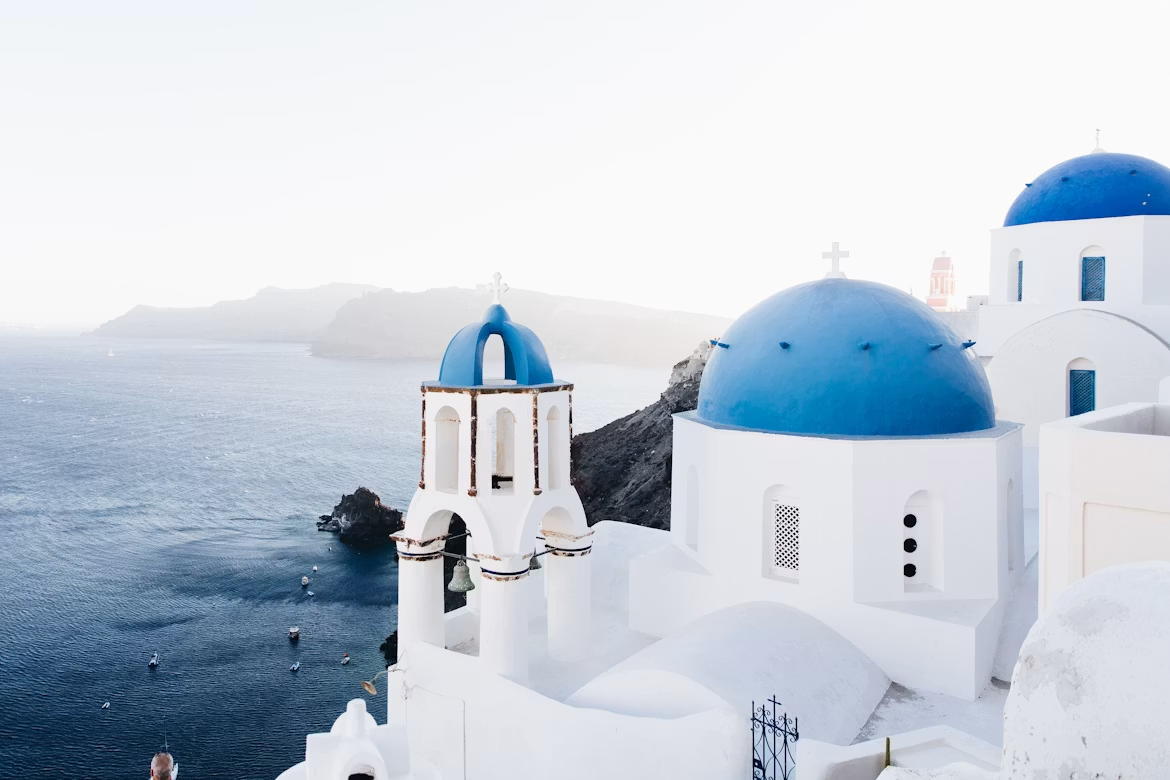
Santorini, Greece is instantly recognizable for its whitewashed cave houses and blue-domed churches perched above a dramatic volcanic caldera. Formed by one of the largest eruptions in recorded history, the island offers some of the most striking sea views in Europe, especially from cliffside towns like Oia, Fira and Imerovigli.
Days here are spent wandering narrow lanes, visiting unique volcanic beaches such as Red Beach and Kamari, or taking a boat trip to the still-active Nea Kameni volcano and nearby hot springs. Evenings are just as memorable, with sunset views from Oia attracting visitors from around the world.
Thanks to its compact size and robust infrastructure, Santorini works perfectly as a 2–3-day stop on an island-hopping itinerary or a standalone luxury escape. Due to high demand, booking caldera-view accommodation well in advance is essential during peak summer months.
Crete
Crete is Greece’s largest and most diverse island, offering a mix of history, landscapes and local culture that feels more like a small country than a single destination. Visitors can explore the ancient Palace of Knossos near Heraklion, hike the spectacular 16km-long Samaria Gorge in the White Mountains, or relax on fabulous beaches like Balos Lagoon and Elafonissi, known for its pink-tinged sand.
The island’s food scene is equally as impressive, with traditional tavernas serving fresh seafood, local cheeses and Cretan wine. Crete’s size means you can combine lively cities such as Chania and Heraklion with quieter mountain villages and remote coastal spots. With international airports in both Heraklion and Chania, it’s also one of the easiest Greek islands to access without transiting via Athens.
Mykonos
Mykonos is best known amongst travelers for its vibrant nightlife, stylish beach clubs and cosmopolitan atmosphere, making it one of the most exciting islands in Greece. By day, visitors can unwind on sandy beaches like Psarou, Paradise and Elia, many of which feature upscale beach bars and crystal-clear waters.
Mykonos Town (Chora) is a highlight in its own right, with its maze of whitewashed streets, boutique shops and iconic windmills overlooking Little Venice. Beyond the party scene, the island also provides cultural experiences such as a short boat trip to the ancient ruins of Delos, one of Greece’s most important archaeological sites. Mykonos is ideal for travelers looking for a lively, high-energy destination with luxury accommodation, fine dining and unforgettable sunset cocktails.
Naxos
Naxos offers a more relaxed Greek island experience, combining beautiful beaches with rich history and traditional village life. The island is best known for its long, sandy coastline — particularly Agios Prokopios and Plaka Beach — which are among the best in the Cyclades but far less crowded than neighboring hotspots.
Naxos Town is dominated by the iconic Portara, a massive marble gateway overlooking the sea, especially impressive at sunset. Inland, you’ll find fertile valleys, mountain villages like Apeiranthos, and ancient sites including the Temple of Demeter.
Naxos is also renowned for its local produce, from cheeses and potatoes to fresh seafood served in family-run tavernas. It’s an excellent choice for travelers who are looking for a balance of beaches, culture and a more laid-back pace, while still being well connected for island hopping.

Sample 10-Day Itineraries
Cyclades
- Days 1–2: Fly into Athens, explore the Acropolis, Plaka and Monastiraki
- Day 3: Ferry from Piraeus to Mykonos
- Days 3–5: Mykonos — beach clubs, Mykonos Town, Delos day trip
- Day 6: Ferry from Mykonos to Paros
- Days 6–7: Paros — Naoussa harbour, Kolymbithres Beach
- Day 8: Ferry from Paros to Naxos
- Days 8–9: Naxos — Portara, Plaka Beach, mountain villages
- Day 10: Fly from Naxos to Athens and connect home
Sample 10-Day Itinerary (Rhodes and Kos)
Perfect for history lovers and beach seekers in the Dodecanese islands:
- Days 1–2: Fly into Athens, explore the Acropolis and historic centre
- Day 3: Flight from Athens to Rhodes
- Days 3–6: Rhodes — medieval Old Town, Lindos, beaches
- Day 7: Ferry from Rhodes to Kos
- Days 7–9: Kos — ancient ruins, cycling routes, sandy beaches
- Day 10: Fly from Kos to Athens and connect home
Sample 10-Day Itinerary (Corfu & Kefalonia)
A scenic Ionian itinerary with lush landscapes and turquoise waters:
- Days 1–2: Fly into Athens, explore key sights and neighbourhoods
- Day 3: Flight from Athens to Corfu
- Days 3–6: Corfu — Old Town, Paleokastritsa, coastal drives
- Day 7: Ferry from Corfu to Kefalonia (via mainland connection)
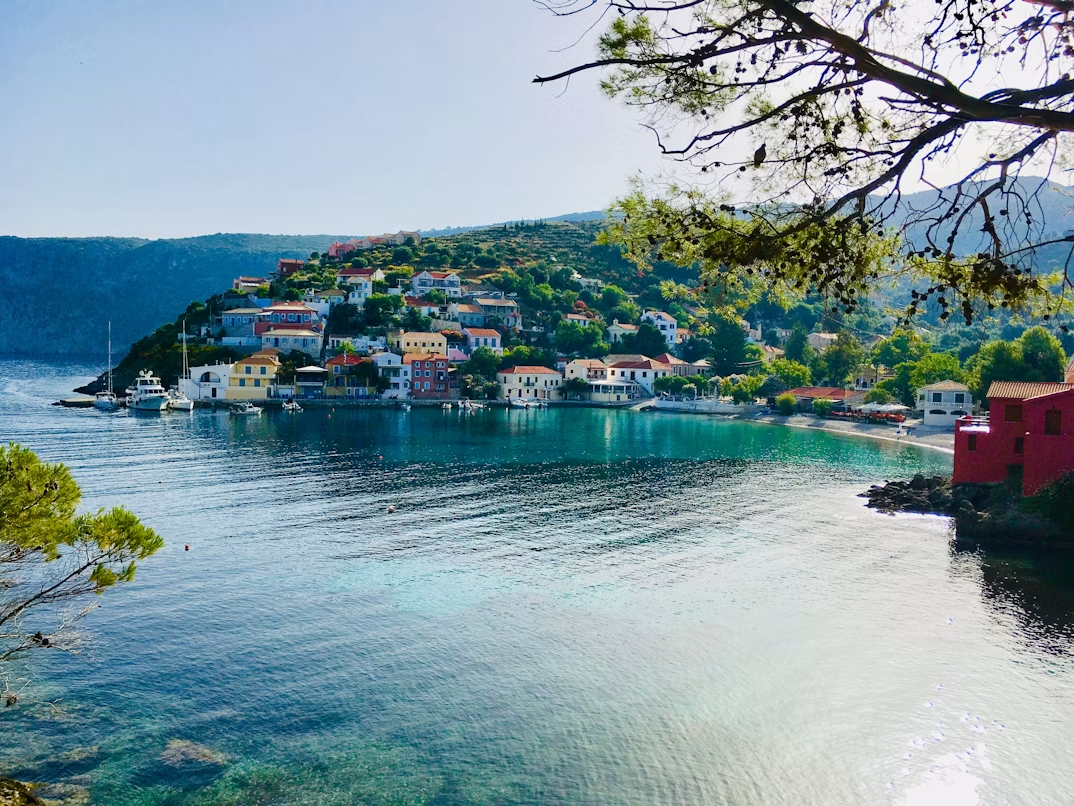
- Days 7–9: Kefalonia — Myrtos Beach, Melissani Cave, Assos village
- Day 10: Fly from Kefalonia to Athens and connect home
For more travel inspiration, please read our 10-Day Greece Island Hopping Itinerary and 5-Day Greece Island Hopping Itinerary. You can also make a bespoke itinerary to suit your travel preferences, with Athens to Crete ferry alternatives and Santorini to Mykonos ferry alternatives.
Frequently Asked Questions
Where is Greece located?
Greece is in southeastern Europe on the Balkan Peninsula, surrounded by the Aegean, Ionian, and Mediterranean Seas, with Turkey to the east and Albania, North Macedonia, and Bulgaria along its northern borders. The country also includes over 6,000 islands and islets, around 200 of which are inhabited, spread across these seas. Its location makes it a natural gateway between Europe, Asia and Africa, influencing its culture, cuisine and history.
How long is the flight to Greece from the US?
Nonstop flights to Athens from the US East Coast take about 10–11 hours. From the West Coast, expect a connection and approximately 15–18 hours of total travel time. Flight durations can vary depending on departure city, airline routing and layover times, with common connections in major European hubs like London, Paris or Frankfurt. Overnight flights are very common, allowing travelers to arrive in Greece in the morning ready to start exploring.
Do I need to fly directly to an island, or can I connect through Europe?
You don't need a direct flight to an island. The most common route is flying into a major European airport, whether it’s Athens, Rhodes or Corfu, then taking a ferry or short domestic flight onward to islands like Santorini or Crete. Many travelers prefer this approach because it offers more flight options, often at lower prices, while also giving them the flexibility to combine multiple islands in one trip.
How do I get from Athens Airport to the ferry port?
The port of Piraeus is about 40–60 minutes from Athens International Airport by metro, bus, or taxi. Ferries to most islands depart from Piraeus. The metro Line 3 provides a direct and reliable connection, while express buses run 24/7 and are a budget-friendly option. Taxis and private transfers are the quickest choice, especially if you have luggage or a tight ferry connection.
What's the best island to visit in Greece for first-timers?
Santorini and Crete are the most popular starting points — Santorini for iconic views and a compact layout, Crete for its size, history, and its vast choice of beaches. Many first-time visitors combine both. Santorini is a perfect destination for shorter stays with dramatic scenery and luxury accommodation, whereas Crete offers more space to explore, including ancient ruins, diverse landscapes and local culture. Choosing between them often depends on whether you prefer a relaxed sightseeing trip or a more varied, activity-based holiday.
Are all-inclusive resorts and vacation packages available in Greece?
Yes. All-inclusive resorts are concentrated in Crete, Rhodes, and Kos, and many operators offer vacation packages bundling flights, transfers, and hotels, which can simplify booking for a first trip.
These packages can provide good value, particularly for families or travelers looking for a hassle-free experience with meals and activities included. However, independent travel remains popular in Greece, especially for island hopping and exploring smaller, less commercial destinations.
Book Your Vacation to Greece
Wherever you live in the US, start planning your trip to Greece and book your ferry tickets today. The holiday of a lifetime starts here.