Take the Scenic Route to Spain with Brittany Ferries
Route Guides
Route Guides


Spain is one of the most popular holiday destinations in Europe, and how you choose to get there matters. From the scenic shores of the Costa del Sol to the wild mountain trails of northern Spain, the country offers an extraordinary range of experiences across diverse landscapes, cultures, and cuisines.
Rather than the stress of airports, baggage restrictions, and cramped seats, Brittany Ferries offers a far more civilised alternative: a direct sailing from the UK or Ireland to northern Spain, where your holiday genuinely starts the moment you step aboard.
Brittany Ferries operates several direct sailings from the UK and Ireland to northern Spain, making it the leading ferry operator for this route. Whether you're departing from Portsmouth, Plymouth, or Rosslare, all routes arrive in either Bilbao or Santander, two convenient gateways to the whole of the Iberian Peninsula.
Brittany Ferries UK sailings to Spain are well-established, with the Brittany Ferries Portsmouth to Bilbao ferry and Portsmouth to Santander ferry crossings being among the most popular long-distance services in Europe. The Plymouth to Santander route provides a shorter crossing time, perfect for those coming from the South West of England. All routes are cruise-style overnight sailings, featuring Brittany Ferries cabins ranging from comfortable en-suite doubles to more spacious suites, along with restaurants, bars, live entertainment, and onboard shops.
| Route | Duration | Sailings | Price (from) |
| Portsmouth to Bilbao ferry | 33 hours and 58 minutes | 2 sailings per week | $65 |
| Portsmouth to Santander ferry | 32 hours and 48 minutes | 2 sailings per week | $65 |
| Plymouth to Santander ferry | 21 hours and 3 minutes | 2 sailings per week | $92 |
Brittany Ferries Ireland to Spain services depart from Rosslare in County Wexford, transporting passengers from the Republic of Ireland to northern Spain without having to stop in England first.
| Route | Duration | Sailings | Price (from) |
| Rosslare to Bilbao ferry | 29 hours and 37 minutes | 2 sailings per week | $72 |
| Rosslare to Santander ferry | 28 hours | 1 sailings per week | $122 |
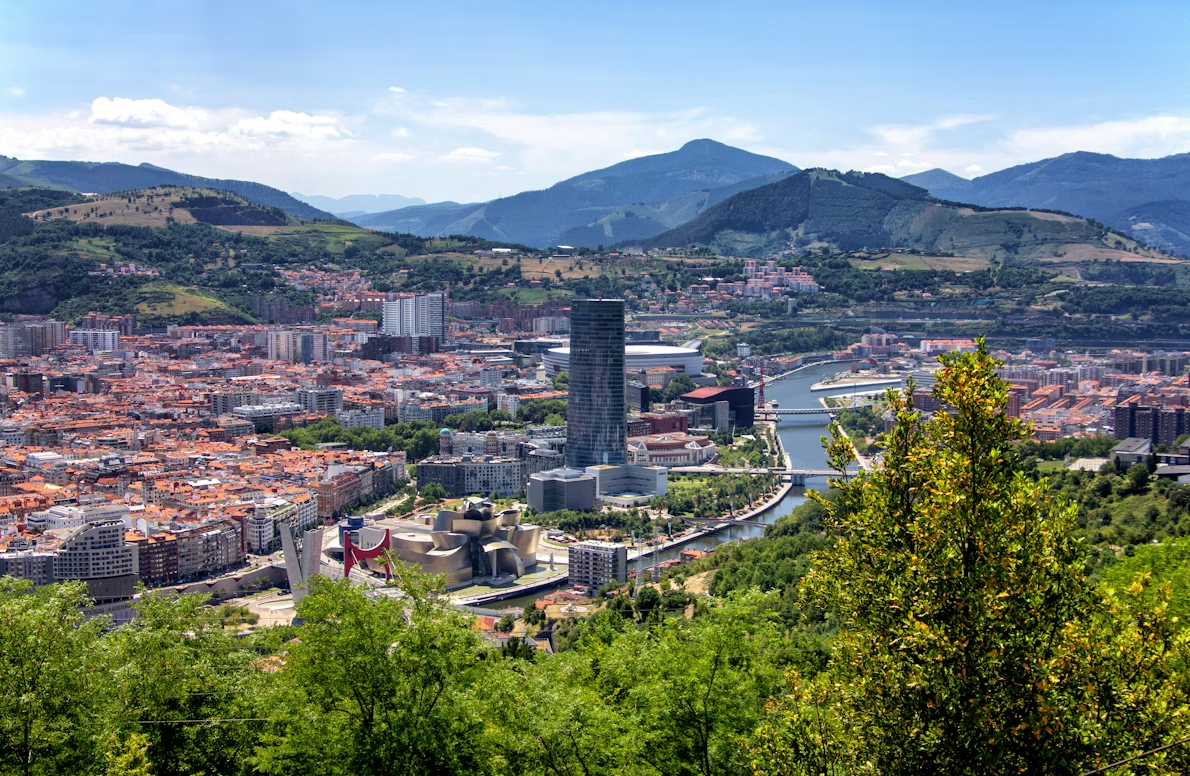
Bilbao and Santander are located approximately 60 miles apart along the northern Cantabrian coast, and both serve as outstanding gateways to the rest of the country. Whether you're planning a city break, a road trip through some of the most spectacular landscapes in Europe, or a pilgrimage along the Camino de Santiago, arriving by ferry drops you in exactly the right place to begin.
Unlike the busier airports of Barcelona or Madrid, the ferry terminals at Bilbao and Santander are relaxed and efficient. Brittany Ferries check-in procedures are very straightforward. You'll receive clear guidance on your arrival time and documentation requirements when you book.
Approaching Bilbao by ferry offers a perspective of Spain that no airport can match. The lush green hills of the Basque Country and the winding Nervión River unfold as the ship docks.
Bilbao is one of Spain’s most captivating cities, largely because it refuses to fit neatly into a single category. Shaped by a strong and independent Basque identity, the city flaunts its heritage with pride. Medieval streets filled with traditional pintxos bars sit just a short walk from striking modern architecture.
The food scene is exceptional, built on fresh local seafood, high-quality olive oil, and the rich pintxos tradition of the Basque Country. Alongside its culinary appeal, Bilbao is also home to many remarkable museums that attract visitors from across the world.
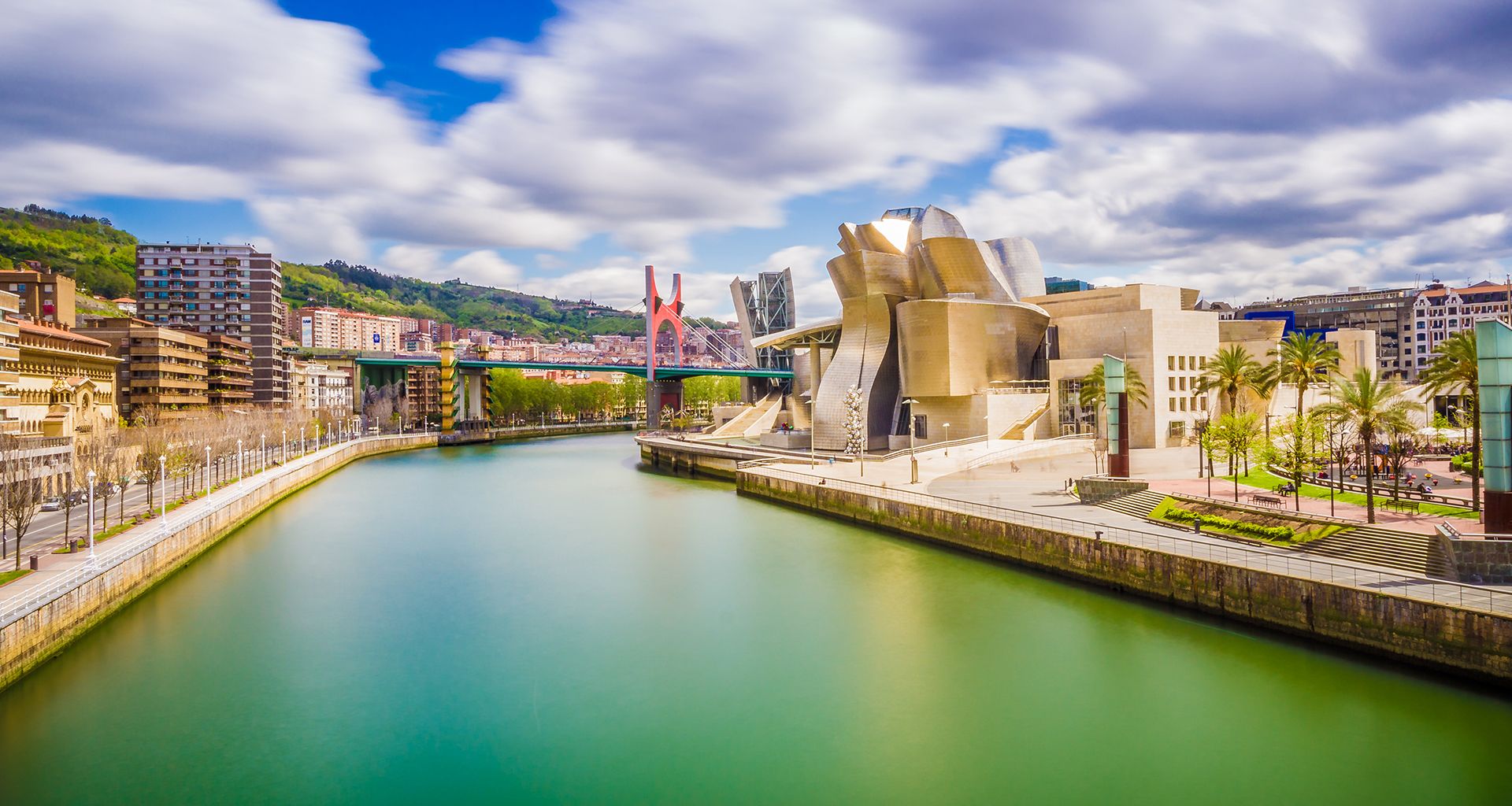
Guggenheim Museum
The Guggenheim Museum is one of the most iconic buildings of the modern era. Designed by Frank Gehry, its striking titanium exterior overlooks the waterfront. Visit early in the day to appreciate the architecture in the morning light, then explore its impressive collection of modern and contemporary art.
Old Town (Casco Viejo)
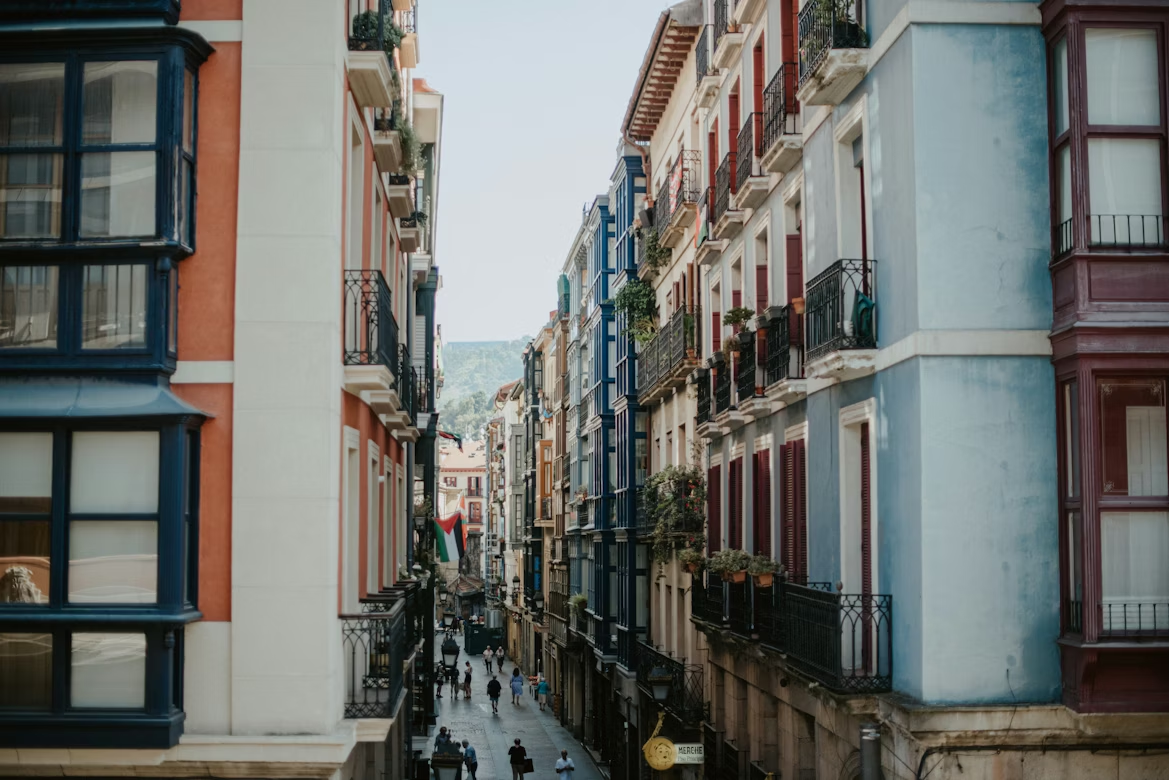
Bilbao’s Old Town offers a rich contrast to the city’s modern landmarks. This historic area is made up of narrow streets, independent shops, and traditional pintxos bars. Take time to wander through the Seven Streets and experience the authentic character of the Basque Country.
Mercado de la Ribera
Mercado de la Ribera is one of the largest covered markets in Europe and a highlight for food lovers. Visitors can explore a wide variety of fresh seafood, local cheeses, seasonal produce, and high-quality olive oil. It provides an excellent introduction to the region’s renowned culinary traditions.
Mount Artxanda
For panoramic views of the city, take the historic Artxanda Funicular to the summit of Mount Artxanda. Operating since 1915, it offers an easy and scenic journey. From the summit, you can enjoy sweeping views of Bilbao and the surrounding landscape.
Vizcaya Bridge
The Vizcaya Bridge is a UNESCO World Heritage Site and a remarkable feat of engineering. It is the oldest transporter bridge in the world and has connected Getxo and Portugalete since 1893. Visitors can cross by gondola or walk along the upper level for impressive views of the river and coastline.
Bilbao's position in northern Spain makes it an ideal starting point for a road trip through some of the country's finest cities and landscapes. San Sebastian is barely an hour away, and Madrid is easily reachable in a day's drive.
| Destination | Approximate distance | Approximate driving time |
| Santander | 65 miles | 1 hour 15 minutes |
| San Sebastian | 60 miles | 1 hour 15 minutes |
| Picos de Europa National Park | 115 miles | 2 hours 30 minutes |
| Zaragoza | 190 miles | 3 hours |
| Madrid (Plaza Mayor) | 250 miles | 4 hours |
| Barcelona (Sagrada Família) | 380 miles | 6 hours |
| Valencia | 385 miles | 6 hours 15 minutes |
| Alicante | 450 miles | 7 hours |
| Seville | 560 miles | 8 hours 30 minutes |
| Malaga (Costa del Sol) | 580 miles | 8 hours 45 minutes |
Located along Spain’s Cantabrian coastline, Santander is an elegant and relaxed seaside city that rewards visitors who take the time to explore it fully. Unlike many of Spain’s more touristy destinations, Santander has preserved a strong local character.
Visitors will discover wide sandy beaches, impressive Belle Époque architecture, excellent tapas bars, and a genuine sense of civic pride. Speaking a little Spanish can enhance the experience and help visitors connect more easily with the local culture.
Whether you plan to spend a long weekend before heading further afield, or you're using Santander as the starting point for a road trip south to the Costa del Sol or east towards the Basque Country and San Sebastian, the city offers more than enough to justify staying a while.
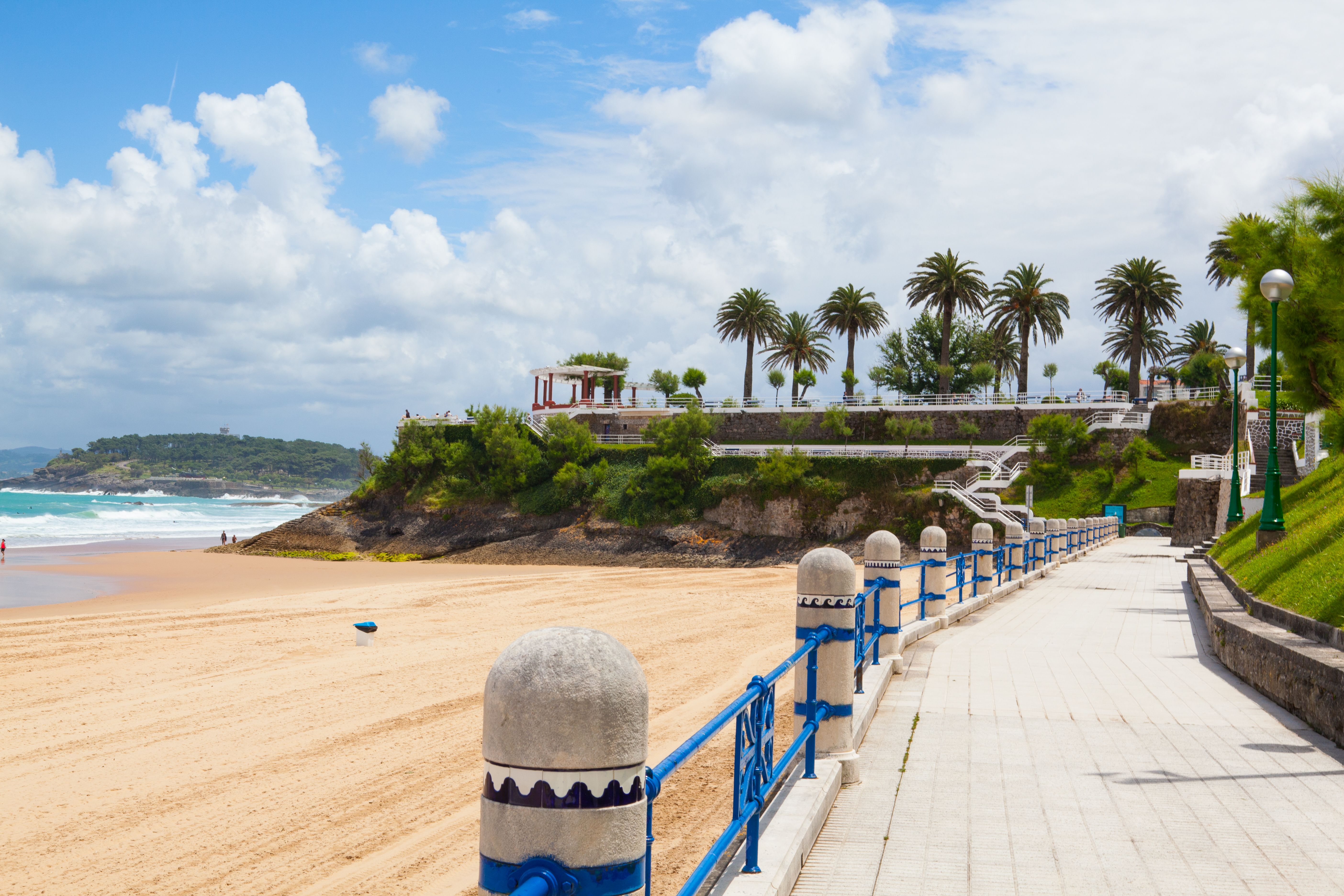
El Sardinero Beach
El Sardinero Beach is the most famous stretch of coastline in Santander, known for its wide expanse of golden sand and elegant seafront promenade. Even during the summer months, the beach feels spacious and relaxed. Visitors can enjoy views of the Cantabrian Sea, with rolling waves and distant hills completing the scenery.
Magdalena Peninsula
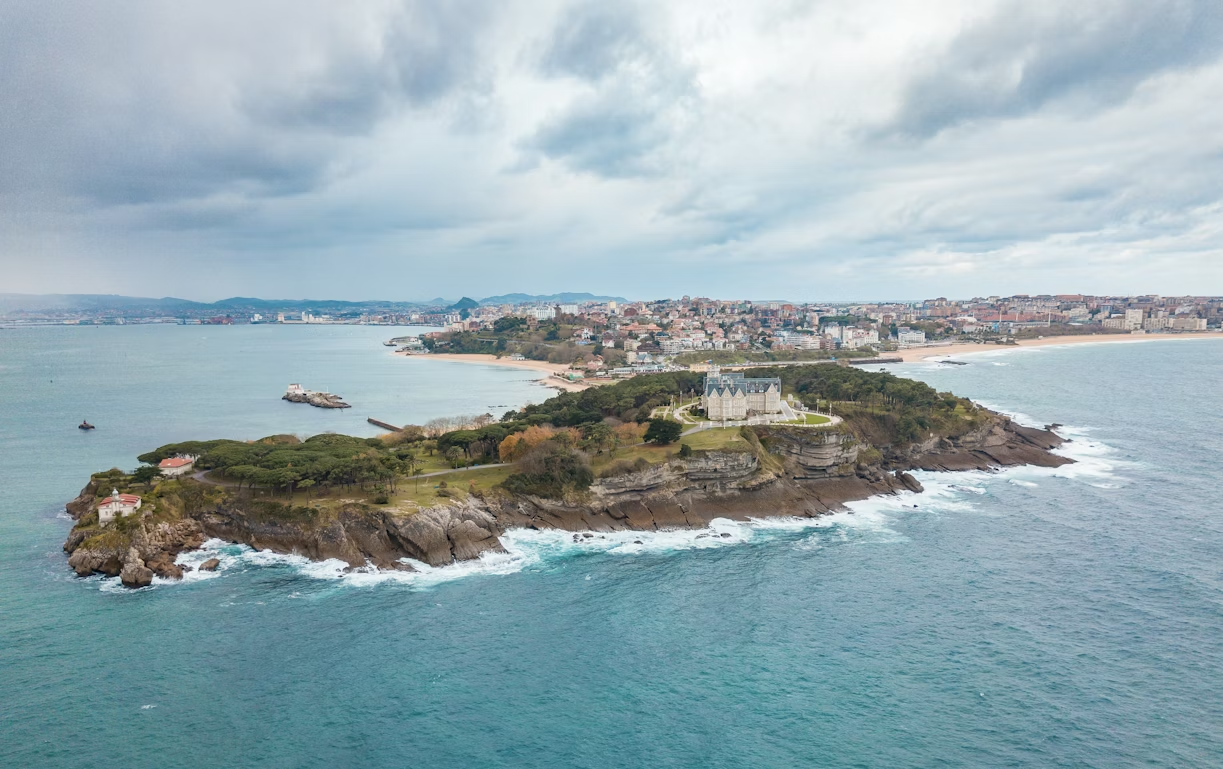
The Magdalena Peninsula is one of Santander’s most attractive green spaces. At its core stands the Magdalena Palace, originally built as a summer residence for King Alfonso XIII. The area features quiet beaches, coastal walking paths, and some of the best panoramic views of Santander Bay.
Museo Marítimo del Cantábrico
The Museo Marítimo del Cantábrico provides an in-depth look at the marine life and maritime history of the region. The museum consists of four floors and includes aquariums with local species. One of its most notable highlights is a 20-meter fin whale skeleton, making it a popular attraction for families and visitors of all ages.
Centro Botín
Centro Botín is a leading cultural venue dedicated to contemporary art. Designed by architect Renzo Piano, the building extends over Santander Bay and features modern exhibition spaces. Visitors can also access a rooftop terrace that offers impressive views across the city and coastline.
Mercado de la Esperanza
Mercado de la Esperanza is a historic market that showcases the best of local produce. Inside, visitors will find fresh seafood, anchovies, regional cheeses, and other Cantabrian specialties. The market is an excellent place to experience local food culture and get your hands on some high-quality ingredients.
Aside from being such a beautiful city, Santander is also conveniently located for anyone heading to the Picos de Europa National Park and the pilgrim trail of the Camino de Santiago, both of which are within easy driving distance, making it one of the most versatile starting points for a Spanish road trip.
| Destination | Approximate distance | Approximate driving time |
| Bilbao | 65 miles | 1 hour 15 minutes |
| San Sebastian | 125 miles | 2 hours 15 minutes |
| Picos de Europa National Park | 70 miles | 1 hour 45 minutes |
| Santiago de Compostela (Camino de Santiago) | 225 miles | 3 hours 30 minutes |
| Zaragoza | 245 miles | 4 hours |
| Madrid (Plaza Mayor) | 280 miles | 4 hours 30 minutes |
| Barcelona (Sagrada Família) | 440 miles | 7 hours |
| Valencia | 390 miles | 6 hours 30 minutes |
| Alicante | 470 miles | 7 hours 30 minutes |
| Seville | 560 miles | 8 hours 30 minutes |
| Malaga (Costa del Sol) | 590 miles | 9 hours |
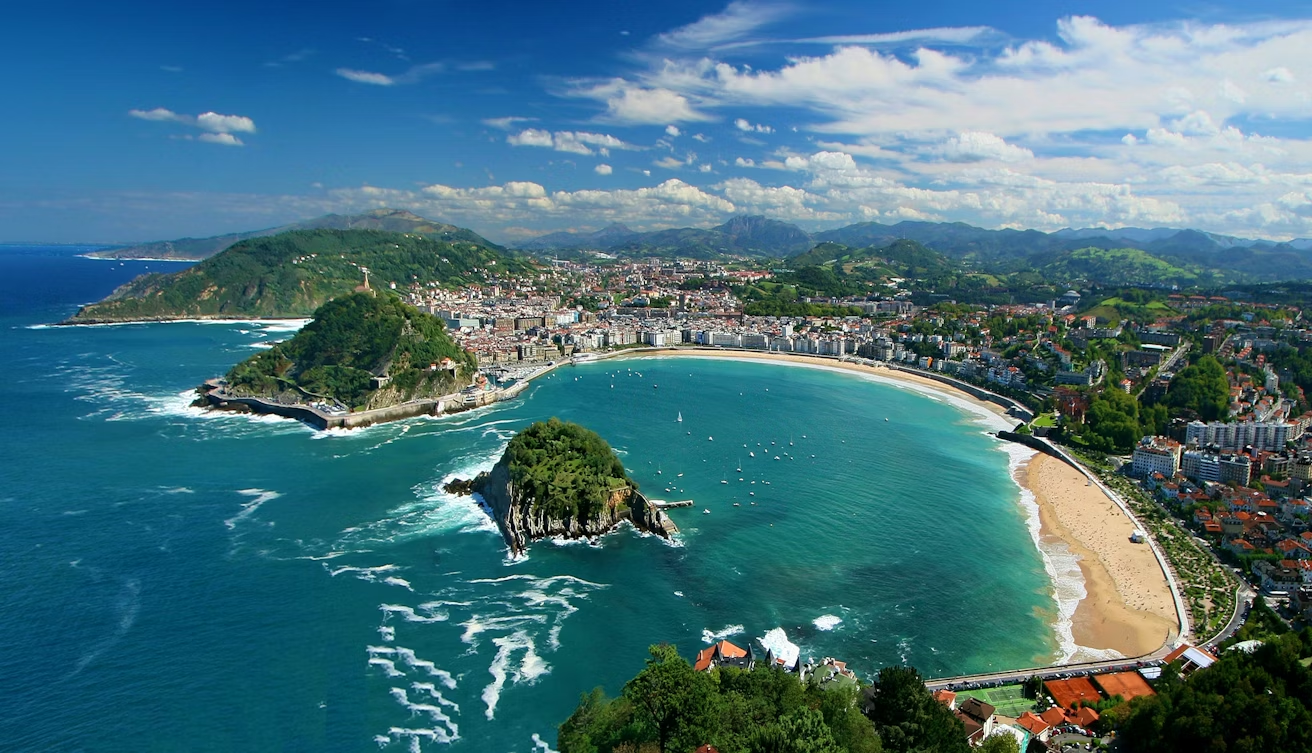
Northern Spain is only the starting point. Both Bilbao and Santander are ideally located for extended road trips across the country, providing easy access to Spain’s diverse landscapes, cultures, and experiences.
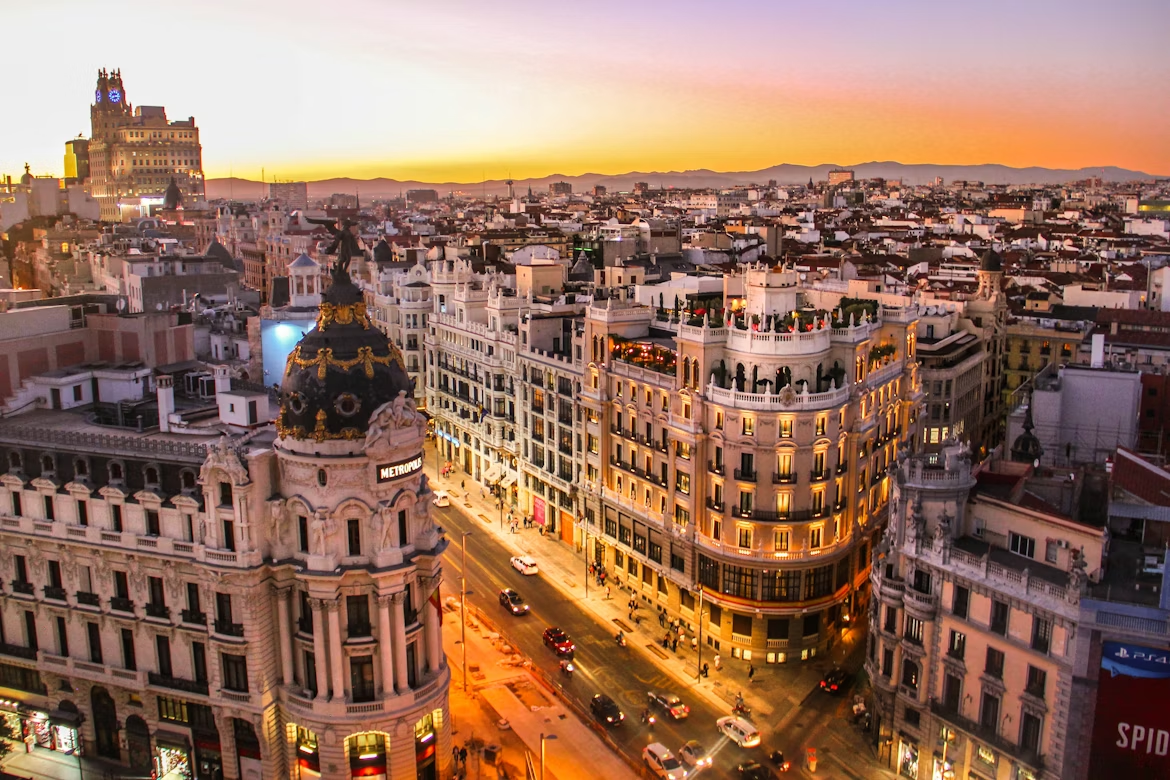
Traveling south, the scenery gradually changes from the lush Atlantic coastline to the wide plains of Castile, before reaching the mountainous regions of Andalusia and the Mediterranean coast. Madrid, located at the heart of Spain, is known for landmarks such as Plaza Mayor and its historic art museums, making it an excellent base for exploration.
Further east, Barcelona attracts millions of visitors each year, many drawn to the remarkable Sagrada Família, a masterpiece that has been under construction for over a century.
For a different experience, heading west from Santander along the northern coast toward Santiago de Compostela follows sections of the historic Camino de Santiago pilgrimage route. Within a short drive of both ferry ports, the Picos de Europa National Park offers some of Europe’s most striking natural scenery, with dramatic gorges and limestone peaks.
If your journey takes you further south to the Costa del Sol, or if you plan to continue to Gran Canaria or other parts of the Canary Islands, arriving by ferry gives you the advantage of traveling with your own vehicle. This allows you to explore at your own pace and stop wherever you please along the way.
Planning ahead: Spain is a large country, and distances between cities can be greater than they appear on a map. Allow enough time to enjoy the journey, as the drive itself is an important part of the overall experience.
While flying to Spain is undoubtedly the fastest option, the overall travel experience can be more complex than it first appears. Transfers, airport queues, baggage limits, and onward travel from the airport to your accommodation can all add time and inconvenience.
Traveling by ferry offers a straightforward and comfortable alternative. For many travelers, it has become a preferred way to reach Spain, combining convenience with a more relaxed and flexible journey. Here are some of the benefits of taking the ferry to Spain:
Compared to short-haul air travel, traveling to Spain by ferry produces significantly fewer CO₂ emissions per passenger. Ferries transport large numbers of people and vehicles simultaneously, and modern vessels are increasingly designed with fuel efficiency and environmental sustainability in mind. If reducing your carbon footprint matters to you, the ferry is the more responsible choice.
All Brittany Ferries routes to Spain allow you to bring your car, campervan, or motorhome onboard. You drive onto the ship in the UK or Ireland and drive off in Spain, ready to go wherever you choose. No car hire queues, no hidden insurance charges, no unfamiliar vehicles. Just your own car and an open road stretching south through some of the most beautiful landscapes in all of Europe.
Airlines impose strict baggage allowances, and exceeding them is an expensive mistake. Ferry travel, particularly when you're taking your own vehicle, is refreshingly different. There are no weight limits on what you pack in your car, no extra charges for a pushchair or a surfboard, and no anxious re-packing at the check-in desk.
For pet owners, the ferry is often the only practical option for a European holiday. All Brittany Ferries Spain routes allow passengers to bring dogs and other pets, with pet-friendly cabins or kennels available depending on the vessel. Please read our guidelines for taking pets on a ferry.
Perhaps the most persuasive argument for the ferry is simply this: it is a better experience. Wave goodbye to cramped seats, 100ml liquid restrictions, and 45-minute baggage reclaim. Instead, you have a comfortable cabin, excellent restaurants, duty-free shopping, live entertainment, and the open sea. The crossings to Spain from Portsmouth and Plymouth are long enough to feel genuinely restorative, a peaceful interlude between the rush of home and the pleasure of arriving in Spain.
Ready to start planning your Spanish adventure? Compare crossings, sailing times, and prices across all Brittany Ferries routes from the UK and Ireland.