The 2026 FIFA World Cup: Everything You Need to Know
Events & Festivals
Events & Festivals


The 2026 FIFA World Cup is set to reshape global sporting events, bringing together fans from across the world in a historic tournament hosted by the United States, Canada, and Mexico. With mammoth stadiums, a new expanded format, and worldwide anticipation, this tournament promises to be unlike anything the footballing world has seen before.
For the first time in the competition’s history, three nations will co-host the world's most-watched sporting event. Spanning across two continents and dozens of cities, 48 teams from every corner of the globe will battle it out for the top prize in what promises to be an incredible spectacle. From the sun-soaked boulevards of Los Angeles to the electric atmosphere of Mexico City and the iconic pitches of SoFi Stadium, football's greatest celebration is coming to the Americas.
The tournament kicks off on June 12 and concludes with the World Cup final on July 19, spanning five weeks of continuous football drama. During that period, 48 teams will compete in what promises to be the most expansive and electrifying World Cup in history. This edition introduces a ground-breaking expansion from 32 to 48 teams, enabling more nations, including emerging sides like Bosnia and Herzegovina, to set foot on football's biggest stage for the very first time.
The enlarged roster means more matches and thus more moments of magic. Fans will be spoilt for choice, with 104 games available to watch. The opening fixture on June 12th is expected to draw a global television audience in the hundreds of millions, setting the tone for a tournament that will captivate the world right through to the final whistle on July 19th.
The host nations — the United States, Canada, and Mexico — will share responsibilities across 16 epic venues. The United States will host the lion’s share of matches, with cities including Los Angeles, New York/New Jersey, Dallas, San Francisco, Miami, Seattle, Boston, Kansas City, and Philadelphia all playing their part. Canada contributes Toronto and Vancouver, while Mexico brings the passion of Mexico City and the electric atmosphere of Guadalajara to the tournament.
Los Angeles is expected to be one of the centrepieces of the entire event. With Sofi Stadium — one of the most technologically advanced arenas in the world — set to host some of the biggest fixtures, the city will further solidify its reputation as a global sporting capital. Sofi Stadium, home of the NFL's Los Angeles Rams and Chargers, has a seating capacity of more than 70,000 and a retractable roof, making it perfectly suited to the grandeur of the competition.
Mexico City will bring its own unique footballing energy. The Estadio Azteca, best known for hosting the 1970 and 1986 World Cup finals, will once again welcome the world's best players onto its hallowed turf. These locations will collectively serve as hubs for fans traveling from across the globe, each providing a distinctive cultural experience alongside the football.
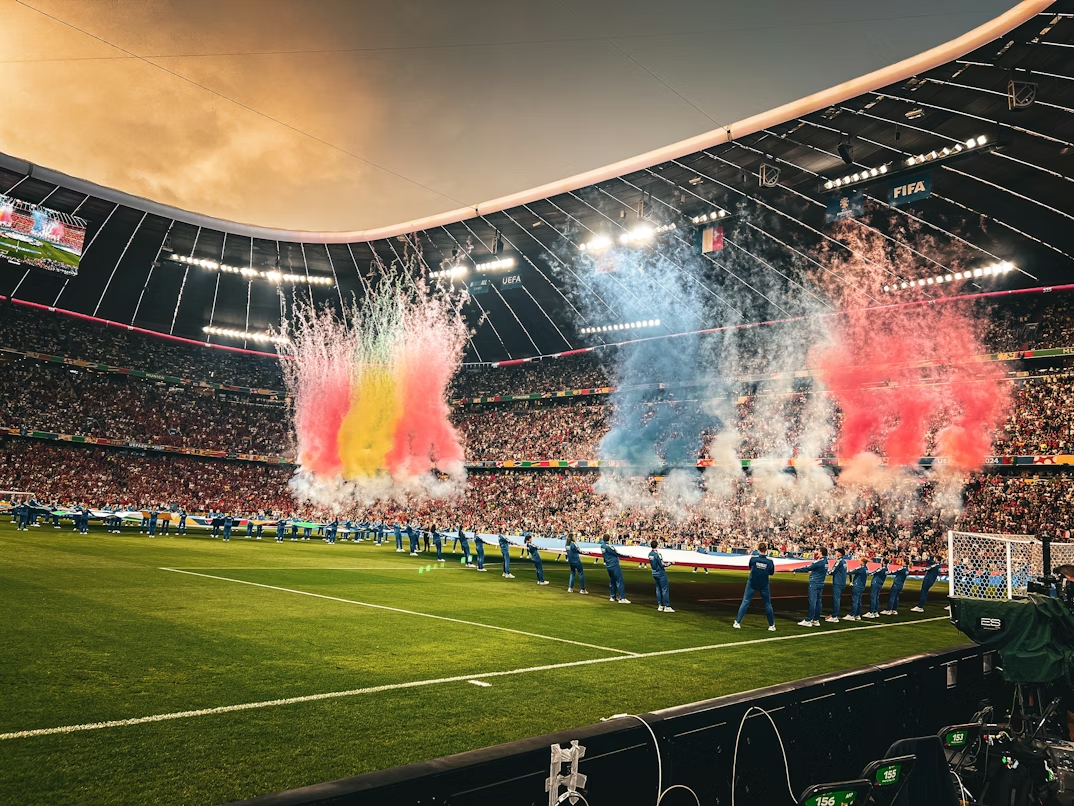
The expanded format introduces 48 teams split into 12 groups of four, where group stage matches will determine which nations are good enough to progress to the knockout rounds. The top two teams from each respective group will advance automatically to the Round of 32, along with eight of the best third-place finishers from across the groups, creating a more competitive and genuinely inclusive tournament than any previous edition.
This restructuring also means every group stage match is high stakes. Unlike previous tournaments, whereby the final group stage round could often be a formality, the new format ensures that teams must fight for every point. Group stage matches are subsequently expected to be fiercely contested, with nothing taken for granted.
The road to qualification has already started, with the 2026 FIFA World Cup qualification process intensifying across every continent. Fans are closely following the FIFA World Cup 2026 qualifiers table to see which teams will secure their places, with CONMEBOL, UEFA, CAF, AFC, CONCACAF, and OFC competitions all producing dramatic qualifying campaigns. The expanded 48-team allocation means that confederations such as Africa and Asia have been given additional spots, giving more football nations a chance at getting their hands on the coveted trophy.
Expect powerhouse nations and rising stars to dominate headlines throughout the tournament. Established football giants like Brazil, Argentina, France, England, Germany, and Spain will come face-to-face with ambitious underdogs, while each men's national team arrives with something to prove on the global stage.
The expanded 48-team format means that nations previously excluded from the World Cup will make their highly anticipated debuts. Bosnia and Herzegovina, for instance, represent the kind of emerging footballing nation that will benefit most from the new format, bringing passionate supporters and gifted players onto the world stage. Meanwhile, seasoned stars who are approaching the twilight of their careers will be eager to add a World Cup winner's medal to their collection before their time runs out.
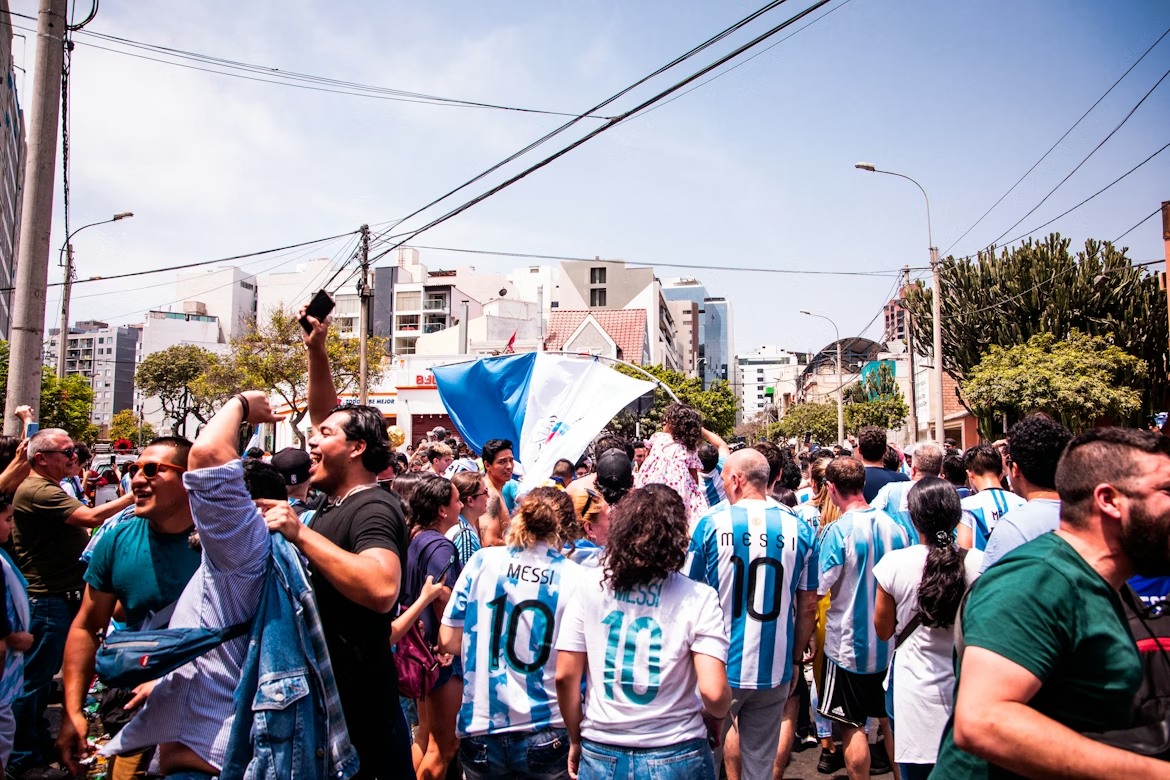
This year’s tournament will be one of the largest sporting events ever hosted anywhere on earth, with an economic impact projected to run into the tens of billions of dollars across the three host nations. The tourism boost alone is expected to be staggering, with millions of visiting fans accumulating revenue for hotels, restaurants, transport operators, and local businesses in every host city.
Investment in infrastructure across the United States, Canada, and Mexico has already begun in readiness for the tournament. Stadiums have been upgraded, transport links improved, and public spaces transformed to accommodate the influx of visitors. Previous tournaments, such as South Africa 2010, highlighted the lasting legacy these events can have on host nations — from improved facilities to elevated international profiles.
Beyond its economic significance, the tournament is expected to have a substantial cultural impact. It will bring together fans from around the world in the diverse and multicultural cities of North America, from the vibrant, Latino-influenced atmosphere of Los Angeles and Mexico City to the cosmopolitan energy of Toronto. This will create a distinctive celebration of global community through sport.
Demand for World Cup tickets is expected to be extraordinarily high, with millions of fans across the globe competing for a finite number of seats in stadiums. FIFA's ticketing process will involve multiple ballot phases, and fans are strongly urged to register their interest as early as possible. World Cup tickets for marquee fixtures, especially the semi-finals and the World Cup finals, will undoubtedly be among the most desirable sporting tickets in history.
Fans are urged to plan comprehensively, not only for matchdays but also for travel and accommodation across the three host nations. The multi-country format provides an exciting opportunity for visitors to experience multiple cultures within a single tournament. A fan could realistically watch a group stage match in Canada, travel south to watch a knockout fixture in Los Angeles, and then cross into Mexico for a later round tie, all within the same fortnight.
There is also expected to be dedicated fan zones in every host city, providing big-screen viewing, food and entertainment for the millions of supporters who attend the tournament without match tickets. These fan parks will be as much a part of the experience as the games themselves.
Please note that ferries are also a popular use of transport in LA, especially from San Pedro to Two Harbors and San Pedro to Avalon, both available with Catalina Express. For more advise on getting around, please read our guide for the top tips and tricks for international travel.
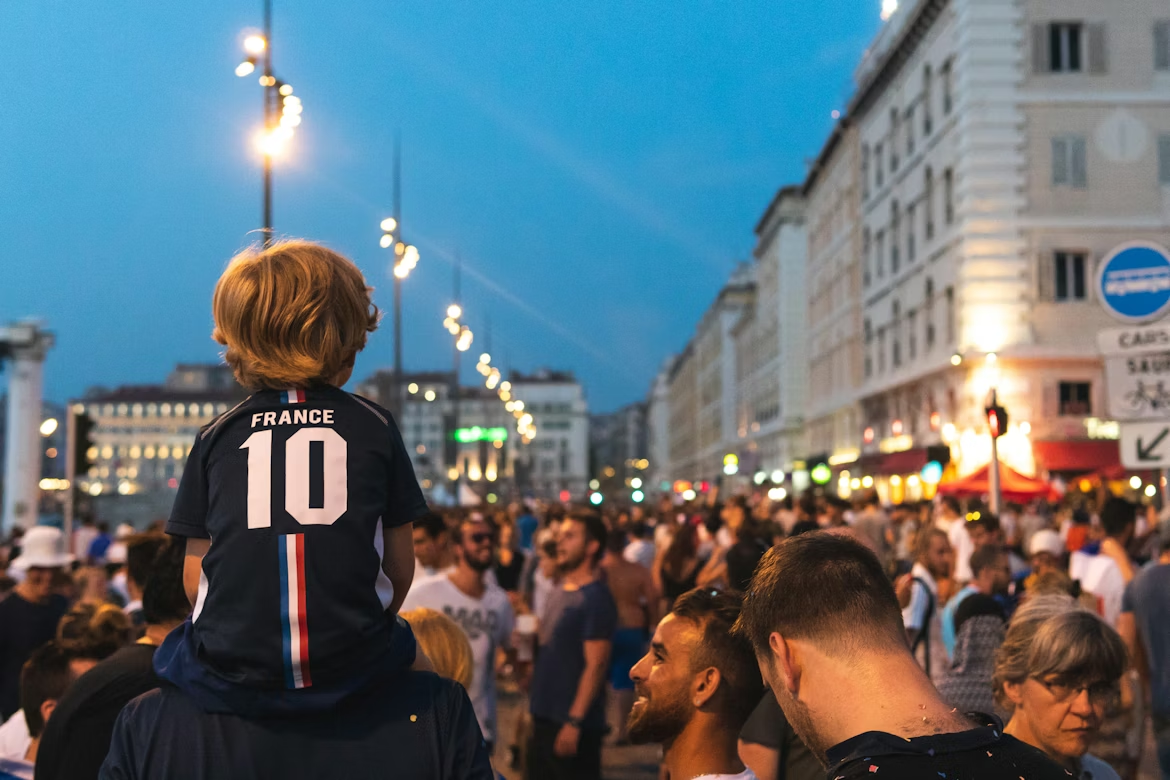
Although nobody has a crystal ball to predict outcomes with any certainty, traditional football powerhouses are widely expected to be among the strongest contenders. Brazil and Argentina, backed by decades of pedigree, will carry the hopes of South America. France, the reigning 2018 champions, currently has one of the most impressive squads in world football. England, Germany, Spain, and Portugal will all arrive harbouring hopeful ambitions of lifting the trophy.
However, the expansion to 48 teams certainly increases the likelihood of memorable upsets and surprises, making this tournament one of the most unpredictable in recent history. With more group stage matches comes more opportunity for unfancied sides to gain momentum and build confidence. Countries from Africa and Asia, now given additional qualifying spots, could spring some of the biggest shocks.
The host nation, the United States, will also carry huge expectations given that they are playing on home soil. With a rapidly growing footballing culture and an increasingly talented pool of professional players, including the likes of Christian Pulisic, the US men's national team will have the backing of tens of thousands of passionate home fans at venues like SoFi Stadium — a notable advantage that should never be overlooked at a major tournament.
Kick-off times are expected to vary depending on location and broadcast requirements, though many matches hosted in the United States will likely fall within afternoon and evening slots in PST, making them accessible to both local and international audiences. Games in Los Angeles at SoFi Stadium, for example, may kick off as early as midday local time to accommodate European broadcast windows, or as late as 8 pm PST for domestic audiences.
Fans can celebrate the tournament in various ways, including attending matches, hosting viewing gatherings, or traveling between host cities across the United States, Canada, and Mexico. Careful planning is essential due to the high demand for accommodation and transportation. It is advisable to book flights and hotels as early as possible, ideally once the host city fixtures are confirmed. Even without tickets, supporters can still enjoy the atmosphere in official fan zones, which typically feature large screens, live entertainment, and a vibrant festival environment.
Travel between venues will involve a variety of domestic flights, trains, and road transport. Given the vast geography of the three host nations, careful planning is necessary to travel between destinations like Los Angeles and Mexico City, or between US and Canadian venues.
Domestic flights will be the preferred choice for long-distance travel between host cities, so booking early is critical. Meanwhile, coaches and rail services will serve shorter routes and connections within the same region. However, ferries are also popular in Los Angeles, especially from Long Beach and Dana Point.
Favorites usually include historically strong nations with experienced squads and proven tournament pedigree, such as Brazil, France, Argentina, Spain and England. However, the expanded format of 48 teams increases the likelihood of unexpected outcomes, allowing emerging nations to challenge traditional powers deep into the knockout stages. Additional factors, including the home advantage for the United States, the physical demands of traveling across three countries, and the high number of group stage matches, make it difficult to predict an outright winner.
A total of 48 teams will qualify for the competition, making it the largest World Cup in history. UEFA will have the largest allocation with 16 spots, while Africa and South America have both received increased allocations under the new format. The expanded field of 48 teams means that nations from every confederation now have a more realistic path to qualification than ever before.
Teams qualify through regional competitions organized by their respective confederations, including UEFA in Europe, CONMEBOL in South America, CAF in Africa, AFC in Asia, CONCACAF in North and Central America, and OFC in Oceania. Performance in these tournaments and qualifying leagues determines which nations secure a place among the final 48 teams. The host nations, the United States, Canada, and Mexico, qualify automatically as co-hosts, which creates additional opportunities within their respective confederations' qualification pathways.
The 2026 FIFA World Cup qualification process has already delivered high drama, and the excitement will only snowball as the group stage matches get underway. Whether you're a lifelong fan tracking every result on the FIFA World Cup 2026 qualifiers table or a newcomer experiencing the magic for the very first time, this is a sporting event that will live long in the memory.