From Haaland to the Highlands: Norway's Moment in the Limelight
Things to do
Things to do

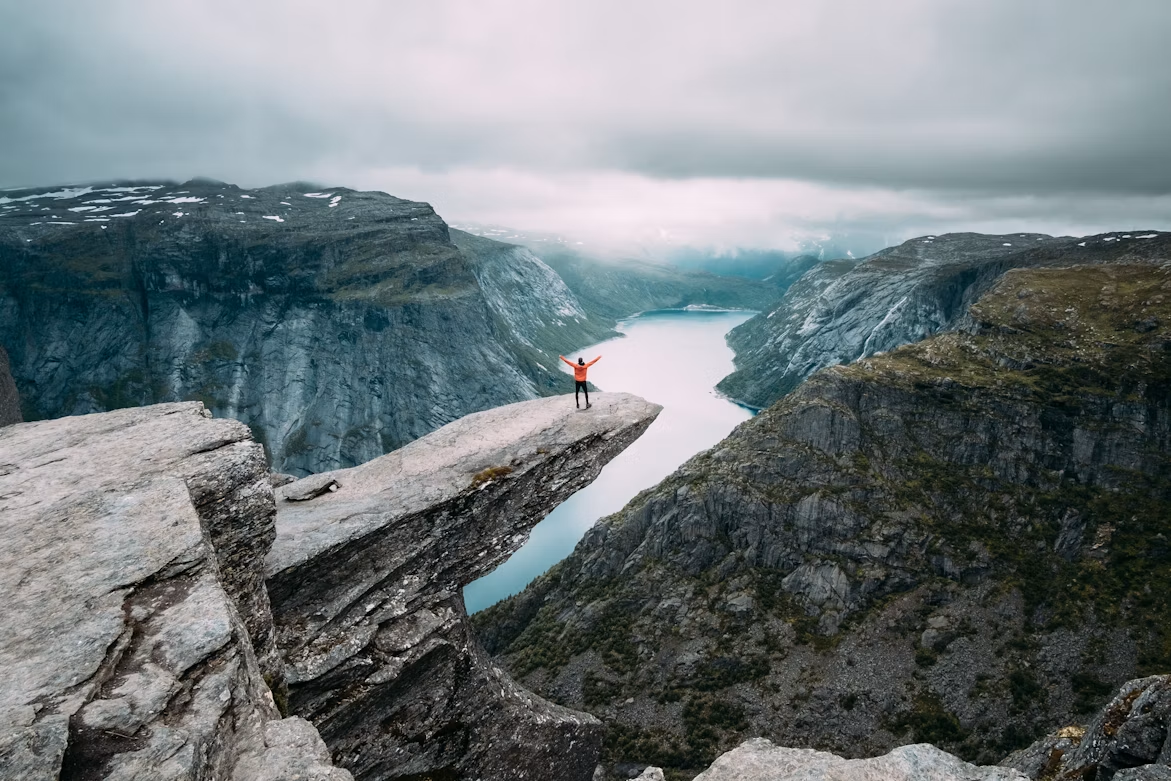
Erling Haaland has not only won the hearts of his own nation but also spectators from all around the world after his performance at the 2026 FIFA World Cup. Norway's marksman scored seven goals as Ståle Solbakken's side reached the quarterfinals in their first World Cup appearance in twenty-eight years. And the country's return to football's biggest stage did something no tourism campaign could manage on its own: it put Norway back on the map for millions of casual viewers who had never given the country much thought beyond fjords and flat-pack furniture.
Search interest in Norway holiday packages 2026 has climbed steadily since the first whistle, and it's easy to see why — a nation of 5.5 million people producing the tournament's most beloved striker has a way of making its landscapes and its coastline suddenly feel like essential viewing. If Haaland's summer sent you down a rabbit hole of fjord photos at 1 am, you're in good company, and this guide is for everyone now planning their next holiday around it.
There's a certain thrill that comes with crossing the Arctic Circle, the invisible line at 66°33′N where the ordinary rules of daylight stop applying for part of the year. In Norway, you can cross it by train, by coastal ferry, or aboard classic Hurtigruten-style voyages that mark the moment with an onboard ceremony, half gimmick and half genuine rite of passage.
North of the line, the landscape transforms into something wild, where you will find reindeer herds beside the road, picturesque fishing villages and eventually Svalbard, the Norwegian archipelago where polar bears reportedly outnumber people, and the town of Longyearbyen sits closer to the North Pole than to Oslo.
Operators such as Arctic Direct now build itineraries around this crossing, packaging Arctic Circle luxury holiday packages for 2026/2027 that combine husky sledding, glacier hikes, and nights in glass-roofed cabins built for sky-watching. If it's on your bucket list, we recommend looking into Arctic holidays and northern lights tours early, as the best cabins with unobstructed views tend to sell out months before forecasts turn favorable.
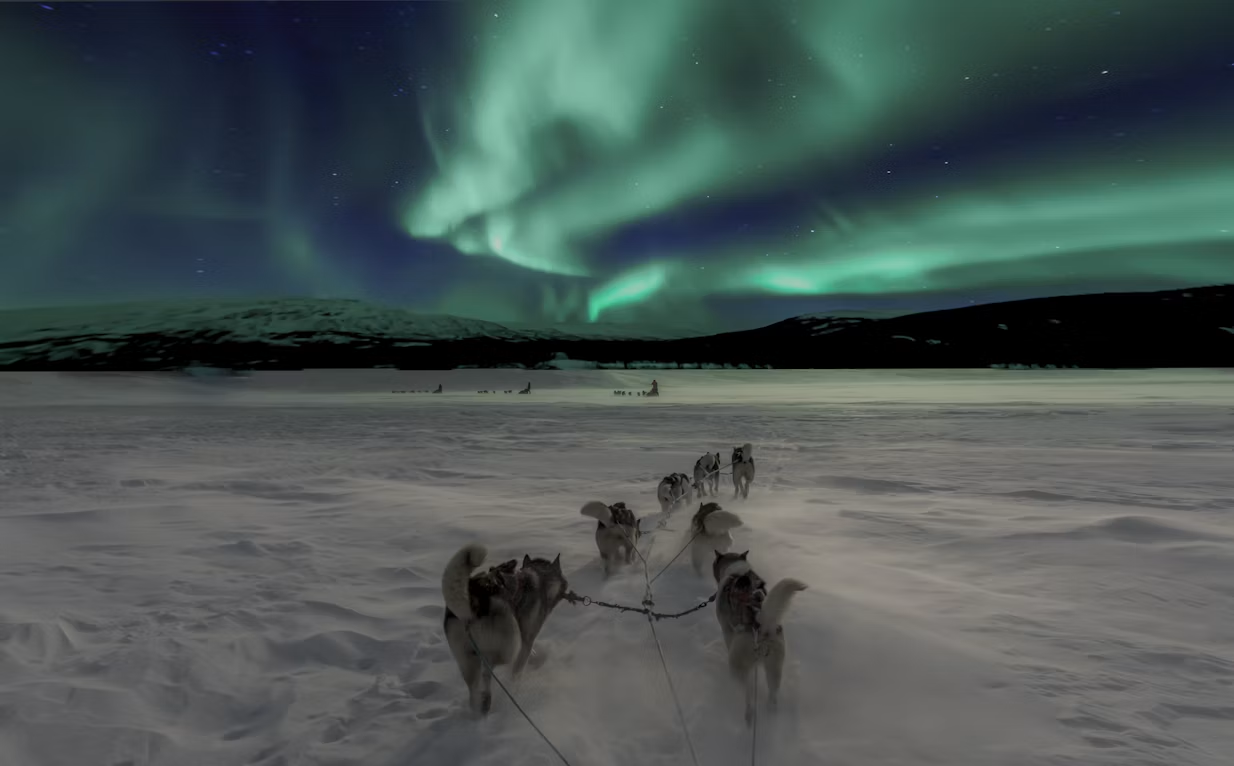
Norway runs on two extremes of light, and both are reasons to visit. Between May and late July, much of the country experiences the midnight sun, a stretch where the sun never fully descends below the horizon, and towns like Tromsø and Bodø stay illuminated at 2 am as though someone forgot to switch the light off. Locals eat dinner outdoors at midnight, and hiking trails stay busy well past a reasonable bedtime. It sounds disorienting at first, but in practice, it's one of the most euphoric things a holiday can offer.
During the winter months, Norway offers a completely different kind of natural spectacle. The best time to plan a northern lights holiday is between late September and March, when extended hours of darkness and clearer skies in the north create ideal conditions for viewing the aurora borealis in all its glory.
Tromsø is widely regarded as the most accessible and dependable base for northern lights experiences. From here, guided tours regularly depart as soon as forecasts indicate strong aurora activity, taking visitors beyond urban light pollution to maximize visibility.
No matter which season you decide to visit, Norway never fails to deliver memorable light displays—whether under the midnight sun or beneath the dancing colors of the northern lights.
If you were to ask ten Norwegians for the best places to visit in Norway, you'll likely receive ten different answers, which is part of the fun of planning a trip to this marvelous country. Oslo is the natural starting point for any vacation to Norway. This modern, design-led capital combines cultural landmarks with easy walkability, allowing visitors to experience highlights such as the Munch Museum, Vigeland Sculpture Park, and the city’s increasingly popular harborside sauna culture within a relatively small area. On match days, Ullevaal Stadion comes alive as home to the Norway national football team, adding a lively local atmosphere to the city.
From Oslo, most travel itineraries continue west to Bergen, a historic coastal city known for its steep hillsides, wooden houses, and scenic harbor. Often described as the gateway to Norway’s fjords, Bergen is home to the UNESCO-listed Bryggen wharf, known for its striking facades that have become one of the country’s most recognizable images.
The city also serves as a key departure point for fjord cruises and ferries, where you can experience some of Norway’s most incredible scenery. Here are some of the most popular ferry routes:
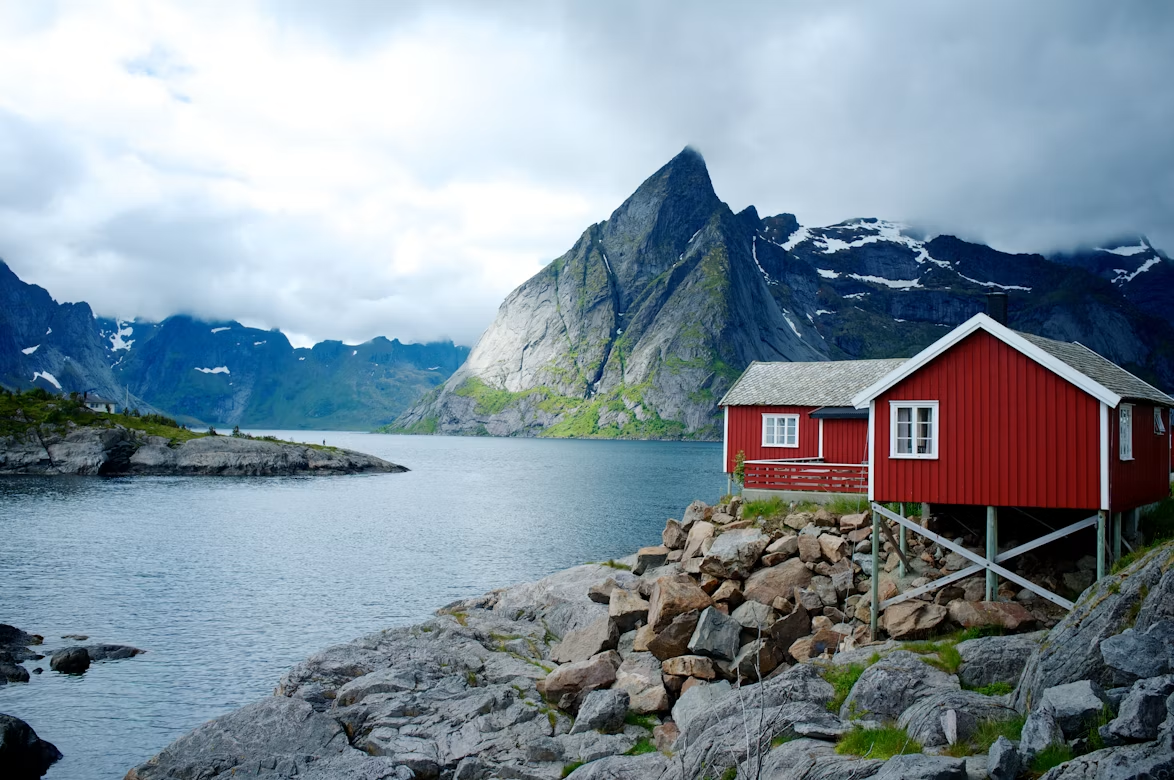
Further north, destinations such as the Lofoten Islands and Svalbard offer equally memorable experiences, from rugged coastal beauty to remote Arctic wilderness. Whether combined into a single itinerary or explored separately, these locations consistently rank among the most rewarding places to visit in Norway.
For more inspiration of places to visit in Norway, check out our guide on a Nordic Road Trip by Ferry.
Timing a trip around Norwegian holidays and traditions can turn a good holiday into a memorable one. Constitution Day on 17th May is the big one. Locals call it syttende mai, and it fills every town in the country with children's parades, national costumes known as bunad, and an unusually cheerful amount of flag-waving, even by Norwegian standards. Midsummer, or sankthansaften, brings coastal bonfires in late June, timed to make the most of those long midnight-sun evenings, even though it isn't officially a public holiday.
Winter has its own celebrations. Norwegians take Christmas very seriously, with festive work parties taking place throughout December, followed by a quiet, candlelit approach to Christmas Eve itself that feels a world away from a typical European Christmas market. None of these dates requires tickets or a special invitation; showing up is usually enough to be swept into the celebration.
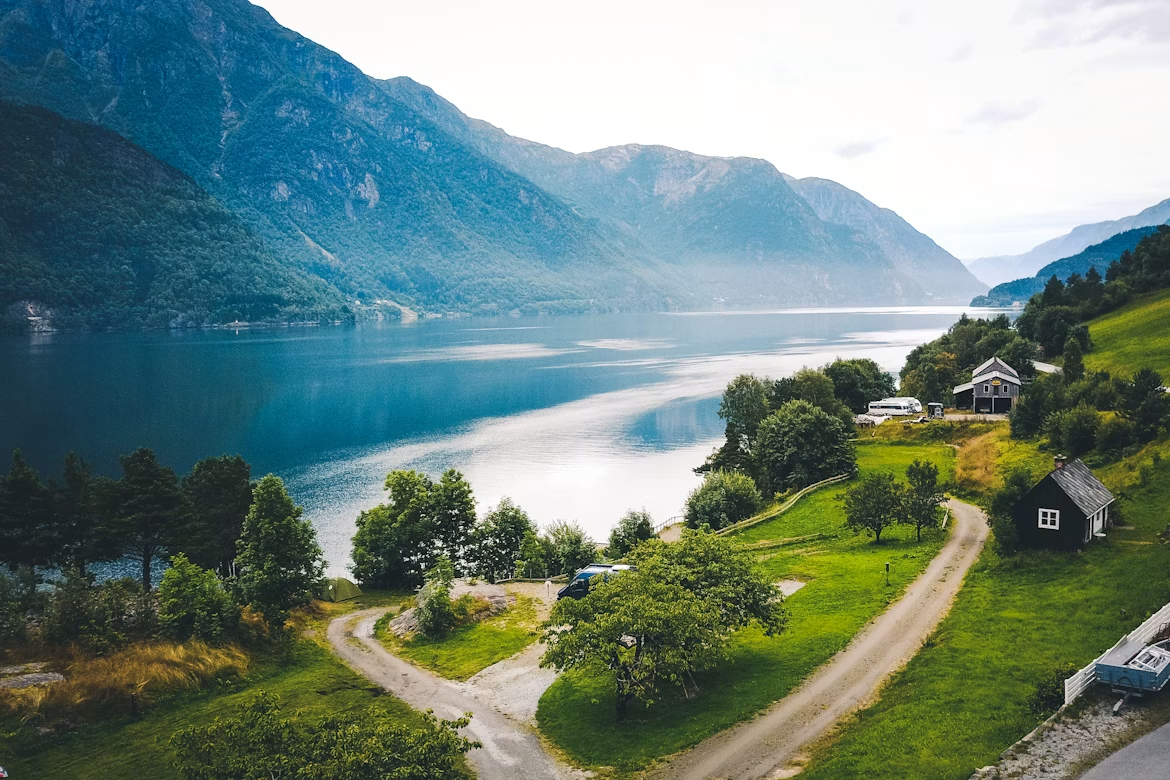
For anyone considering a Norway holiday after their starling performance in the FIFA World Cup, it's worth building the trip around — or deliberately away from — the country's røde dager, the "red days" marked on every Norwegian calendar. Some, like Christmas Eve, aren't technically statutory holidays but function as one in practice, with most shops and offices closing regardless. Here's the full rundown of holidays and observances in Norway in 2026:
| Date | Day | Holiday / Celebration | Type |
|---|---|---|---|
| 1 January 2026 | Thursday | New Year's Day | Public Holiday |
| 21 January 2026 | Wednesday | Princess Ingrid Alexandra's Birthday | Flag Day |
| 6 February 2026 | Friday | Saami National Day | Flag Day / Cultural Celebration |
| 2 April 2026 | Thursday | Maundy Thursday | Public Holiday |
| 3 April 2026 | Friday | Good Friday | Public Holiday |
| 5 April 2026 | Sunday | Easter Sunday | Public Holiday |
| 6 April 2026 | Monday | Easter Monday | Public Holiday |
| 1 May 2026 | Friday | Labour Day | Public Holiday |
| 14 May 2026 | Thursday | Ascension Day | Public Holiday |
| 17 May 2026 | Sunday | Constitution Day (National Day) | Public Holiday / National Celebration |
| 24 May 2026 | Sunday | Whit Sunday (Pentecost) | Public Holiday |
| 25 May 2026 | Monday | Whit Monday | Public Holiday |
| 25 December 2026 | Friday | Christmas Day | Public Holiday |
| 26 December 2026 | Saturday | Boxing Day (2nd Day of Christmas) | Public Holiday |
Across Norway in 2026, the most significant travel period falls between Maundy Thursday and Easter Monday in early April. During this week, many Norwegians leave the cities in favor of mountain cabins, creating a nationwide shift toward ski resorts and alpine regions.
Travelers planning to visit Norway during Easter should book accommodation in fjord regions and cities well in advance, particularly if traveling against this domestic holiday trend, as availability can be limited.
If you fancy a ski holiday yourself and want to know how to get there, check out our guide on the best ski holidays in Europe.
There are a few practical details worth knowing before you touch down in Norway, including currency, language, time zones, and a couple of the national symbols you'll spot everywhere once you arrive.
The currency of Norway is the Norwegian krone (NOK). Cards and contactless are accepted almost everywhere, even at tiny mountain cabins, so carrying cash is rarely necessary.
Norwegian is the official language, written in two forms, Bokmål and Nynorsk, with Sámi holding official status in several northern municipalities. English is spoken fluently and widely. To find more destinations, please read our guide on the best places to visit without knowing the language.
Norway runs on Central European Time (UTC+1), shifting to Central European Summer Time (UTC+2) from late March to late October — the same clock as most of mainland Europe.
The Norwegian flag depicts a red field with an indigo-blue Scandinavian cross outlined in white. This was first adopted in 1821 and is typically flown at full mast on every public holiday listed above.
The country's national tree, Picea abies, best known abroad as the tree Norway gifts to London's Trafalgar Square each Christmas, a tradition of thanks dating back to 1947.
The Norway national football team's run to the 2026 World Cup quarterfinals was the country's best-ever showing on the sport's biggest stage — and, if the current mood is any guide, the reason more than a few readers are here in the first place.
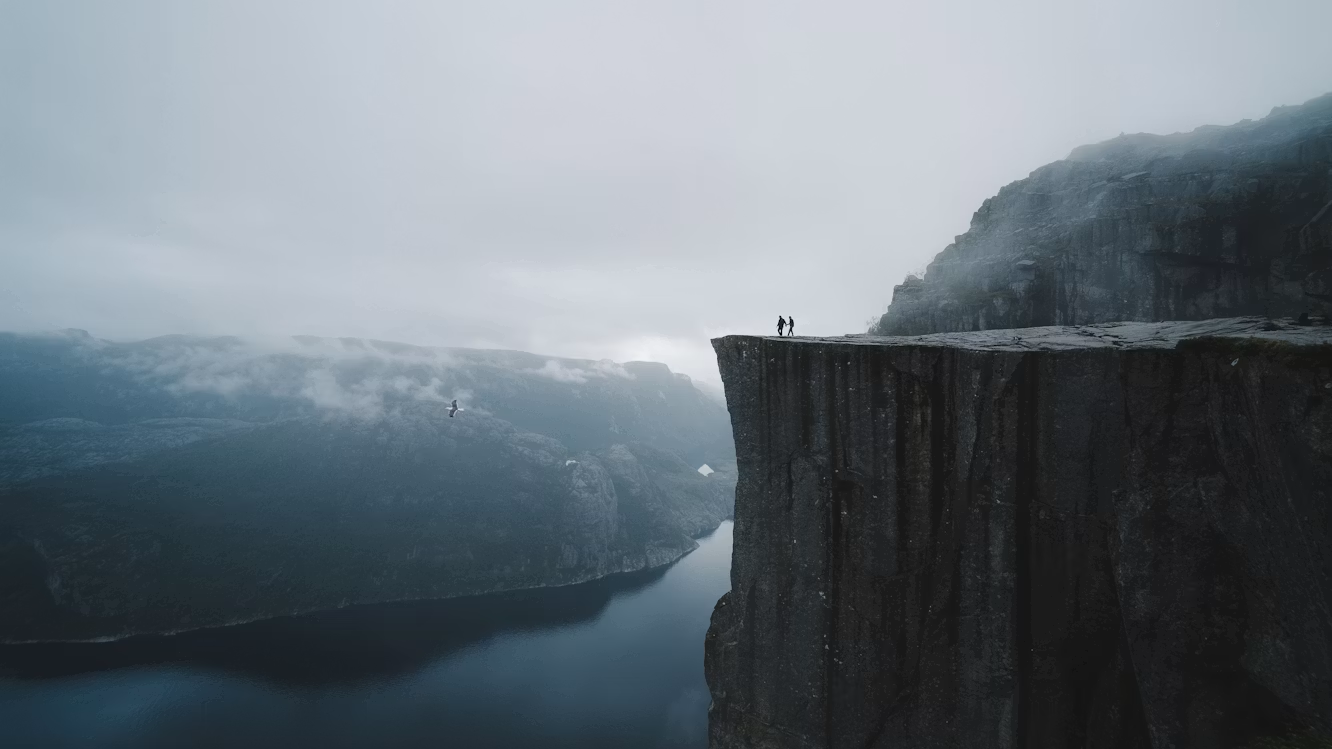
The best time to visit Norway all depends on what you wish to experience. June to August certainly favors hiking, fjord cruises, and — in the far north — the midnight sun. December to March is the best season for the Northern Lights and skiing.
May and September offer a shoulder-season sweet spot of smaller crowds, lower prices, and generally reliable weather in between. If forced to pick one window for a first trip, we suggest visiting between late June and August, though it is also peak season for prices around Bergen and the main fjords.
No, Oslo cannot offer a true midnight sun. Oslo sits at roughly 59.9°N, well south of the Arctic Circle at 66.5°N, so the sun technically sets even on the summer solstice, around 22:40–22:55. Oslo does deliver close to 19 hours of daylight in June, with only a short, bright twilight rather than real darkness. But to experience the midnight sun, head north to Tromsø, the Lofoten Islands, or North Cape, between mid-May and late July.
Yes. St. Olav's Day, known in Norwegian as Olsok, falls on 29th July and commemorates King Olaf II Haraldsson, Norway's patron saint, who died at the Battle of Stiklestad in 1030. It's an official flag day rather than a statutory public holiday, so shops and offices stay open as normal. But the day is celebrated with church services taking place across the country, especially in Trondheim during the Olavsfestdagene festival and at Stiklestad itself.
The right choice all depends on the type of trip you're planning. Norway is unmatched for dramatic natural scenery, including fjords, the Arctic Circle, and the midnight sun, though it is the most expensive option in this group.
Sweden offers comparable Nordic landscapes and easy access to Lapland at a lower cost. Finland is known for its thousands of lakes and sauna culture. Denmark and Belgium are ideal for compact, walkable city breaks. Poland typically offers the best value for money, with historic old towns and a lower overall cost of living. For fjords, the Arctic Circle, and the midnight sun specifically, Norway remains the standout choice.
Norway is one of the pricier destinations in Europe, but it's still manageable on a budget. Travel in the shoulder season in May or September and self-cater using a cabin or apartment rather than eating out for every meal.
You can also lower costs by taking advantage of allemannsretten, Norway's 'right to roam,' which allows free wild camping in most areas. Trains and coaches are considerably cheaper than domestic flights, and city tourist cards like the Oslo Pass or Bergen Card bundle transport and attractions at a discount.
Yes, winter is arguably Tromsø's best season for visitors. From late November to mid-January, the city experiences the polar night, when the sun doesn't rise above the horizon, though a few hours of blue twilight each day still make sightseeing possible.
It's also peak Northern Lights season, and the fjords around Tromsø fill with orcas and humpback whales following herring migrations from late October through January. The only downsides are the cold, limited daylight, and higher tour prices than in summer.
Whether it's the Arctic Circle pulling you north, the midnight sun keeping you up past midnight or watching Haaland send an entire country football-mad, Norway's moment feels well earned. Book your Norway ferry tickets today and prepare for the experience of a lifetime!