Eating Your Way Through Thailand: A City-by-City Food Guide
Things to do
Things to do


Thai food is not a single cuisine. It is a range of regional cooking styles that balance sweet, sour, salty, spicy and bitter flavors in different ways, from the fiery salads of Isan to the coconut-rich curries of the south.
This Thailand food guide covers the best Thai dishes to try in each region, including Pad Kra Pao, Pad Thai, Som Tam, Khao Man Gai, Massaman Curry and Mango Sticky Rice, along with the best street food markets and helpful tips. Whether you're planning a food-focused trip or want to know what to eat in Thailand, this guide shows you what to order and where to find it.
Thais are known for eating several small meals throughout the day as opposed to three large ones, and dishes are usually shared. Food is eaten with a fork and spoon, with chopsticks reserved for noodle soups.
| Meal | Usual Time | What They Eat |
|---|---|---|
| Ahan chao (breakfast) | 6–9 am | Jok (rice porridge), khao tom (rice soup) or patongo (fried dough) with sweet soy milk from a street stall |
| Ahan klang wan (lunch) | 11 am–1 pm | A quick one-plate meal such as Pad Kra Pao or Khao Man Gai, or a bowl of noodles |
| Snacks (khanom) | All day | Grilled skewers, fresh fruit, and sweets bought from carts and eaten on the move |
| Ahan yen (dinner) | 6 pm onward | The main shared meal, often several dishes with rice, at a restaurant or night market |
A few words of Thai that will help you at a street stall. Men end polite phrases with "krap" and women with "ka".
Learning "mai phet" is especially useful. Thai spice levels are set for Thai palates, and a dish ordered "normal" at a local stall can be far hotter than visitors expect.
Thai food follows the seasons too. Mango season runs from March to June, the best time for Mango Sticky Rice. Durian, mangosteen and rambutan peak in early summer. Phuket's Vegetarian Festival in late September or October turns much of the island's street food meat-free for nine days.
Bangkok is one of the world's great cities for street food. Its most famous dishes are Pad Thai, Pad Kra Pao and Khao Man Gai, with cheap one-plate meals sold from carts, shophouses and food courts in every neighborhood. These are the traditional Thai dishes to try in Bangkok:
| Dish | Description |
|---|---|
| Pad Kra Pao (Holy Basil Stir-Fry) | Minced pork or chicken stir-fried with holy basil, chili and garlic, served over rice with a crispy fried egg (kai dao). It is Thailand's most popular everyday lunch. |
| Pad Thai | Rice noodles stir-fried with tamarind, fish sauce, egg, tofu, shrimp, bean sprouts and peanuts. It was promoted as a national dish in the 1930s. |
| Khao Man Gai (Hainanese Chicken Rice) | Poached chicken on rice cooked in chicken fat and broth, served with a ginger, garlic and fermented soybean sauce. |
| Tom Yum Goong | Hot and sour soup with prawns, lemongrass, galangal and kaffir lime leaves |
| Moo Ping | Grilled marinated pork skewers, served alongside sticky rice |
Some of Bangkok’s best street food can be found in Yaowarat (Chinatown), which comes alive with food stalls after dark, and in the Old Town near the Grand Palace. Pratunam is very well known for Khao Man Gai (Thai chicken and rice), whereas the area around Democracy Monument is a popular spot for Pad Thai, with famous shophouses attracting long queues in the evenings.
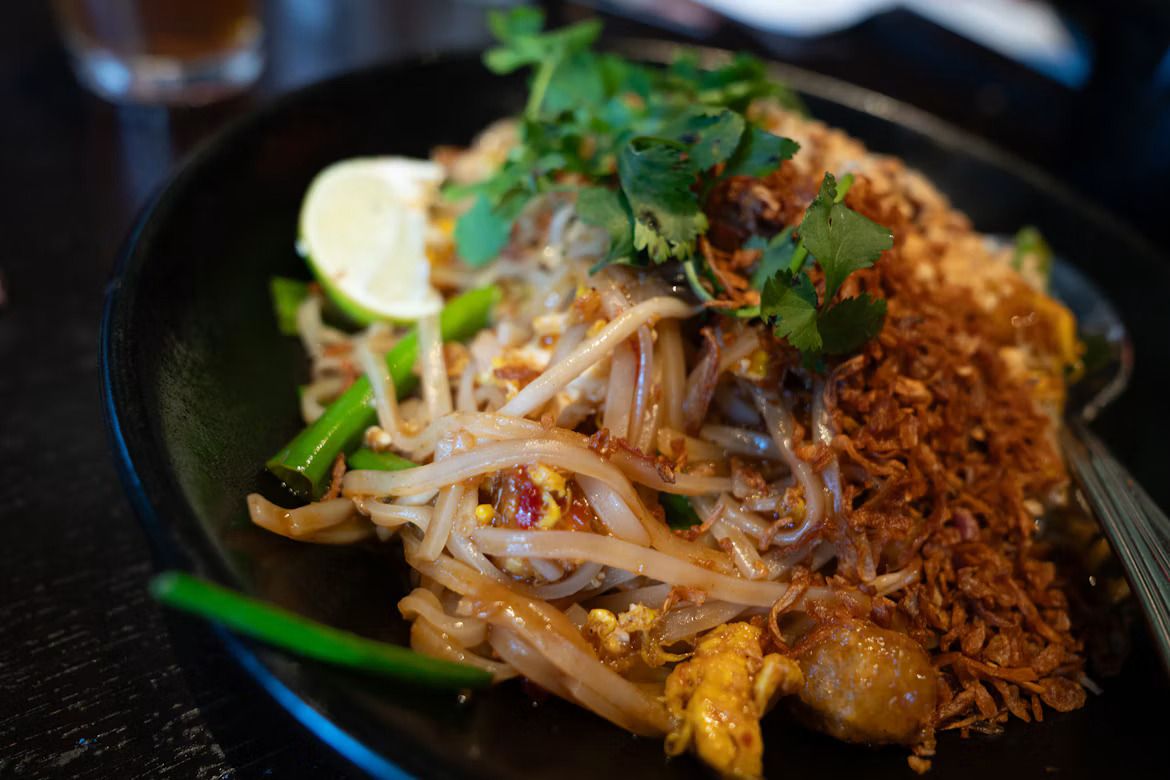
Boat noodles (kuay teow reua) are small bowls of rice noodles in a dark, rich broth made with spices, soy and a little pork or beef blood. They originate from the canals around Ayutthaya and central Thailand, where vendors once cooked and sold them directly from their boats. That is why the bowls are small: they had to be passed safely from boat to shore.
| Boat Noodle Style | What's In It |
|---|---|
| Moo (pork) | Sliced pork, meatballs, liver and crackling in spiced blood broth |
| Neua (beef) | Sliced and stewed beef with beef balls, richer and darker in flavor |
| Nam sai (clear broth) | The same toppings in a lighter broth without blood, for first-timers |
As the portions are so small, locals often order five or more in one sitting and stack the empty bowls on the table. In Ayutthaya, you can still eat boat noodles beside the river. In Bangkok, the best-known spot is "Boat Noodle Alley" by Victory Monument.
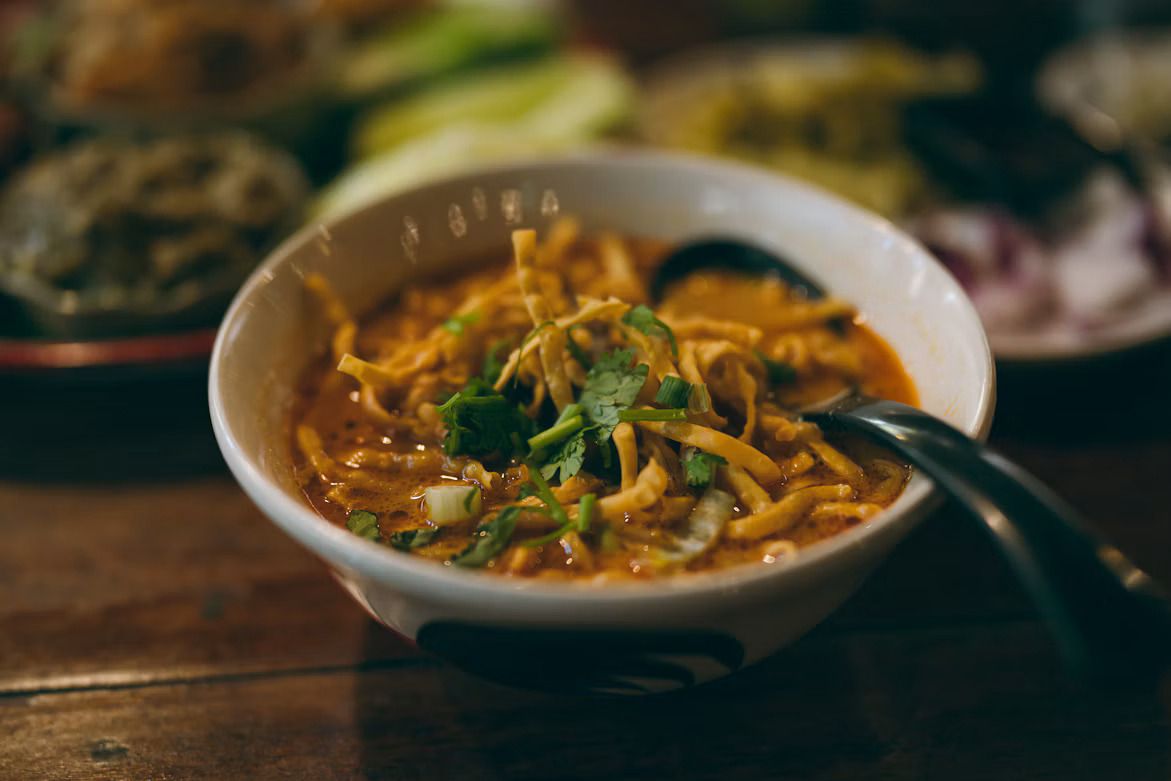
Northern Thai cuisine (ahan nuea) is known for its aromatic herbs, rich flavors and influences from neighboring Myanmar and China's Yunnan province. Compared with central Thai food, it often has less sweetness and a distinctive spice blend. Chiang Mai's signature dish is Khao Soi, a creamy coconut curry noodle soup. Here are some of the best dishes to try during your visit:
| Dish | What’s In It |
|---|---|
| Khao Soi | Egg noodles in coconut curry broth topped with crispy fried noodles, served with pickled mustard greens, shallots and lime. It is the defining dish of northern Thailand. |
| Sai Ua | Grilled pork sausage packed with lemongrass, kaffir lime and chili |
| Nam Prik Noom | A smoky roasted green chili dip, eaten with pork crackling and steamed vegetables |
| Gaeng Hang Lay | A rich pork belly curry with ginger and tamarind, Burmese in origin and made without coconut milk |
| Khantoke Dinner | A traditional Lanna-style meal of several northern dishes served on a low round tray |
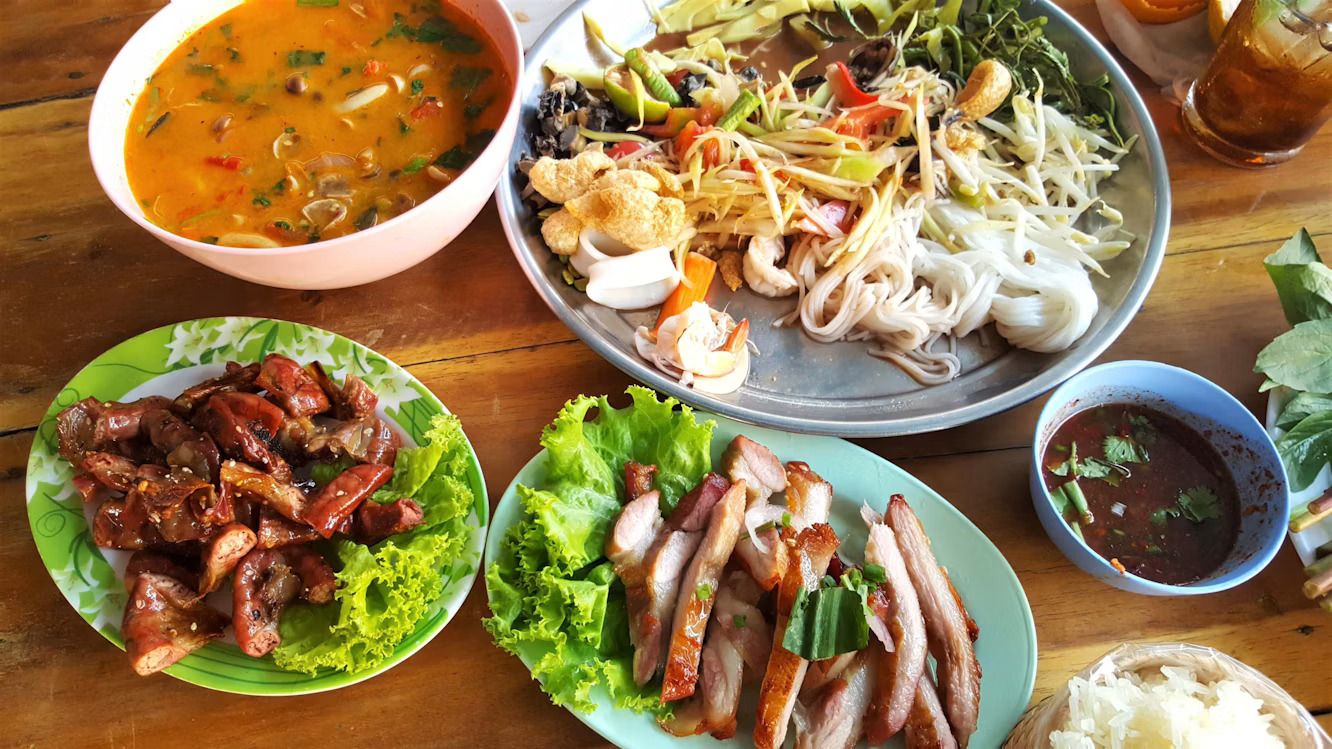
Isan, in northeastern Thailand, is famous for its bold, distinctive cuisine, which shares many similarities with the food of neighboring Laos. Expect a balance of spicy, sour and savory flavors, with sticky rice, grilled meats and fermented fish featuring prominently. Som Tam (green papaya salad) is one of the region's best-known dishes and a must-try for visitors exploring Thai food.
Here are some other regional dishes that are certainly worth trying:
| Dish | What's In It |
|---|---|
| Som Tam Thai (Papaya Salad) | Shredded green papaya pounded in a mortar with chili, lime, fish sauce, palm sugar, tomatoes, dried shrimp and peanuts. This is the sweeter version found all over Thailand. |
| Som Tam Pla Ra / Som Tam Poo | The more traditional Isan versions, made with fermented fish sauce (pla ra) or salted crab (poo) |
| Gai Yang | Marinated grilled chicken, the classic partner to Som Tam |
| Larb | A minced meat salad with lime, chili, mint and toasted rice powder |
| Khao Niao (Sticky Rice) | Glutinous rice served in a woven basket, rolled into balls by hand and used to scoop up other dishes |
You don't need to travel to the northeast to try Isan food. Som Tam stalls can be found everywhere, especially in Bangkok and the islands. When you order, the vendor will usually ask how many chilies you want. One or two is more than enough for most visitors.
Southern Thai food is the spiciest in the country, with heavy use of turmeric, coconut and seafood. Phuket cuisine has Peranakan (Straits Chinese) influence from Hokkien traders who settled there and was subsequently named a UNESCO City of Gastronomy in 2015. The south is also closely associated with Massaman Curry, shaped by the region's Muslim communities and centuries of Persian and Indian trade.
Here are some other regional dishes that you should keep an eye out for:
| Dish | What’s In It |
|---|---|
| Massaman Curry | A mild, rich coconut curry with beef or chicken, potatoes, peanuts, and dry spices like cardamom, cinnamon and cloves. It regularly appears near the top of global rankings of the world's best foods. |
| Mee Hokkien | Phuket-style yellow egg noodles fried with seafood, pork and greens |
| Moo Hong | Pork belly braised slowly in soy sauce, garlic and black pepper, a Phuket Peranakan specialty |
| Gaeng Som / Gaeng Tai Pla | Fiery southern curries: a sour turmeric fish curry and a pungent curry made with fermented fish |
| Roti | Flaky fried flatbread, eaten with curry or as a sweet snack with banana and condensed milk |
Phuket Old Town is the best place to try the island's Peranakan dishes, especially at breakfast, when shophouses serve dim sum and noodle soups.
On Thailand's Andaman coast, including Krabi, Koh Phi Phi and Koh Lanta, fresh seafood is a highlight, often prepared and served at beachfront restaurants. Many seafood restaurants display fresh fish, prawns and crab on ice, allowing you to choose your preferred seafood, pay by weight and select how it is cooked.
| Dish | What’s In It |
|---|---|
| Pla Pao | Whole fish crusted in salt, stuffed with lemongrass and grilled over charcoal |
| Pla Neung Manao | Steamed whole fish in a sharp lime, garlic and chili broth |
| Goong Phao | Grilled river prawns, served with a spicy seafood dipping sauce (nam jim seafood) |
| Pu Pad Pong Karee | Crab stir-fried with egg and yellow curry powder |
Koh Samui, Koh Phangan and Koh Tao in the Gulf of Thailand were formerly coconut-farming islands, hence why coconut is still an essential ingredient in their cooking, from curries to desserts. Here are some popular dishes you can expect to find:
| Dish | What’s In It |
|---|---|
| Mango Sticky Rice (Khao Niao Mamuang) | Sweet, ripe mango served with sticky rice soaked in salted coconut cream and topped with crunchy mung beans. It is best during mango season (March to June). |
| Gaeng Kati Pla | A fragrant coconut fish curry made with the islands' local catch |
| Fresh Coconut | Drunk straight from the shell, with the soft young flesh scooped out afterwards |
| Khanom Krok | Small coconut-rice pancakes cooked in a dimpled pan, crisp outside and custardy inside |
The Fisherman's Village night market in Bophut, Koh Samui, is one of the best places to try a wide range of island food in one evening.
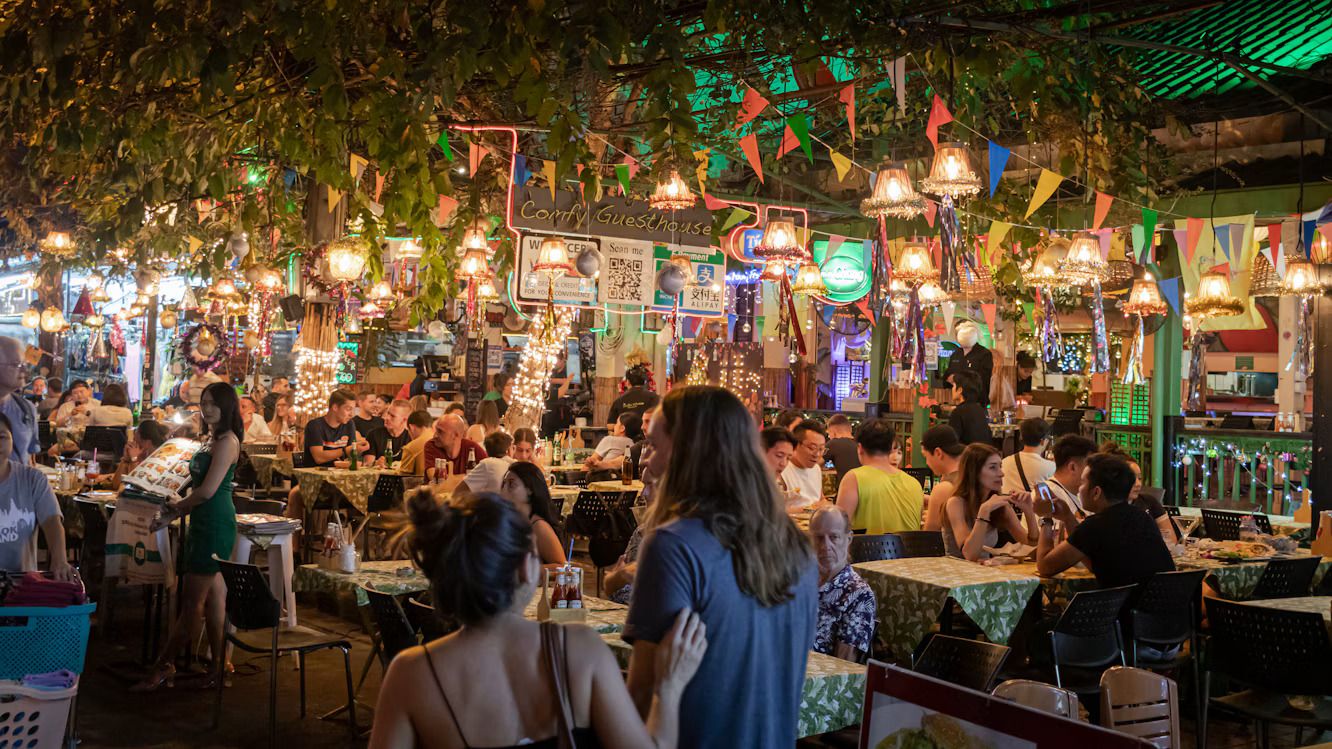
Every city on this list has a fresh market (talad sod) or night market worth visiting. Markets are where most Thais buy their everyday meals, and they're the cheapest and most authentic places to try street food in Thailand.
Here are a few habits that make market visits easier:
These are small things, but they're the kind of practical details worth folding into broader trip prep. For more helpful information, check out our top tips and tricks for international travel.
Pad Kra Pao (holy basil stir-fry served with rice and a fried egg) is a popular everyday meal in Thailand. Other well-known Thai dishes include Pad Thai, Tom Yum Goong (spicy prawn soup), Green Curry, Som Tam (green papaya salad) and Massaman Curry. For dessert, Mango Sticky Rice is a reliable favorite among locals and visitors.
Thai street food is generally safe to eat when you choose vendors who follow good food hygiene practices. Look for busy stalls where food is freshly prepared and cooked thoroughly to order, as high customer turnover often means ingredients are used more frequently.
Avoid raw or undercooked seafood, food that has been left uncovered in the heat, and dishes that have been sitting at room temperature for extended periods. To reduce the risk of foodborne illness, choose freshly cooked meals, drink sealed bottled or treated water, and ensure ice is made from a safe water source.
Tap water in Thailand is generally not recommended for drinking. Travelers should choose sealed bottled water or use a reliable water filtration system. Bottled water is cheap and widely available in shops, hotels and restaurants, while filtered water refill stations offer a convenient way to reduce plastic waste.
Ice served in established restaurants and reputable street food stalls is generally considered safe when made from treated water. Cylindrical ice with a hole through the center is often commercially produced. If you are unsure about the water or ice supply, it is best to avoid it to reduce the risk of stomach upsets.
Tipping is not expected at street stalls or local restaurants, though rounding up or leaving small change is always appreciated. Hotel and upmarket restaurants often add a 10% service charge plus 7% VAT, shown on menus as "++", so check the bill before tipping extra.
Thai food can be very spicy, especially Som Tam, jungle curry and southern Thai dishes. You can request a milder version by saying "mai phet" (not spicy) or "phet nit noi" (a little spicy), although spice levels can vary between restaurants. If you prefer gentler flavors, Massaman Curry, Khao Man Gai (Thai chicken and rice) and Pad Thai are good options. Many meals are also served with condiments, allowing you to adjust the heat to suit your taste.
Vegetarian food is easy to find in tourist areas. Look for restaurants displaying yellow flags with red Thai lettering, which commonly indicate "jay" food prepared without meat or animal products. However, many Thai dishes contain fish sauce, oyster sauce or shrimp paste, so explain your dietary requirements clearly and ask for "mai sai nam pla" (no fish sauce) when appropriate.
Gluten-free dining requires extra care because conventional soy sauce and some oyster sauces contain wheat, and marinades or curry pastes may include hidden ingredients. Carrying a Thai gluten-free translation card and checking sauces with restaurant staff can help you identify suitable meals and avoid accidental exposure.
A realistic daily food budget in Thailand is around $15 to $40 per person, depending on where you eat and whether you choose local street food or restaurants. Street food dishes typically cost 50 to 100 baht ($1.50 to $3), while a meal at a mid-range restaurant generally costs 200 to 500 baht per person. Food prices tend to be higher on popular islands such as Koh Samui and Phuket, particularly at beachfront restaurants and tourist hotspots.