Thailand Island Hopping

Thailand Island Hopping
The term "island hopping" literally means "jumping from island to island," and few destinations suit it better than Thailand. With around 1,430 islands dotted across the Andaman Sea and the Gulf of Thailand, the country has been built for getting around by boat. Whether you are traveling on a gap year or backpacking around Southeast Asia, discover everything you need to know about island hopping in Thailand.
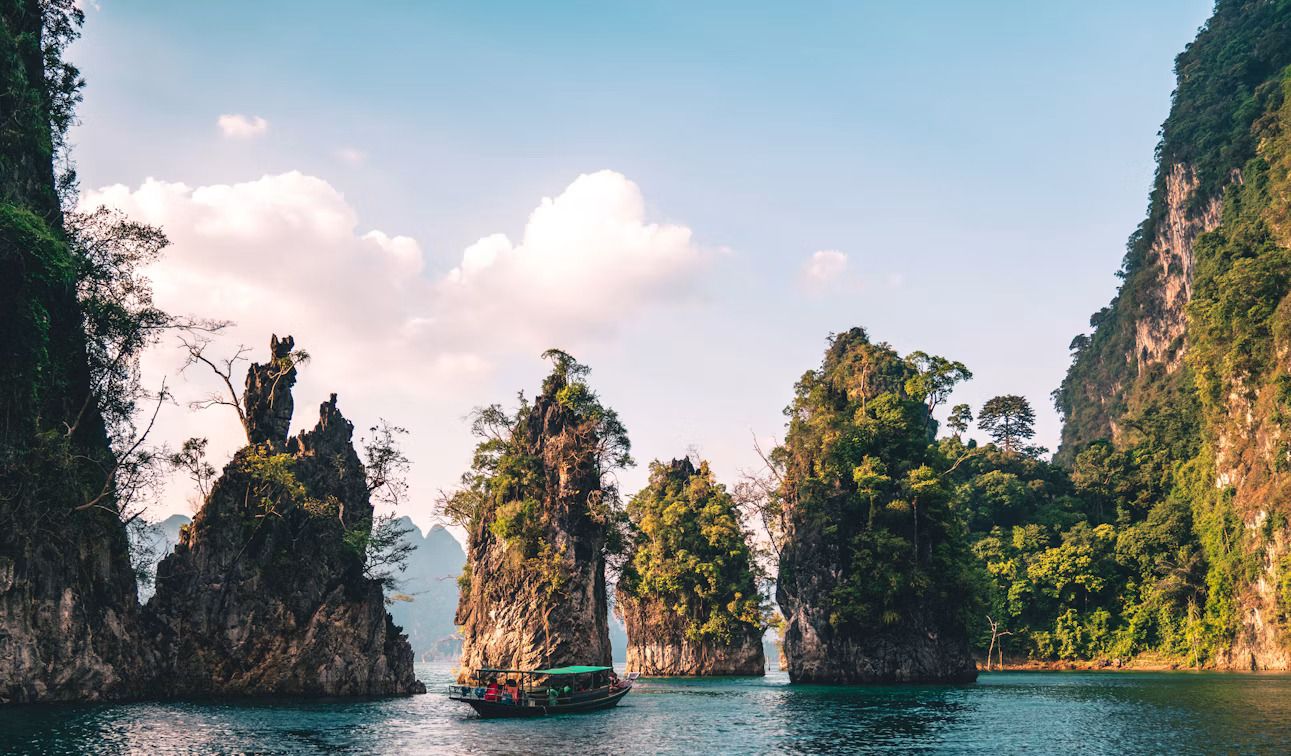
Thailand's coastline is divided neatly into two halves, with the Andaman Sea in the west and the Gulf of Thailand in the east. If you’re planning to island hop in Thailand, understanding how this network works is the best place to begin.
Generally speaking, there are two types of boat you will commonly find in Thailand:
Thailand's islands sit across two different seas, so island hopping really starts on the mainland. Five main hubs handle almost all of the ferry traffic, with Phuket and Krabi facing the Andaman Sea in the southwest and Surat Thani, Trat and Pattaya facing the Gulf of Thailand in the east. Here's what each one actually offers.
Phuket is Thailand's largest island, linked to the mainland by two bridges over the Sarasin Strait. Phuket has the busiest airport in the south with direct long-haul flights, plus the densest cluster of piers in the country, hence why it's usually the fastest way in, no matter which Andaman island is the final stop.
Krabi is a mainland province on the Andaman coast, making for a convenient gateway to Railay Beach's limestone cliffs. Krabi is located between Phuket and the Trang islands, making it a natural midpoint for continuing south, and its airport takes direct flights from Bangkok — handy for skipping Phuket altogether.
Surat Thani is a popular mainland province on the Gulf coast, situated around 640 km south of Bangkok. It offers convenient ferry crossings to Koh Phangan, Koh Tao and Koh Samui ranging from 3 to 6 hours and 30 minutes.
A small regional airport in Trat province, located near the Cambodian border. Flying into Trat avoids the 5–6 hour drive from Bangkok.
A popular coastal resort city located approximately 2 hours southeast of Bangkok. Here, operators run bus and ferry combination tickets from town ranging between 5 hours and 30 minutes and 8 hours and 20 minutes, so it's possible to reach islands nearly 200 km away without first backtracking into Bangkok or all the way to Trat.
Many of Thailand’s islands are grouped into regional clusters, with destinations located relatively close to one another. This makes onward travel between islands very straightforward. While some islands do have airports, ferries and boats remain the best way to get around.
Plotting a route across multiple islands may seem complicated at first, but it’s much simpler in practice. With a map and a little preparation, you’ll quickly see why Thailand’s islands are well suited to island hopping. Just a few straightforward steps will get you started:
If you're traveling during high season, it's worth booking in advance, especially for longer routes or connections you cannot afford to miss. If you already have a fixed Thailand island hopping itinerary, we recommend booking your tickets early, ideally as soon as possible. If you prefer to stay flexible, you can keep an eye on the connections you want and book once your travel dates are in place.
As a general guideline, spending two to three nights on each island works well. It gives you enough time to enjoy each destination without feeling rushed. There are no strict rules when it comes to length of stay, but it’s worth remembering that travel days often take longer than expected, as you’ll need to factor in early arrivals at the pier.
Weather can also affect schedules, with choppy seas sometimes causing delays or cancellations, especially on smaller or more remote islands. For this reason, it’s wise to build some flexibility into your itinerary.
Our Deal Finder allows you to search, compare, and book multiple routes in one place. You can also mix different operators or combine separate outbound and return journeys to fit around your plans.
You can manage your bookings conveniently via My Account. There you'll find your digital ticket along with all the important details, such as check-in times or the exact pier your boat departs from. However, please be aware that some operators in Thailand do not offer digital tickets.
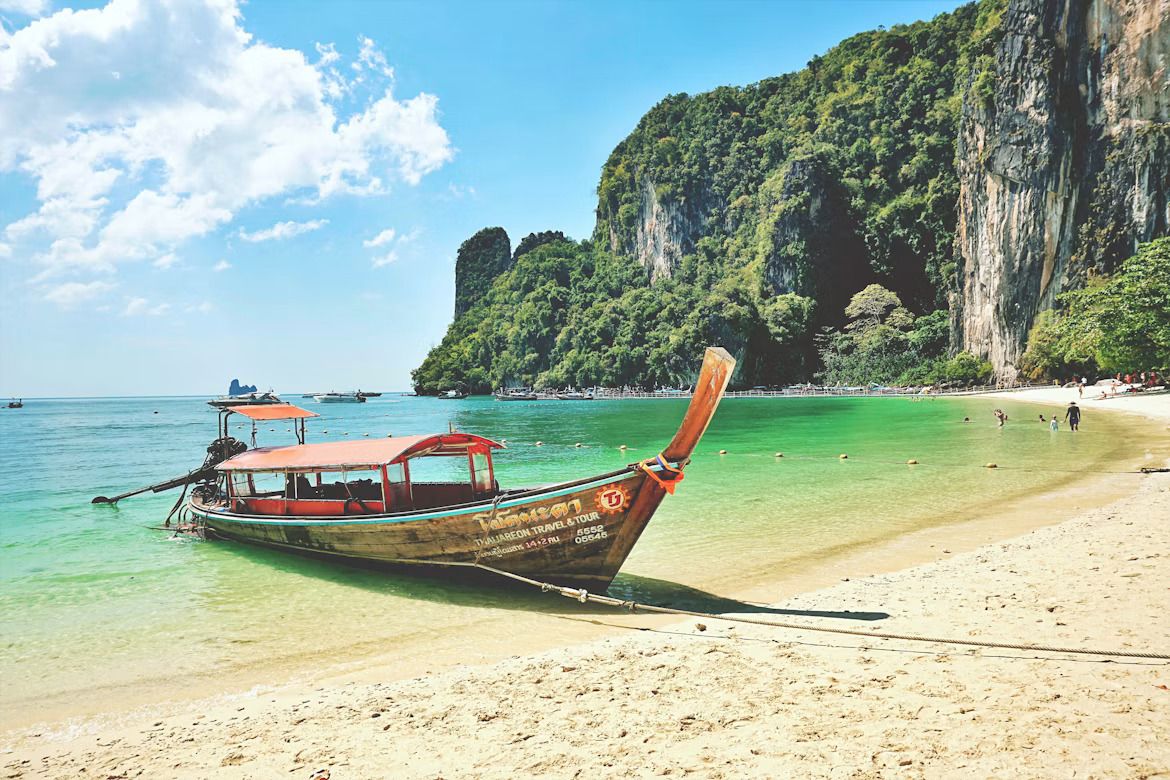
Combo tickets, often called "joint tickets," bundle a bus or minivan ride with a ferry crossing into a single booking. They're especially popular for reaching Thailand's islands, such as Koh Samui, Koh Phangan, Koh Tao, Koh Chang, and Koh Lanta, from mainland hubs like Bangkok, Surat Thani, or Trat.
Instead of booking transportation and boat tickets separately, travelers can buy one ticket that covers the entire journey, with staff coordinating the transfer between the bus and the pier. This is usually cheaper and less stressful than arranging each leg on your own.
Phuket – Phi Phi – Krabi – Koh Lanta
| Step | Route | How to Get There | Duration | Highlights |
|---|---|---|---|---|
| 1 | Phuket (Rassada Pier) → Koh Phi Phi (Tonsai Pier) | Ferry with Andaman Wave Master or Bundhaya Speed Boat | 59 minutes | Start your trip in Phuket. Travel to Koh Phi Phi, famous for Maya Bay (from The Beach) and its dramatic limestone cliffs. |
| 2 | Koh Phi Phi | Explore on foot / local boats | Flexible stay | Visit Maya Bay, enjoy nightlife at Loh Dalum Bay, watch fire shows, or experience Muay Thai at the Reggae Bar. |
| 3 | Koh Phi Phi → Railay Beach (Krabi) | Ferry with Tigerline or Bundhaya Speed Boat | 30 minutes | Scenic transfer to Railay Beach, known for limestone cliffs and crystal-clear waters. |
| 4 | Railay Beach (Krabi) | Explore on foot / kayak | Flexible stay | Rock climbing, visit Tiger Cave Temple (Wat Tham Suea), and kayak through Ao Thalane’s mangroves and lagoons. |
| 5 | Railay Beach → Koh Lanta (Saladan Pier) | Ferry with Bundhaya Speed Boat or Andaman Wave Master | 1 hour 10 minutes | Continue south to Koh Lanta for a more relaxed island vibe. |
| 6 | Koh Lanta | Explore by scooter / taxi | Flexible stay | Beach hop from Long Beach to Bamboo Beach, enjoy sunsets, and unwind in peaceful surroundings. |
| 7 | Koh Lanta → Phuket (Rassada Pier) | Ferry with Bundhaya Speed Boat or Satun Pakbara Speed Boat Club | Head home | Fly back from Phuket International Airport |
Koh Samui – Koh Phangan – Koh Tao
| Step | Route | How to Get There | Duration | Highlights |
|---|---|---|---|---|
| 1 | Koh Samui (Nathon Pier) → Koh Phangan | Ferry with Lomprayah or Songserm | 30 minutes | Begin in Koh Samui and head to Koh Phangan, known for its laid-back vibe and world-famous Full Moon Party on Haad Rin Beach. |
| 2 | Koh Phangan | Explore by scooter / taxi | Flexible stay | Experience the Full Moon Party, relax on Bottle Beach, visit Than Sadet Waterfall, or enjoy yoga retreats and beachside cafés. |
| 3 | Koh Phangan → Koh Tao | Ferry with Lomprayah or Songserm | 1 hour | Travel north to Koh Tao, a small island famous for its crystal-clear waters and vibrant marine life. |
| 4 | Koh Tao | Explore on foot / boat | Flexible stay | Go snorkeling or scuba diving at Shark Bay and Koh Nang Yuan, hike to John-Suwan Viewpoint, and enjoy relaxed beach evenings. |
Koh Lanta – Koh Mook – Koh Kradan – Koh Lipe
| Step | Route | How to Get There | Duration | Highlights |
|---|---|---|---|---|
| 1 | Koh Lanta → Koh Mook | 8-month seasonal ferry or speedboat (Bundhaya Speed Boat, Satun Pakbara) | 50 minutes | Depart Koh Lanta for Koh Mook, a quiet island known for its relaxed vibe and untouched beaches. |
| 2 | Koh Mook | Explore on foot / boat | Flexible stay | Visit the Emerald Cave (Morakot Cave), relax on Charlie Beach, and enjoy the island’s peaceful atmosphere. |
| 3 | Koh Mook → Koh Kradan | 8-month seasonal ferry with Bundhaya or Satun Pakbara | 15-20 minutes | Short hop to Koh Kradan, often considered one of Thailand’s most beautiful islands. |
| 4 | Koh Kradan | Explore on foot | Flexible stay | Swim and snorkel in crystal-clear waters, relax on powdery white sand beaches, and enjoy spectacular sunsets. |
| 5 | Koh Kradan → Koh Lipe (Pattaya Beach) | 8-month seasonal ferry with Bundhaya or Satun Pakbara | 1 hour and 50 mins-1 hour and 55 mins | Travel south to Koh Lipe, a tropical island near the Malaysian border known for its turquoise waters and coral reefs. |
| 6 | Koh Lipe | Explore on foot / longtail boat | Flexible stay | Relax on Pattaya Beach, snorkel around nearby islands, walk along Walking Street, and enjoy vibrant sunsets and beach bars. |
Thailand Digital Arrival Card (TDAC): All non-Thai nationals must complete the TDAC online within 72 hours before arrival, regardless of whether they enter by air, land, or sea. This is mandatory and separate from any visa requirement.
Passport & visa rules: Your passport should be valid for at least 6 months from your date of entry. Visa requirements depend on your nationality, with options including visa exemption, visa on arrival, and tourist visas. Thailand’s entry rules are changing, including updates to visa exemption schemes from September 2026, so travelers should always check their current eligibility before departure.
For a full breakdown of the latest changes, check out our blog for Thailand Entry Rules Update 2026.
This information is provided as general guidance only. Entry requirements can change at short notice, and travelers must check the latest rules with official sources before departure, including the Thailand Immigration Bureau, Ministry of Foreign Affairs, or their nearest Thai embassy or consulate.
Most travelers need 7 to 14 days to island hop in Thailand comfortably. Five to seven days is enough to explore one island cluster well, such as the Gulf islands (Koh Samui, Koh Phangan, Koh Tao) or the Trang and Satun islands. Ten to fourteen days allows you to combine two clusters, for example the Andaman classic route plus a few extra days further south. A full trip spanning both the Andaman Sea and the Gulf of Thailand typically needs three weeks or more once you account for the overland transfer between coasts.
A useful rule of thumb: budget half a travel day for every ferry or speedboat hop, once you factor in pier check-in, transfers to and from your accommodation, and the crossing itself.
For first-time visitors, the Andaman Circuit — Phuket to Phi Phi to Krabi (Railay) to Koh Lanta and then back to Phuket — is widely considered the best introduction to island hopping in Thailand, since it combines an international airport, iconic limestone scenery, and short boat connections in one manageable loop. The right route ultimately depends on your travel preferences:
Neither side is objectively "better" — the Andaman Sea is generally favored for dramatic limestone scenery, rock climbing, and snorkeling, while the Gulf of Thailand is favored for nightlife, dive certifications, and easier flight connections. The table below summarizes the main differences.
| Feature | Andaman Sea | Gulf of Thailand |
|---|---|---|
| Main hub | Phuket | Surat Thani / Koh Samui |
| Famous islands | Phi Phi, Koh Lanta, Koh Lipe | Koh Samui, Koh Phangan, Koh Tao |
| Best known for | Limestone cliffs, snorkeling, rock climbing | Full Moon Party, diving courses, resort comfort |
| Wettest months | Roughly June to October | Roughly October to December |
| High season | November to April | November to April |
The best time for island hopping in Thailand is between November and April, when seas are calmest on both coasts and ferry and speedboat schedules run at full frequency. Beyond that window, the two coasts diverge: the Andaman side sees its roughest weather from around June to October, whereas the Gulf coast tends to catch its heaviest rain a little later, from around October to December.
As a result, it's possible to find calm, sunny conditions on one coast while the other is experiencing its wet season, so always check the forecast for your specific islands rather than for Thailand as a whole.
Transport is typically the biggest cost factor when island hopping in Thailand, with prices varying significantly depending on distance, season, and the type of boat you choose.
On shorter routes, such as Phuket to Koh Phi Phi, standard ferries are usually the most affordable option, while speedboats offer a faster but more expensive alternative. On longer inter-island journeys, particularly between more remote islands, prices increase considerably and services may be more limited.
In general, travelers can keep costs down by choosing slower ferries, booking in advance during peak seasons, and avoiding last-minute departures. Speedboats and direct routes tend to command higher prices but can save valuable travel time.
For overall travel budgets, Thailand remains relatively flexible. Budget travelers can get by with simple accommodation, local food, and slower transport, while those with a higher budget can opt for more comfort and faster connections between islands.
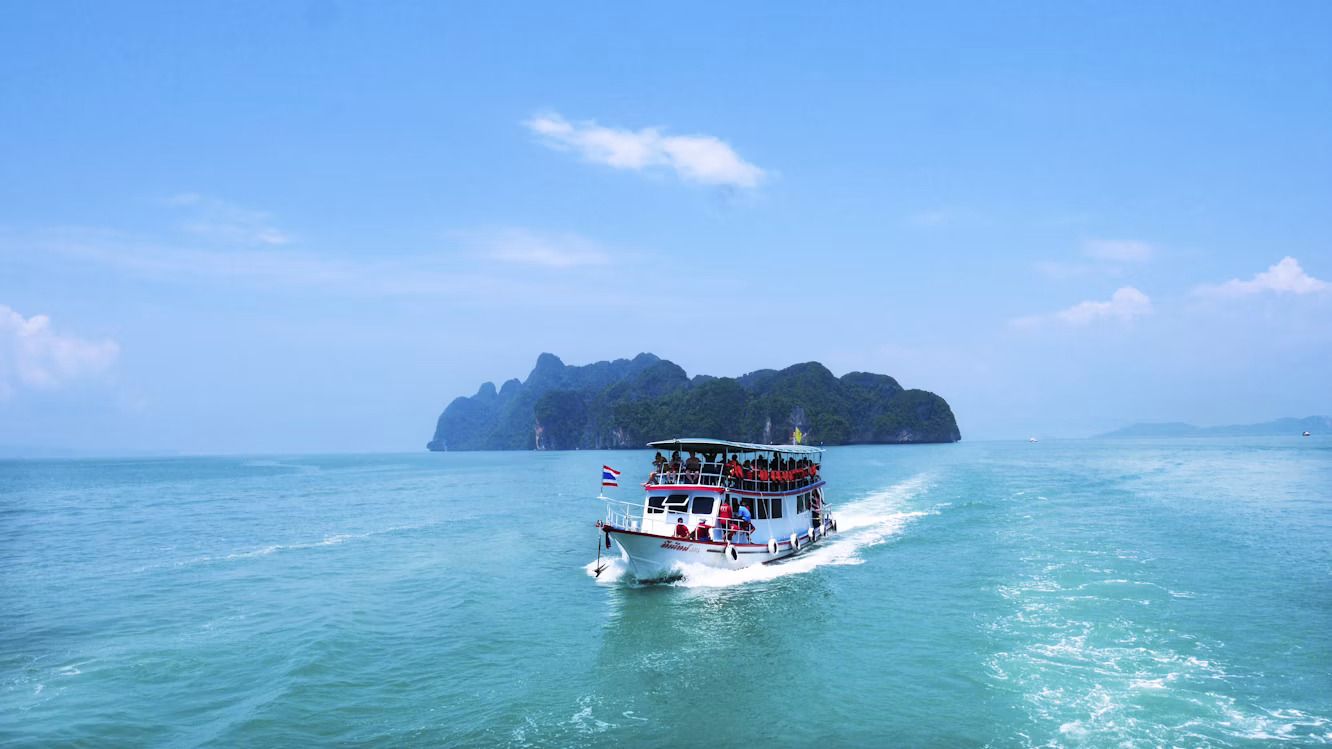
With this guide to hand, planning your next Thailand island hopping trip is easy. Use our Deal Finder to compare connections and book your tickets early. Whether you're ready to island hop Thailand for the first time or you're a seasoned traveler, you'll be well prepared for your next island adventure.
More routes than anyone else.

Compare fares, times & routes in one place.
Change plans easily with flexi tickets.

Book e-tickets & manage trips in-app.
Live ship tracking & real-time updates.

Top-rated customer support when you need it.