Eating Your Way Through Greece: A Region-by-Region Food Guide
Things to do
Things to do


From freshly grilled seafood and rich local cheeses to fragrant olive oil and regional wines, Greek cuisine is a highlight of any visit. Shaped by centuries of Byzantine, Venetian and Ottoman influence, every region has its own distinctive flavors and traditional recipes waiting to be discovered.
Join us on a journey through Athens, Thessaloniki, Santorini, Crete, Naxos and the Cyclades, Corfu and Rhodes to discover the dishes, markets, cheeses and wines that make each destination unique.
Three ideas explain most of a Greek table: olive oil as the foundation of nearly everything, meze (small shared plates) as the way people eat, and the Orthodox Christian calendar, which has long steered cooks toward meat-free dishes.
| Meal | Typical Time | What It Looks Like |
|---|---|---|
| Proino (breakfast) | 7–10 am | Strong coffee and a pastry such as a sesame koulouri or cheese pie, often on the go |
| Mesimeriano (lunch) | 2–4 pm | Traditionally the main meal, especially on Sundays; some small-town shops close for the afternoon |
| Meze hour | 6–8 pm | Ouzo, tsipouro, or wine with small plates of cheese, seafood, and dips |
| Vradino (dinner) | 9 pm onward | Locals sit down late and stay for hours; tourist-area restaurants open earlier |
Greece typically ranks among the world's top three olive oil producers, behind Spain and Italy. Most is extra virgin, and the small, dark Koroneiki olive accounts for approximately 60 percent. Expect oil on salads, in stews, and over beans, with bread to mop up the rest.
Greeks take philoxenia (hospitality, literally "love of strangers") seriously and respond warmly to a few words:
Athens is where Greece's regional cooking comes together, making it the best place to taste the country's everyday favorites, from cheap street food to hearty taverna meals.
| Dish | Description |
|---|---|
| Souvlaki | Grilled pork or chicken skewers, usually wrapped in pita with tomato, onion, and tzatziki; a bare skewer is often called kalamaki in Athens |
| Gyros | Meat shaved from a vertical rotisserie, usually pork or chicken rather than the beef-and-lamb blend common in the US |
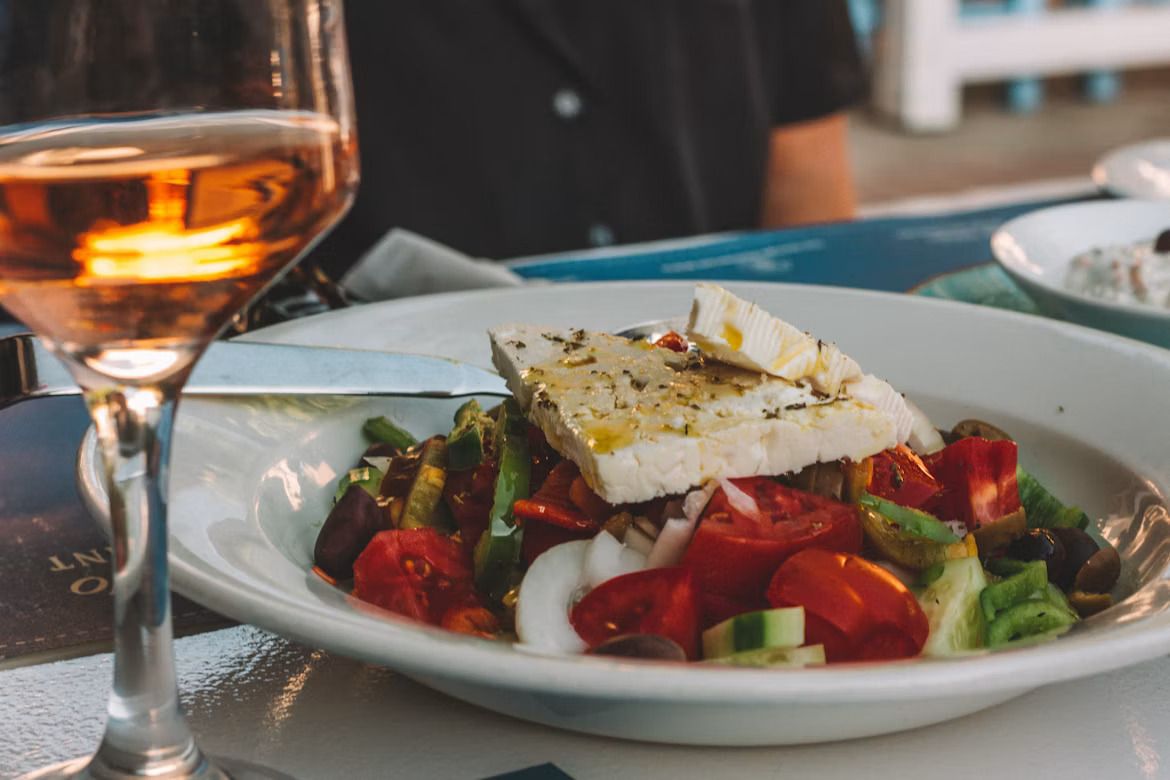
| Horiatiki | The real "Greek salad": tomato, cucumber, onion, olives, and a slab of feta with olive oil and oregano — no lettuce |
| Spanakopita & Tiropita | Flaky phyllo pies filled with spinach and feta or with cheese, eaten for breakfast |
| Moussaka | Eggplant, potato, and spiced ground meat under a thick béchamel, a topping often credited to chef Nikolaos Tselementes |
| Saganaki | Cheese, often graviera or kefalotyri, fried in the small two-handled pan that names the dish and finished with lemon |
| Loukoumades | Fried dough puffs drizzled with honey and dusted with cinnamon |
The flaming saganaki, traditionally served tableside with a shout of “Opa!”, is widely credited to a Chicago restaurant in 1968. In Athens, you'll find plenty of traditional Greek flavors, from coffee slowly brewed in a small briki to freddo espresso, an iced espresso first popularized in an Athens café in 1991. In neighborhoods such as Psyri, tavernas come alive in the early evening, serving local favorites like grilled octopus, fried zucchini and traditional dips.
If you're sailing from Piraeus, arrive early to enjoy a meal at one of the port's longstanding fish tavernas before boarding your ferry.
Greece's second-largest city is widely regarded as its food capital and, in 2021, became the first Greek UNESCO Creative City of Gastronomy. Byzantine, Ottoman, and Jewish heritage, plus spices and pastries brought by Asia Minor refugees after 1923, make it warmer, spicier, and more pastry-driven than Athens.
| Dish | Description |
|---|---|
| Bougatsa | Phyllo filled with semolina custard, cheese, or minced meat; the sweet version, dusted with powdered sugar, is a breakfast staple |
| Koulouri | A bagel-like sesame bread ring sold by street vendors all over the city |
| Trigona Panoramatos | A crisp phyllo cone filled with custard cream, a classic afternoon sweet |
| Soutzoukakia | Cumin-spiced meatballs in tomato sauce, a legacy of the Asia Minor refugees |
| Bouyiourdi | Feta baked with tomato, green peppers, and chili flakes, served as a meze |
| Frappé | Instant coffee shaken with cold water and ice into a foam, invented at the 1957 Thessaloniki International Fair when Nestlé rep Dimitris Vakondios couldn't find hot water |
Beyond the caldera views, Santorini's volcanic soil and infrequent rainfall produce small, intensely flavored crops, making it one of the Aegean's most distinctive food and wine destinations.
| Dish | Description |
|---|---|
| Fava Santorinis | A silky purée of Lathyrus clymenum, grown on the island for thousands of years and EU-protected; served warm with capers, raw onion, and olive oil |
| Tomatokeftedes | Crisp fritters of the island's small, sweet cherry tomatoes, onion, and herbs |
| Assyrtiko | The signature white grape, making crisp, mineral wines; PDO Santorini wines must contain at least 85% Assyrtiko |
| Vinsanto | A sweet amber wine from sun-dried grapes, oak-aged at least 24 months; not Tuscany's Vin Santo |
| Grilled Octopus & Fresh Fish | Best at harborside tavernas below the cliffs, such as Ammoudi Bay near Oia |
The vineyards are worth a detour. Vines are trained into low, woven baskets called kouloura to shield grapes from the wind. As phylloxera, the root louse that destroyed European vineyards in the 19th century, never took hold in the volcanic sand, many vines grow on their own roots and are subsequently over a century old. A glass of Assyrtiko with fava and tomato fritters explains the island like no guide could.
Crete, Greece's largest island, is synonymous with the Mediterranean diet. Its low rates of heart disease attracted the attention of researchers involved in Ancel Keys's Seven Countries Study, while UNESCO recognized the Mediterranean diet as Intangible Cultural Heritage in 2010. The local cuisine is centered around simple, fresh ingredients, including olive oil, wild greens, legumes and locally produced cheeses, with little reliance on processed foods.
| Dish | Description |
|---|---|
| Dakos | A hard barley rusk topped with chopped tomato, crumbled mizithra or feta, oregano, and plenty of olive oil |
| Kalitsounia | Small folded pies filled with fresh mizithra or wild herbs, a staple of Cretan bakeries |
| Graviera Kritis | A PDO hard sheep's milk cheese (up to 20% goat's), aged at least five months, sweet and nutty |
| Chochlioi Boubouristi | Snails pan-fried in olive oil with vinegar and rosemary, a meze usually paired with raki |
| Gamopilafo | The "wedding pilaf," rice cooked in rich lamb or goat broth |
| Raki (Tsikoudia) | A clear grape-pomace spirit, often poured on the house at the end of a meal |
Unlike most other Cycladic islands, Naxos has numerous fertile valleys and mountain springs, giving it the group's richest pantry. Cow's-milk cheesemaking across the Cyclades dates all the way back to Venetian rule, and on Naxos, it has produced some of Greece's most celebrated products.
| Dish | Description |
|---|---|
| Graviera Naxou | A PDO cheese mainly of cow's milk (up to 20% sheep's or goat's), buttery and mildly sweet, more complex with age |
| Arseniko | A sharp, salty PDO sheep's and goat's milk cheese; the name means "male" in the local dialect, versus milder "female" cheeses |
| Naxos Potatoes | Famous across Greece for their flavor, fried in olive oil or roasted until golden |
| Kitron | A PDO liqueur distilled from citron leaves, sipped as a digestif or poured over desserts |
| Kopanisti | A soft, peppery, pungent PDO cheese made across the Cyclades, including Mykonos, spread on rusks or bread |
| Louza | Air-cured, spiced pork loin, especially associated with Mykonos |
Mykonos may be famous for its beach clubs and nightlife, but it also has plenty to offer food lovers. Visit a traditional taverna to sample local specialties such as kopanisti, a tangy, peppery cheese, and louza, a cured pork delicacy. Nearby, Paros makes a great addition to an island hopping trip between Mykonos and Naxos. Take the Piraeus to Mykonos ferry and continue your journey with shorter island crossings, or follow our 10-day Greece island-hopping itinerary to plan a trip around the local food you want to try.
Corfu spent roughly four centuries under Venetian rule and was a British protectorate from 1815 to 1864. Its signature dishes have Venetian names and are typically comprised of garlic, wine, and warm spices rather than lemon and oregano.
| Dish | Description |
|---|---|
| Pastitsada | Rooster, beef, or veal slow-cooked in a richly spiced red sauce over thick pasta, traditionally a Sunday dish |
| Sofrito | Thin veal slices simmered in a pale sauce of garlic, parsley, and white wine or vinegar |
| Bourdeto | A spicy scorpionfish stew with red pepper; from the Venetian brodetto |
| Bianco | Bourdeto's milder cousin, a white, garlicky fish stew |
| Kumquat Liqueur | A sweet, citrusy liqueur from the island's EU-protected kumquats, served after meals |
| Tsitsibira | A lemony, spicy ginger beer left over from British rule, a favorite on hot days |
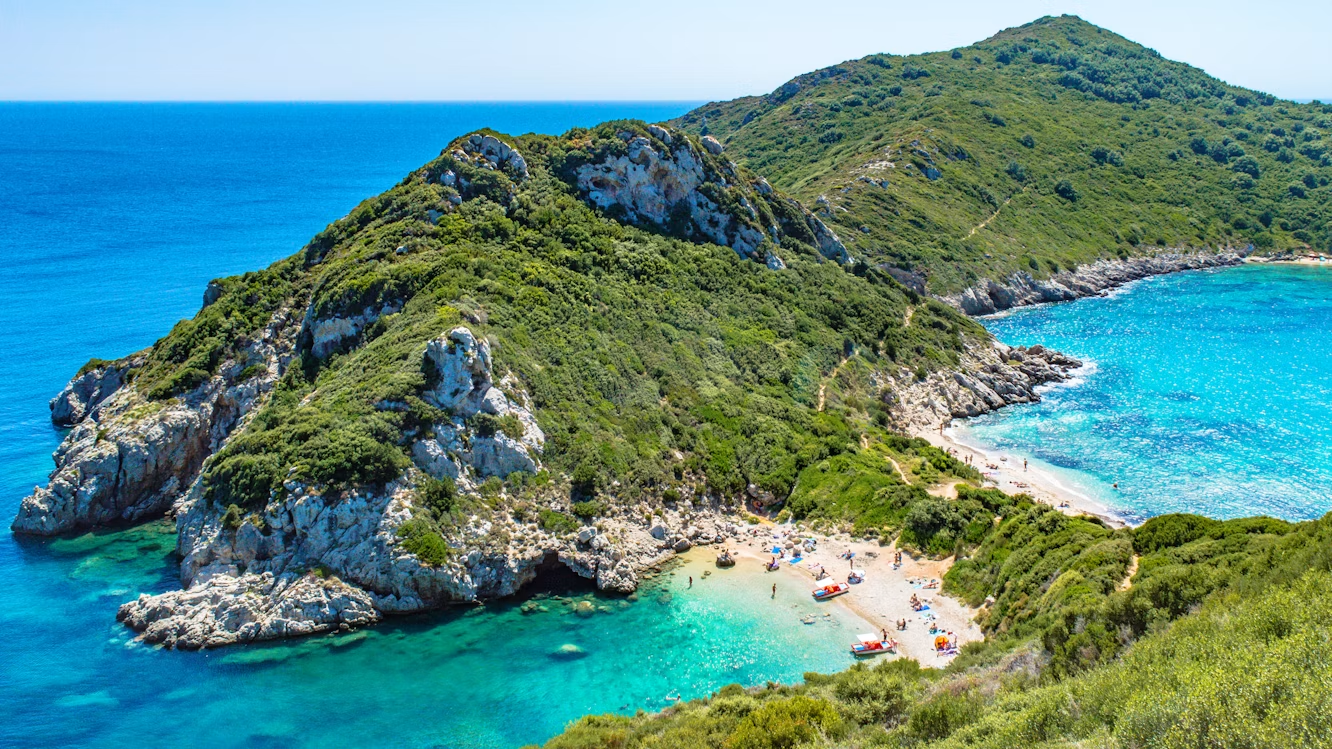
Rhodes is famous for its medieval Old Town, but its culinary heritage often goes unnoticed. Shaped by centuries of trade and cultural exchange across the eastern Mediterranean, the island's cuisine features delicious flavors, including legumes, cumin, honey and sesame. Here are a few dishes worth trying:
| Dish | Description |
|---|---|
| Pitaroudia | Crisp chickpea fritters with tomato, onion, and herbs; the island's signature snack |
| Lakani | Goat slow-baked overnight in a clay pot with chickpeas and cracked wheat, spiced with cumin |
| Melekouni | A chewy honey-and-sesame bar with almonds and citrus peel or spices, traditionally served at weddings |
| Souma | A strong grape-pomace spirit, similar to grappa or Cretan raki |
| Athiri & Mandilaria | The main grapes of PDO Rhodes wines: Athiri for crisp whites, Mandilaria for dark, tannic reds |
Greeks eat more than 20 kilograms of cheese per person a year by most estimates, much of it sheep's and goat's milk, which suit the rocky terrain better than cattle. Here are a few notable cheeses that pop up on virtually every menu in Greece.
| Cheese | Milk | Region | Character |
|---|---|---|---|
| Feta (PDO) | Sheep, up to 30% goat | Macedonia, Thrace, Thessaly, Epirus, central Greece, Peloponnese, Lesbos | Brined, tangy, crumbly to creamy |
| Graviera (Crete / Naxos) | Sheep (Crete) / Cow (Naxos) | Crete / Naxos | Hard, nutty, lightly sweet |
| Kefalotyri | Sheep and/or goat | Mainland and islands | Hard, salty, sharp; grated or fried as saganaki |
| Manouri | Sheep and/or goat, enriched with cream | Macedonia, Thessaly | Soft, mild, creamy |
| Kasseri | Sheep, up to 20% goat | Macedonia, Thessaly, Lesbos | Semi-hard, mild, stretchy when melted |
| Kopanisti | Cow, sheep, or goat | Cyclades | Soft, peppery, pungent |
Greek wine is one of Europe's most overlooked categories, with hundreds of native grapes rarely seen elsewhere. The ones to know:
| Wine | Grape | Region | Style |
|---|---|---|---|
| Assyrtiko | Assyrtiko | Santorini | Crisp, mineral, high-acid white |
| Xinomavro | Xinomavro | Naoussa, northern Greece | Structured, tannic red, often likened to Nebbiolo |
| Agiorgitiko | Agiorgitiko | Nemea, Peloponnese | Soft, plummy red, light and fruity to oak-aged |
| Moschofilero | Moschofilero | Mantinia, Peloponnese | Aromatic, floral white |
| Retsina | Often Savatiano | Attica and central Greece | White flavored with pine resin, classic with fried fish and meze |
| Vinsanto | Mostly Assyrtiko | Santorini | Sweet, amber, from sun-dried grapes |
If you’re planning to visit Italy from Greece, our Italian food guide is worth reading.

A market can tell you more about a region's food than any menu, and Greece's hold their own against the favorites in our guide to the best food markets in Europe. Here are a few worth visiting:
We recommend bringing cash, as some vendors may not accept credit or debit cards. When shopping for food souvenirs, remember that olive oil, kitron and other liquids over 3.4 ounces must be packed in checked luggage when flying. Fresh cheese and meat may also be subject to import restrictions when returning to the United States, so check the latest U.S. Customs and Border Protection guidance before buying.
For more advice on preparing for your trip, see our top tips and tricks for international travel.
Kouvert is a per-person cover charge, usually around $1 to $3, added by many Greek tavernas to cover bread and table settings. It is not a tip and does not go directly to your server. Service is often included in menu prices, so tipping is appreciated but not expected. For good service, consider rounding up the bill or leaving an additional 5 to 10 percent in cash, after checking whether a separate service charge has already been added.
Tap water is generally safe to drink in Athens and most of mainland Greece. However, bottled water is often recommended on the islands, where supplies may come from desalination plants or limited local sources. Even when treated and safe to drink, island tap water can have an unpleasant taste. Please check with your hotel or local hosts for advice about the water quality at your destination.
During the peak summer season in July and August, it's worth booking a day or two ahead at popular restaurants, particularly those with sunset or caldera views in Santorini and Mykonos. Many neighborhood tavernas welcome walk-in customers, although arriving earlier in the evening, around 6:30 p.m., can make it easier to find a table during busy periods.
Vegetarian food is widely available in Greece, thanks in part to the country's Orthodox fasting traditions. Look for dishes like gigantes (baked giant beans), gemista (stuffed vegetables), fava (yellow split pea purée) and pies filled with wild greens. You can say eimai hortofagos ("I'm a vegetarian") or ask for nistisima dishes, which are prepared without meat or dairy.
Always check the ingredients with the waiter, as some rice and bean dishes may contain meat broth. Gluten-free dining requires a little more vigilance. Grilled meats, fish and salads are often suitable options, but pita bread, phyllo pastry and orzo are common ingredients. Dedicated gluten-free menus are more likely to be available in Athens and popular tourist destinations than in smaller villages, so ask about ingredients and cross-contamination when ordering.
Absolutely. Greek tavernas are generally relaxed, family-friendly places where children are welcome, even during long meals and later dinners. Many Greek dishes also appeal to younger diners, including grilled chicken, pita bread, fries, rice and yogurt with honey. For more inspiration when planning your trip, explore our guide to the best destinations for families in Europe.
Are you excited to taste the flavors of Greece? From fresh seafood and traditional tavernas to local cheeses, there's something delicious waiting in every destination. Start planning your Greek food adventure, explore the islands and book your ferry tickets to make the most of your trip!