Eating Your Way Through Italy: A City-by-City Food Guide
Things to do
Things to do

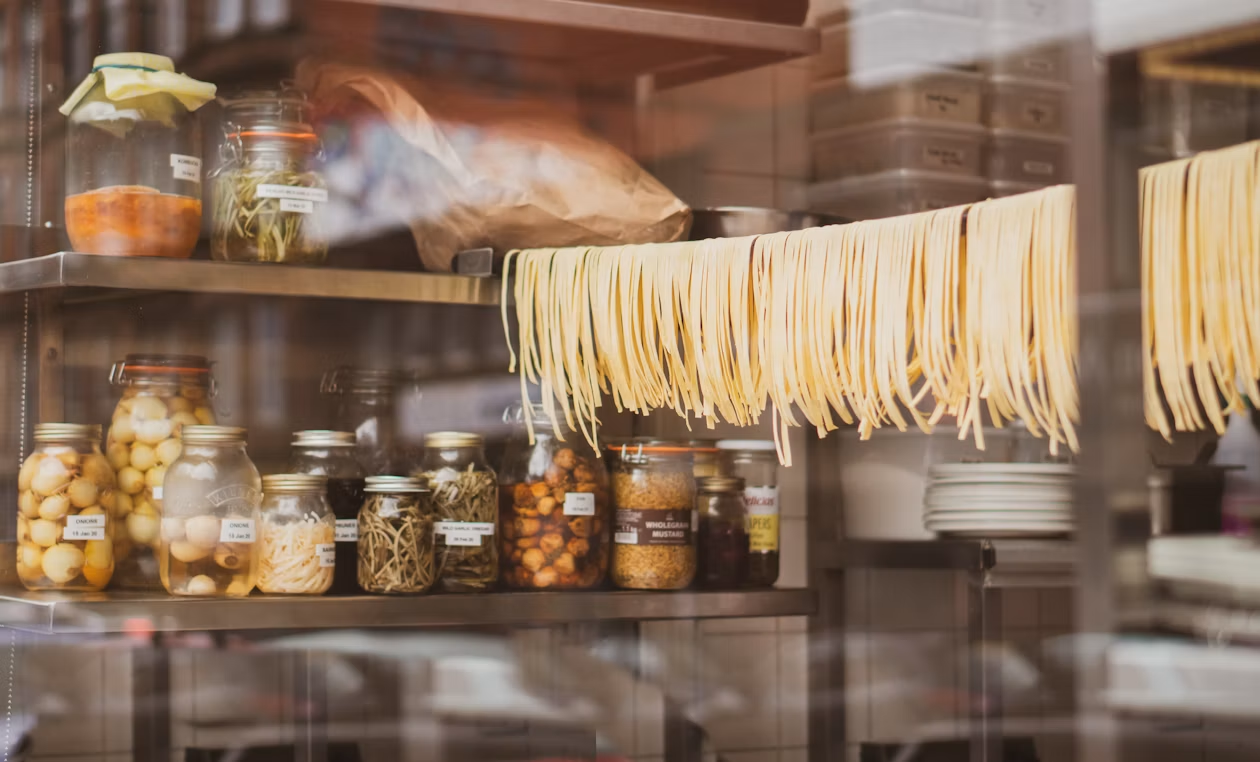
Italian food is not a single cuisine — it’s a mosaic of bold regional flavours, local traditions, and iconic dishes that change dramatically from one city to the next.
This food guide takes you city by city — including Rome, Naples, Sorrento, the Amalfi Coast, Florence, Bologna, Venice, and Sicily — uncovering the must-try dishes, traditional markets, regional cheeses, and local wines that define each place. Whether you're planning a food-focused trip or want to eat like a local, this guide will show you exactly what to try, where to find it, and why it tastes the way it does.
Before getting into individual cities, it helps to understand what shapes Italian food culture.
| Meal | Typical Time | What It Looks Like |
|---|---|---|
| Colazione (breakfast) | 7–9 am | A cornetto and coffee, usually eaten standing at the bar |
| Pranzo (lunch) | 1–2:30pm | Traditionally the main meal, with many small-town shops still closed for it |
| Aperitivo | 6–8pm | Wine or a spritz with small snacks, meant to open the appetite before dinner |
| Cena (dinner) | 7:30pm onward | The main event in most cities; kitchens often don't open before this time |
A little language goes a long way at a market stall or a counter, and Italians tend to respond warmly to visitors who make the effort.
These four lines cover most of what you'll need, but keeping a longer list of Italian phrases for travelers on your phone makes ordering at a busy counter far less intimidating than pointing and hoping.
Food in Italy is also seasonal and calendar-driven in a way that surprises a lot of visitors — white truffles in autumn, artichokes in spring, porcini mushrooms after the first fall rains, and hundreds of local sagre, or food festivals, celebrating everything from chestnuts to snails depending on the town and the month.
If you're planning a trip around more than just the food in Italy, a broader seasonal guide like Top Things to do in Italy All Year Round is a useful companion to this one.
Roman cooking is built on a short list of pasta dishes that look simple but are notoriously easy to get wrong, all made from a small shared pantry of guanciale, pecorino and black pepper. Here are some traditional Roman dishes that are certainly worth trying:
| Dish | Description |
|---|---|
| Cacio e Pepe | Pecorino romano and black pepper, emulsified with starchy pasta water |
| Carbonara | Guanciale, egg, pecorino, black pepper — no cream, despite what menus abroad suggest |
| Amatriciana | Tomato and guanciale, originally from the nearby town of Amatrice |
| Gricia | The "white amatriciana" — same as above, minus the tomato |
| Carciofi alla Giudia | Whole artichoke, flattened and deep-fried, from the Roman Jewish quarter |
| Supplì | Fried rice balls with a molten mozzarella center, sold as street food |
For coffee between meals, Rome's historic cafés near the Pantheon are some of the most atmospheric in the country. If espresso culture is part of what you're chasing on a trip, the best coffee spots in Italy covers several standout counters here and elsewhere on this list.
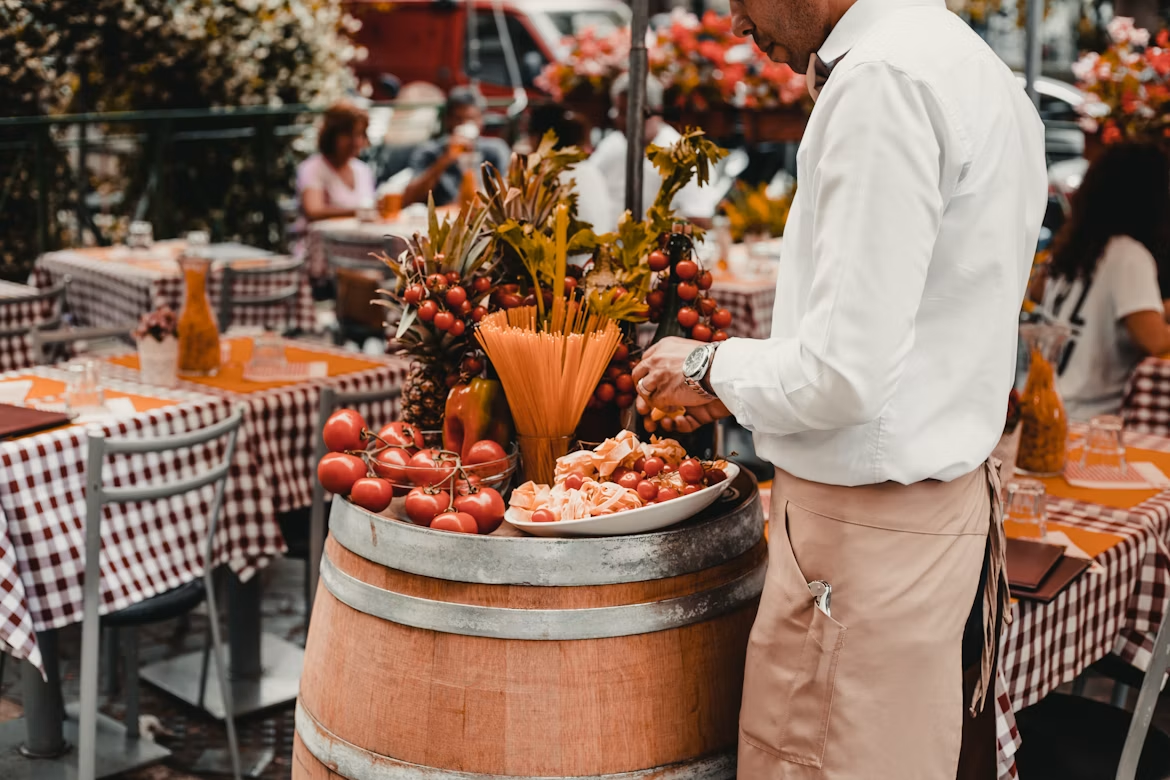
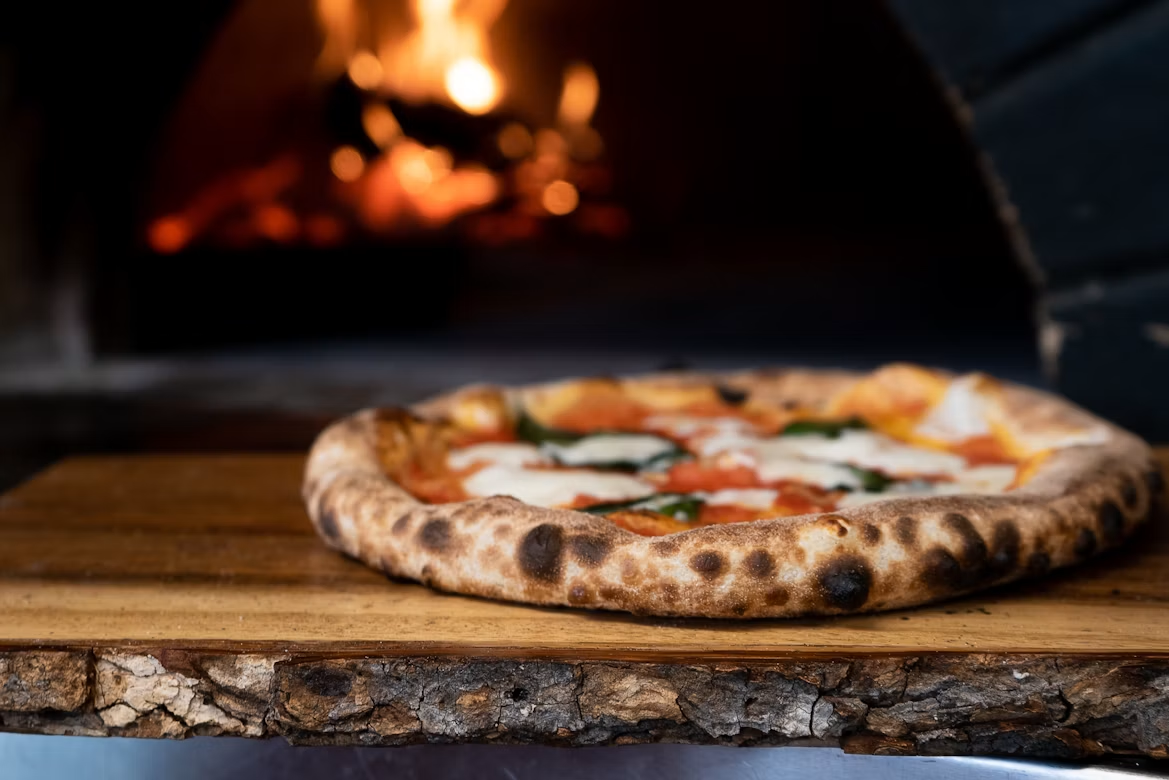
Naples invented pizza as the world knows it, and the city still treats it as a matter of civic pride rather than casual dining — a true Neapolitan pizza has a soft, blistered, almost soupy center and a puffed cornicione (crust edge), cooked in under 90 seconds in a wood-fired oven hot enough to scorch the air.
| Pizza | Toppings |
|---|---|
| Margherita | Tomato, mozzarella, basil |
| Marinara | Tomato, garlic, oregano — no cheese at all |
Beyond pizza, Naples is a city of bold, sweet-and-savory Italian dishes built for eating on foot or on a Sunday afternoon:
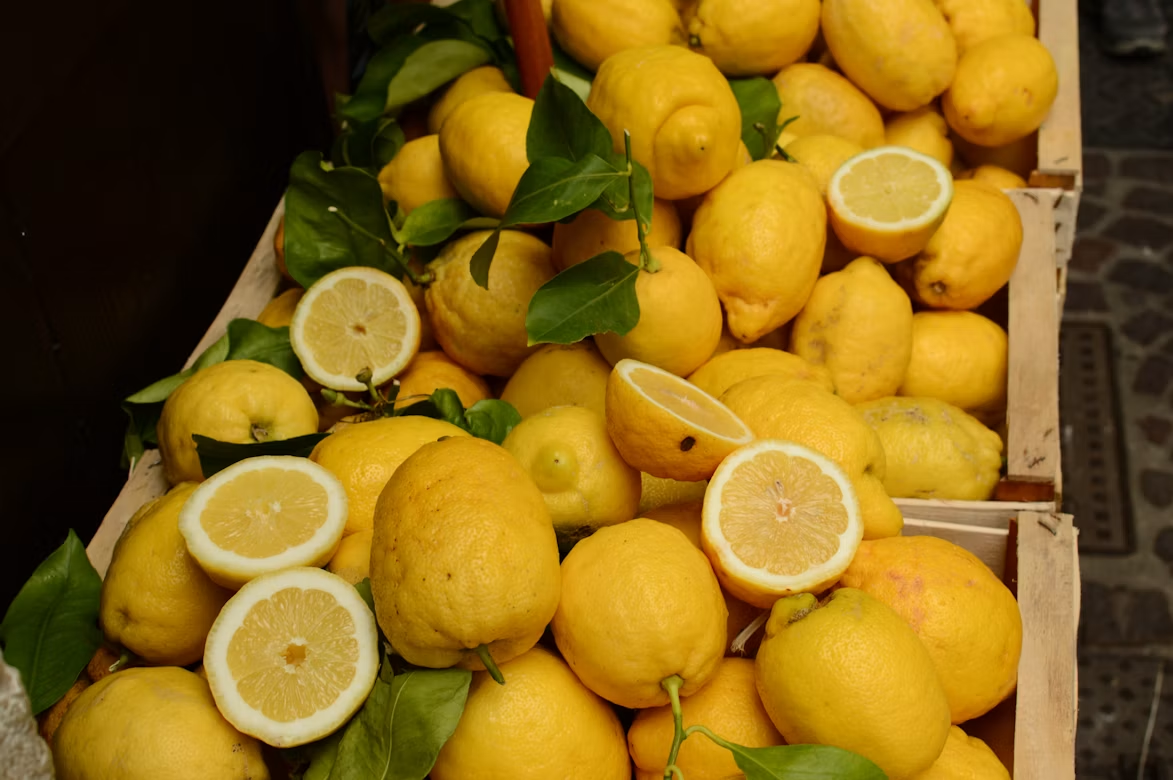
Sorrento sits on a peninsula famous for the sfusato amalfitano, an elongated lemon variety grown on steep terraces along the coast, and the fruit shapes nearly everything the town is known for eating and drinking. Here are a few things you need to order in Sorrento:
| Item | Why It Matters |
|---|---|
| Sfusato Amalfitano | The local lemon variety behind nearly everything else on this list |
| Limoncello | Lemon peel steeped in alcohol and sugar syrup, served ice-cold after meals — a homemade version tastes nothing like the mass-produced bottles |
| Gnocchi alla Sorrentina | Potato gnocchi baked with tomato sauce and fior di latte cheese until browned |
| Provola Affumicata | A smoked cow's-milk cheese from the peninsula's dairy tradition |
| Delizia al Limone | A dome-shaped sponge cake filled and coated in lemon cream, said to have been invented here in the 1970s |
Cooking along the Amalfi Coast leans heavily on what comes out of the water that morning, prepared with as little interference as possible. Here are some staples synonymous with the Amalfi Coast.
| Dish | Description |
|---|---|
| Scialatielli ai Frutti di Mare | A thick, short pasta invented for the region, loaded with clams, mussels, and shrimp in a light broth |
| Colatura di Alici | An amber anchovy extract pressed and barrel-aged in the fishing town of Cetara, used a few drops at a time |
| Insalata di Mare | A cold seafood salad, common as a starter |
| Grilled Whole Fish | Simple preparations of anchovies and swordfish, lightly fried or grilled |
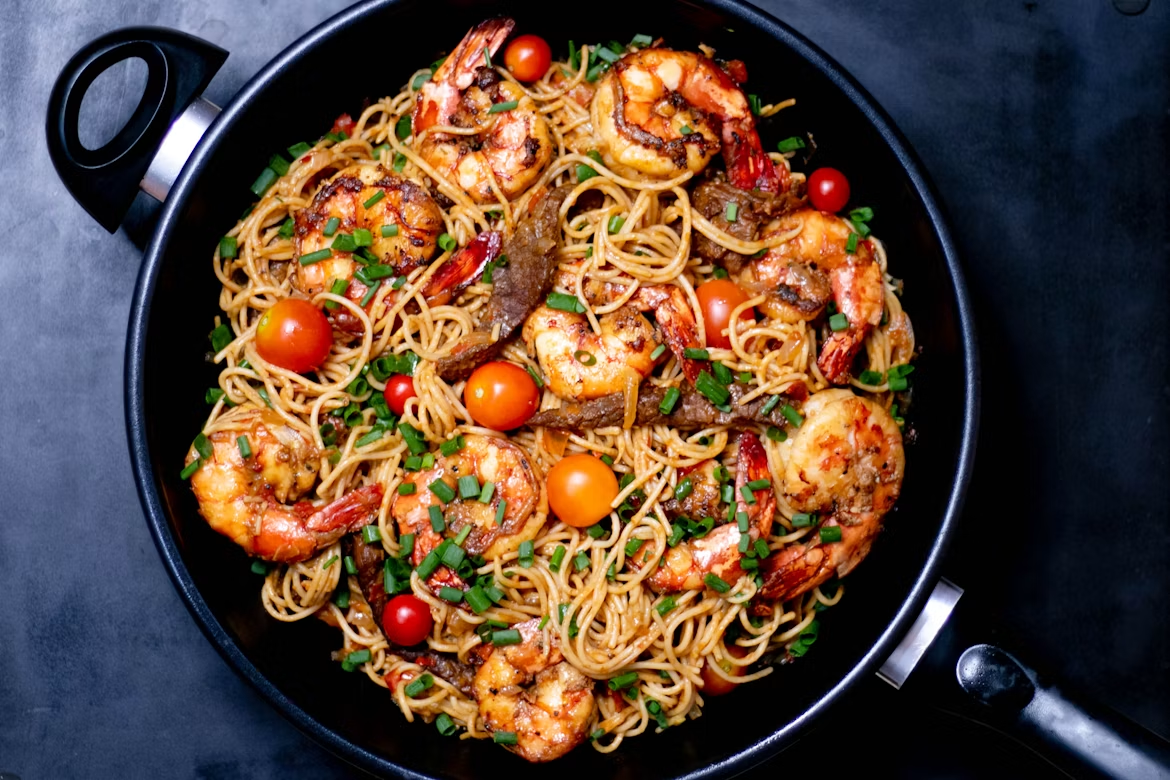
Tuscan food is defined by its simplicity, a celebration of high-quality ingredients prepared with minimal fuss. Grilling, roasting, and rustic techniques take centre stage, but one of its most distinctive features is the bread itself. Traditional Tuscan bread is made without salt, an ancient practice often linked to a medieval salt tax, though many locals credit it to a preference for flavors that don’t overpower the region’s famously rich cured meats.
| Dish or Drink | Description |
|---|---|
| Bistecca alla Fiorentina | A thick-cut T-bone from Chianina cattle, grilled rare and served unsliced, usually priced by weight |
| Ribollita | A thick vegetable and bean soup, thickened with stale bread |
| Pappa al Pomodoro | A tomato and bread soup, closer to a spread than a broth |
| Tuscan Bread | Baked without salt, a hallmark of the region |
| Chianti | The region's best-known Sangiovese-based red wine |
| White Truffle (San Miniato) | An autumn specialty; a smaller, less crowded counterpart to Piedmont's famous truffle fairs |
Bologna sits at the center of Emilia-Romagna, a region that produces more of what people imagine when they think "Italian cuisine" than anywhere else in the country.
| Item | Description |
|---|---|
| Tagliatelle al Ragù | Flat egg pasta with a slow-cooked meat sauce — the real original behind what's sold abroad as "spaghetti bolognese" |
| Tortellini in Brodo | Ring-shaped pasta stuffed with pork, prosciutto, and Parmigiano, served in clear meat broth |
| Mortadella | The origin of American "bologna," though the two share little beyond the name |
| Prosciutto di Parma | Dry-cured ham, aged and salted using a centuries-old method |
| Parmigiano-Reggiano | Aged a minimum of twelve months, often much longer |
| Balsamic Vinegar of Modena | Aged in a succession of progressively smaller wooden barrels — a different product from thin, mass-produced balsamic |
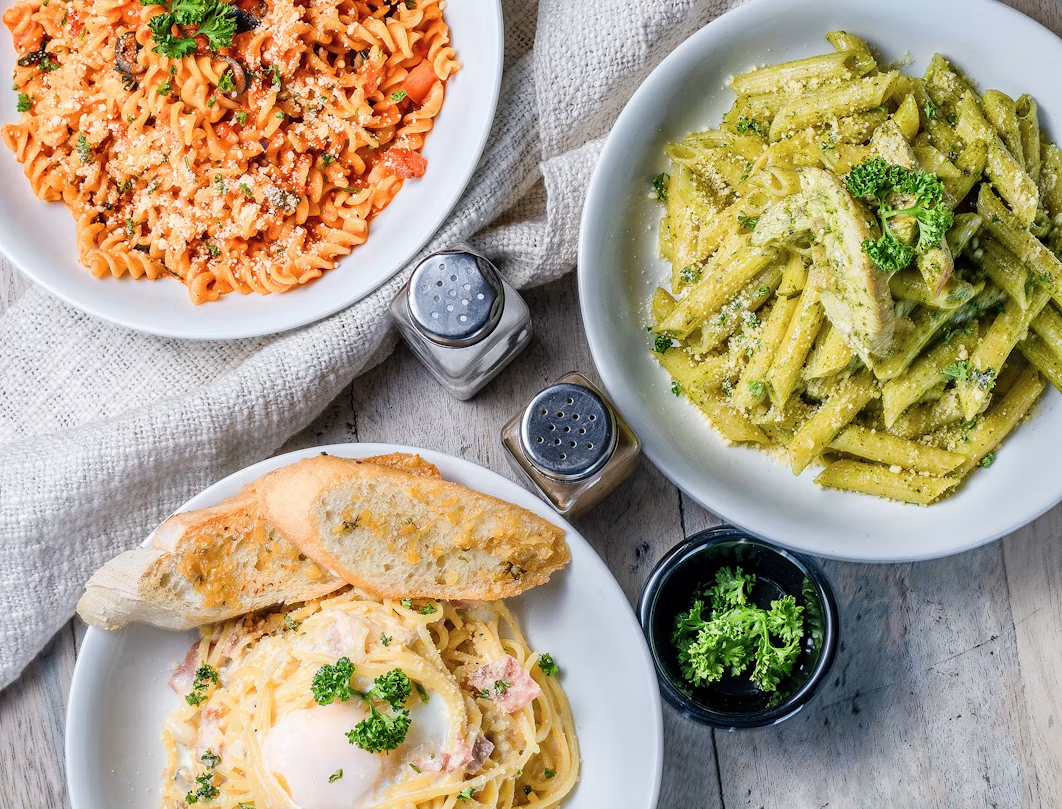
Venetian food culture revolves around cicchetti, bite-sized dishes that showcase the city’s love of simple, flavor-packed eating. Served in traditional bacari (local wine bars), these small plates are typically enjoyed standing at the counter, paired with an ombra, a small glass of regional wine. This casual, social style of dining is deeply rooted in Venice’s history and is widely considered the foundation of Italy’s modern aperitivo culture.
| Dish | Description |
|---|---|
| Baccalà Mantecato | Whipped salt cod, usually served on grilled polenta |
| Sarde in Saor | Sweet-and-sour marinated sardines with onions, a preservation technique from Venice's trading-empire days |
| Risotto al Nero di Seppia | Risotto stained black with cuttlefish ink |
The Rialto Market, split between fish stalls and produce stalls along the Grand Canal, has supplied the city's kitchens for centuries and is still the best place to see the day's catch before it reaches a restaurant.
Cooking in Sicily carries more outside influence than almost any other regional Italian cuisine, a legacy of Greek, Arab, Norman, and Spanish rule over the centuries. Arab traders introduced citrus, saffron, and the sugar-and-almond pastry tradition that produced cannoli and cassata.
| Dish | Description |
|---|---|
| Arancini | Fried, stuffed rice balls, which are a different shape and filling than Rome's supplì |
| Panelle | Thin chickpea-flour fritters, often eaten in a sandwich |
| Sfincione | A thick, spongy, tomato-and-onion Sicilian cousin of pizza |
| Couscous (Trapani) | The base of many western Sicilian dishes, a direct culinary link across the Mediterranean |
| Granita & Brioche | A coarse, crystalline relative of sorbet eaten with a soft bun, usually eaten for breakfast |
Italian cheese varies as sharply by region as the pasta does. The table below covers some of the most recognizable Italian cheeses, region by region, and knowing a few names helps make sense of a menu anywhere in the country.
| Cheese | Milk | Region | Character |
|---|---|---|---|
| Mozzarella di Bufala Campana | Water buffalo | Campania | Soft, milky, best fresh |
| Parmigiano-Reggiano | Cow | Emilia-Romagna | Hard, aged, nutty |
| Pecorino (Romano / Toscano / Sardo) | Sheep | Lazio / Tuscany / Sardinia | Sharp to mild, despite the shared name |
| Gorgonzola | Cow | Lombardy | Blue, pungent |
| Taleggio | Cow | Lombardy | Washed-rind, soft |
| Burrata | Cow | Puglia | Cream-filled, mild |
And of course, you can’t mention cheese without pairing it with Italian wine. Here’s a list of the best Italian wines by region:
| Wine | Grape | Region | Style |
|---|---|---|---|
| Chianti / Brunello di Montalcino | Sangiovese | Tuscany | Medium- to full-bodied red |
| Barolo / Barbaresco | Nebbiolo | Piedmont | Age-worthy, tannic red |
| Prosecco | Glera | Veneto | Light, sparkling |
| Amarone | Dried grapes | Veneto | Rich, concentrated red |
| Nero d'Avola | Nero d'Avola | Sicily | Warm, sun-heavy red |
| Vermentino | Vermentino | Sardinia | Crisp, coastal white |
None of these require expertise to enjoy. Most Italian restaurants pour a solid house wine by the glass or carafe that pairs reasonably well with whatever regional dish you've ordered.

Every city on this list has at least one Italian market worth walking through even if you're not cooking that night, because a market says more about a region's food than any restaurant menu can. You will find many classic dishes here, long before they reach a plate.
A few habits make market visits smoother:
These are small things, but they're the kind of practical details worth folding into broader trip prep. For more helpful information, check out our top tips and tricks for international travel.
Coperto is a standard per-person cover charge, usually between $2 and $4, added at most sit-down restaurants in Italy. It covers essentials like bread, table setting, and service, rather than being an optional tip or hidden fee. This charge is regulated at a local level and clearly listed on menus, so it is a normal part of dining out rather than something to dispute.
Yes, tap water is safe to drink throughout Italy, including in major cities and rural areas. However, restaurants typically serve bottled water — either still (acqua naturale) or sparkling (acqua frizzante) — unless you specifically request tap water (acqua del rubinetto). In many cities, you’ll also find public drinking fountains providing free, high-quality water, which locals regularly use.
In popular cities and well-known restaurants, especially during peak travel seasons, making a reservation one to two days in advance is highly recommended. However, smaller trattorias in less touristy neighborhoods and most lunch services are generally more flexible and will accommodate walk-ins. Booking ahead not only guarantees a table but can also help you secure more desirable dining times.
Vegetarian dining in Italy is relatively easy, as many traditional dishes naturally feature vegetables, pasta, and cheese. Gluten-free options have also become much more widely available in recent years, with many restaurants offering dedicated menus and separate preparation areas due to Italy’s strong awareness of coeliac disease. In addition, supermarkets and bakeries often stock a wide range of certified gluten-free products.
Simple requests or minor adjustments are usually accepted, particularly for dietary needs or allergies. However, significantly altering traditional recipes — such as adding cream to a classic carbonara — may be frowned upon, as many Italian dishes are rooted in strict regional traditions. When in doubt, it’s best to order dishes as they are intended, or politely ask what modifications are possible.
A typical daily food budget in Italy ranges from $50 to $90 per person, covering a light breakfast, a casual lunch, and a mid-range dinner with drinks. Costs can rise significantly in high-demand destinations like the Amalfi Coast or Venice, where a single dinner may exceed this range. Travelers can manage costs by mixing sit-down meals with street food, bakeries, and local markets.