Scotland and Ireland Road Trip: 21-Day Itinerary
Car & Road Trips
Car & Road Trips
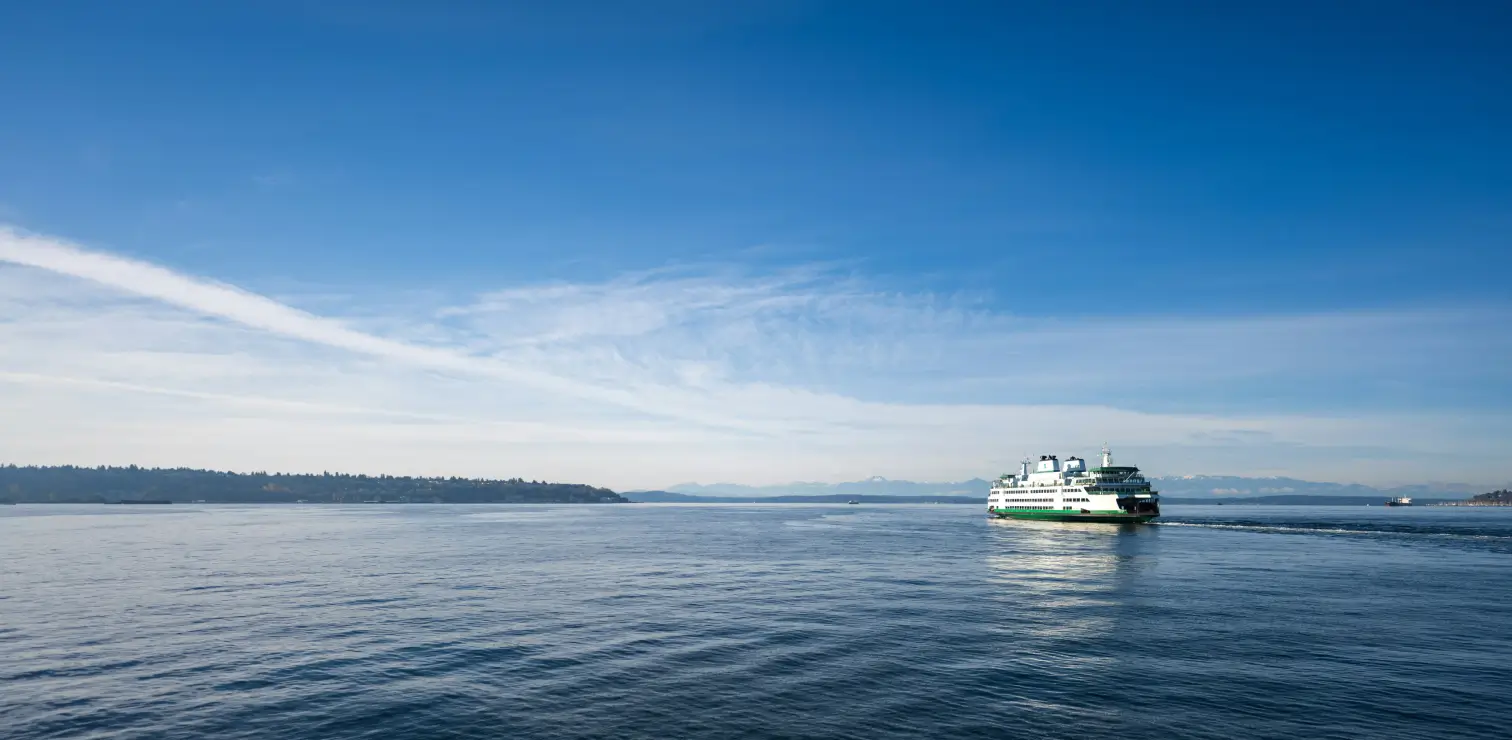
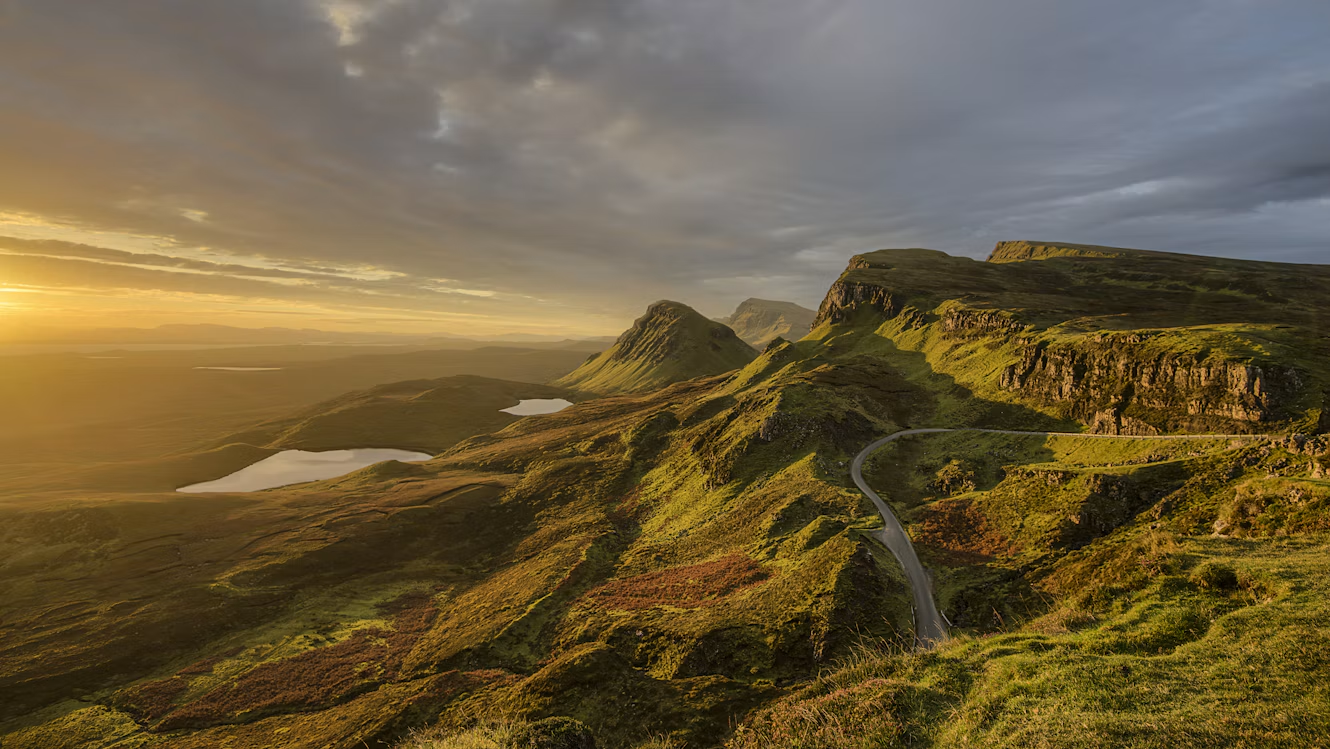
The best way to see Scotland, Northern Ireland and the Republic of Ireland in one trip is a 21-day circular road trip from Edinburgh, linking each stop by car and ferry. From dramatic mountains and glistening lochs to unspoiled beaches and charming fishing villages, this route through Scotland, Northern Ireland and the Republic of Ireland is packed with memorable stops, and the drives between them are just as rewarding.
This itinerary brings together the highlights of Scotland, Northern Ireland and the Republic of Ireland in one three-week adventure. It combines dramatic landscapes with vibrant cities, giving you a variety of experiences, from sightseeing in Edinburgh, Dublin and Belfast to Highland hikes and sandy beaches. There's a mix of famous landmarks and lesser-known gems, with two- and three-night stays giving you time to rest and explore, which is especially helpful if you're recovering from a transatlantic flight.
The Cairnryan to Belfast ferry connects Scotland with Northern Ireland, letting you take your car across and keep the same vehicle throughout. Starting and finishing in Edinburgh also makes the route convenient for travelers bringing their own car or returning a rental car to the same location where they picked it up.
We'd allow a minimum of three weeks for this itinerary, giving you time to enjoy the beautiful landscapes and explore the sights. May to September is generally the best time to go, with long daylight hours that leave plenty of time for hiking and sightseeing. July and August are usually the warmest months (daytime highs are typically in the 60s °F, or around 15–20°C) but also the busiest. Consider May, June and early September for smaller crowds, mild weather and still-generous daylight. Whenever you visit, we recommend packing rain gear and layers, as the weather can be unpredictable.
It's worth knowing that Scotland's midge season, when tiny biting flies are out in force, usually occurs from May to September. Midges are especially active in damp conditions, so pack insect repellent.
Below is a summary of the route, approximate travel times and suggested days:
| Route | Travel details* | Suggested days |
|---|---|---|
| Edinburgh | Explore on foot | 2 days |
| Edinburgh → Inverness | Approx. 3.5–4 hours by road via the Cairngorms | 1 day |
| Inverness → Isle of Skye | Approx. 3–3.5 hours by road to Portree via Loch Ness and the Skye Bridge | 3 days |
| Skye → Armadale → Mallaig → Fort William | Approx. 1–1.5 hours' drive from Portree to Armadale, a 30–45-minute ferry crossing, then 1–1.5 hours' drive to Fort William | 2 days |
| Fort William → Glencoe → Loch Lomond | Approx. 2–2.5 hours by road to Luss or Balloch | 1 day |
| Loch Lomond → Cairnryan → Belfast | Approx. 2–2.5 hours by road from southern Loch Lomond, followed by a ferry of approx. 2 hours 15 minutes | 2 days |
| Belfast → Causeway Coast - Portrush | Approx. 3–4 hours, plus sightseeing stops | 2 days |
| Portrush → Derry → Donegal | Approx. 2–3 hours by road, with extra time for exploring Derry | 2 days |
| Donegal → Sligo → Westport → Galway | Approx. 4–4.5 hours by road via Sligo | 2 days |
| Galway → Dublin | Approx. 2.5 hours by road | 2 days |
| Dublin → Belfast | Approx. 2–2.5 hours by road | 1 day |
| Belfast → Cairnryan → Edinburgh | Ferry of approx. 2 hours 15 minutes, followed by approx. 3–3.5 hours by road | 1 day |
* These travel times are approximate and exclude sightseeing, breaks and traffic. Remember that you'll be driving on the left, so many drivers find they cover ground more slowly than they would at home.
Edinburgh → Cairngorms → Inverness · approx. 160 miles by car
Start your road trip in Edinburgh, Scotland's historic capital. If you're renting a car, we recommend picking it up after you've explored the city. If you're bringing your own vehicle, parking on the outskirts is often the best choice, as Edinburgh is best explored on foot and parking in the city center can be expensive.
Spend your time here exploring historic landmarks such as Edinburgh Castle and St Giles' Cathedral, wandering along the cobbled streets of the Royal Mile, and hiking up Arthur's Seat for beautiful views across the city.
On the morning of day three, start your journey to Inverness. Take the A9 north through the beautiful landscapes of Perthshire and the Cairngorms. With its independent shops and cafés, Pitlochry makes a great lunch stop. Or if you feel like a woodland walk and stunning views, take some time to explore the Cairngorms National Park.
Arrive in Inverness by late afternoon or early evening, leaving time to explore the city center. Take a stroll along the River Ness, admire the cathedral and browse the Victorian Market.
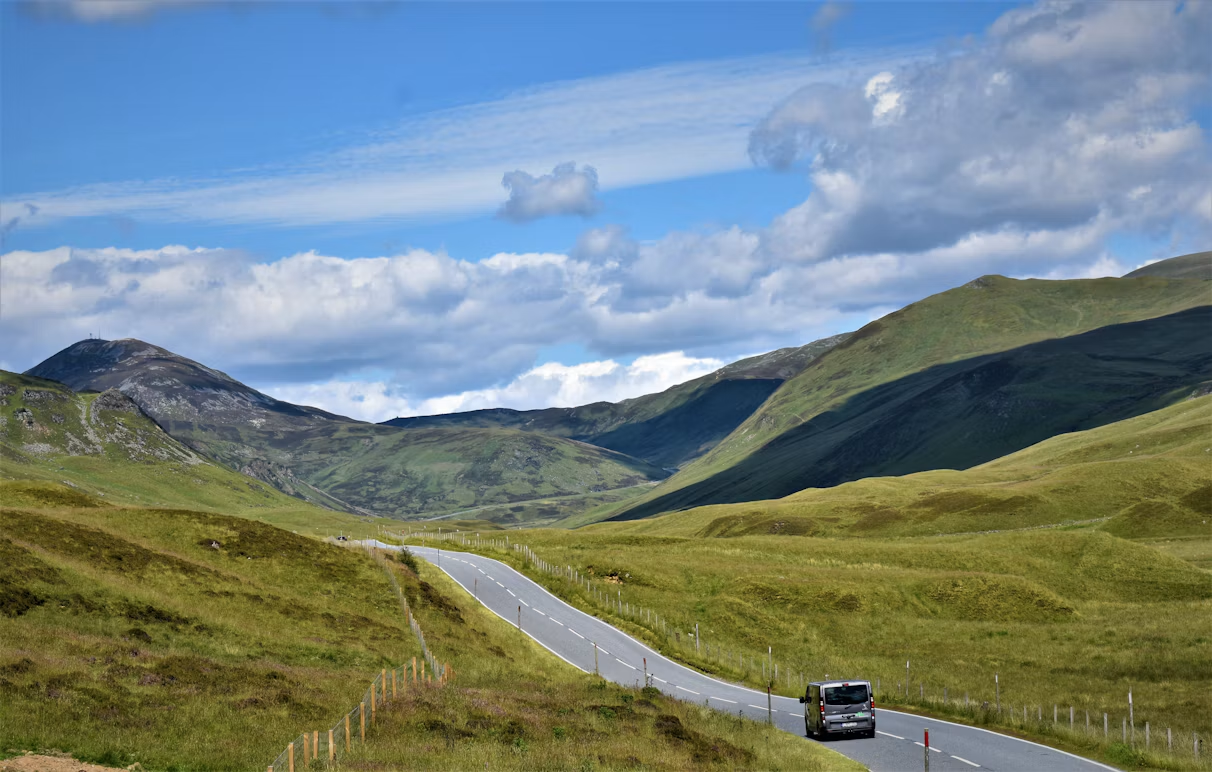
Inverness → Loch Ness → Eilean Donan Castle → Isle of Skye · approx. 115 miles by car
On day 4, depart Inverness and head toward the Isle of Skye, the largest island in the Inner Hebrides. Rather than heading straight there, make a few must-visit stops along the way. Follow the A82 south along the western shore of Loch Ness. Pull over to soak up the beautiful views across the water and visit the ruins of Urquhart Castle, which sits on the shore.
Continue west along the A887 and A87 toward Eilean Donan Castle. This stunning medieval fortress sits on a small island, surrounded by three lochs: Loch Duich, Loch Long and Loch Alsh. Explore the castle and enjoy the panoramic views before continuing along the A87 and crossing the Skye Bridge onto the island.
We recommend staying in Portree, Skye's main town, with its colorful harbor and many shops, cafés and restaurants. It's a convenient base for exploring the island.
Home to dramatic landscapes and ancient landmarks, Skye has plenty to see, and a car is the best way to explore. Over the next couple of days, visit the Old Man of Storr, a 165-foot rock pinnacle that rises above the hills; go wild swimming in the Fairy Pools, a series of crystal-clear turquoise pools; walk through the Quiraing, a landslip with incredible scenery; and drive out to Neist Point Lighthouse for dramatic coastal views.
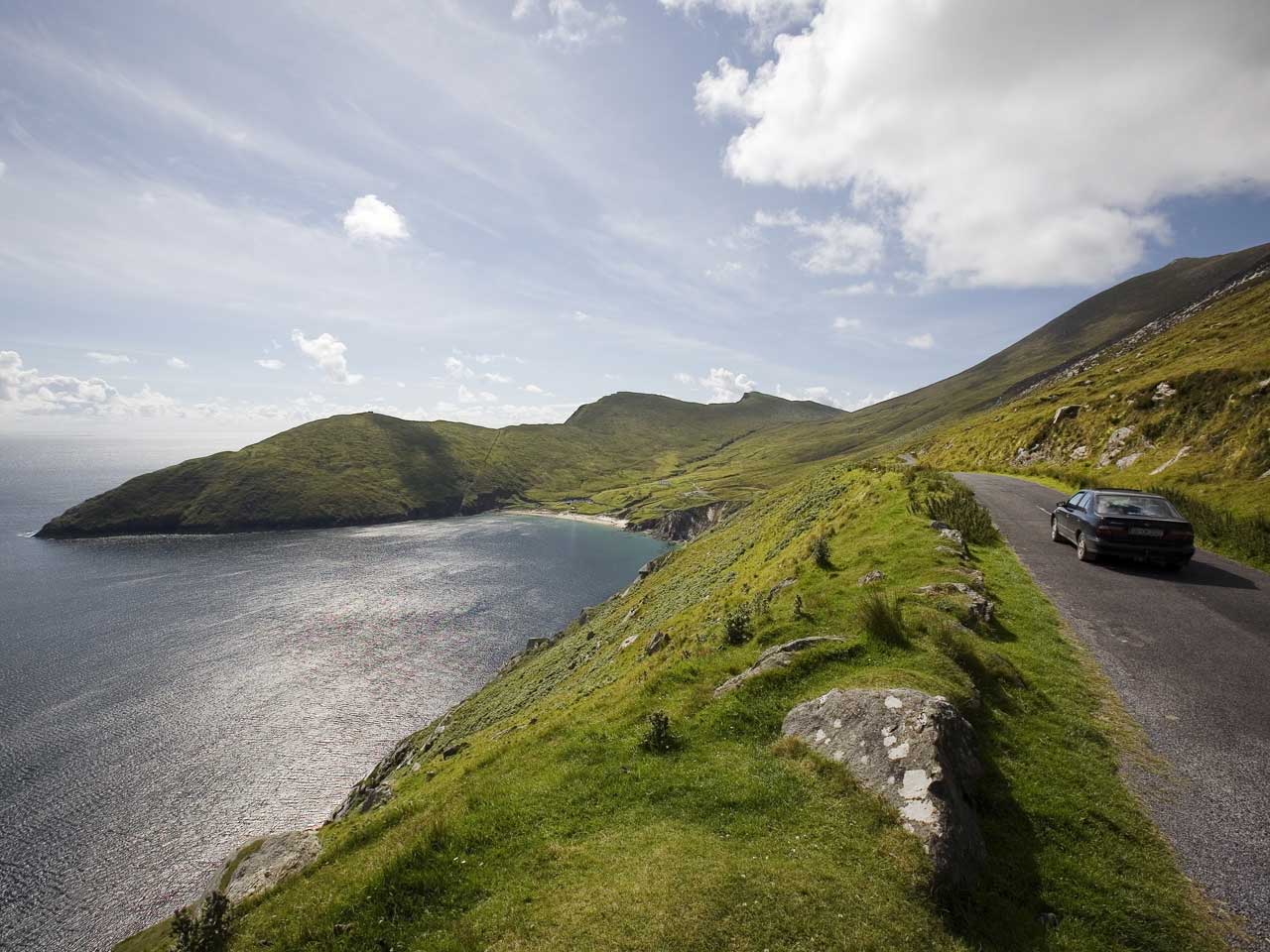
Roads on the Isle of Skye are narrow, often only wide enough for one car at a time, so allow plenty of time for your journey.
Portree → Armadale → ferry to Mallaig → Glenfinnan → Fort William → Glencoe → Loch Lomond · approx. 160–170 miles by car, plus ferry crossing
Depart Skye and follow the A87 and A851 south to Armadale. Take the car ferry from Armadale to Mallaig, a crossing of approximately 30 minutes. Book your vehicle space in advance and allow time for check-in and boarding.
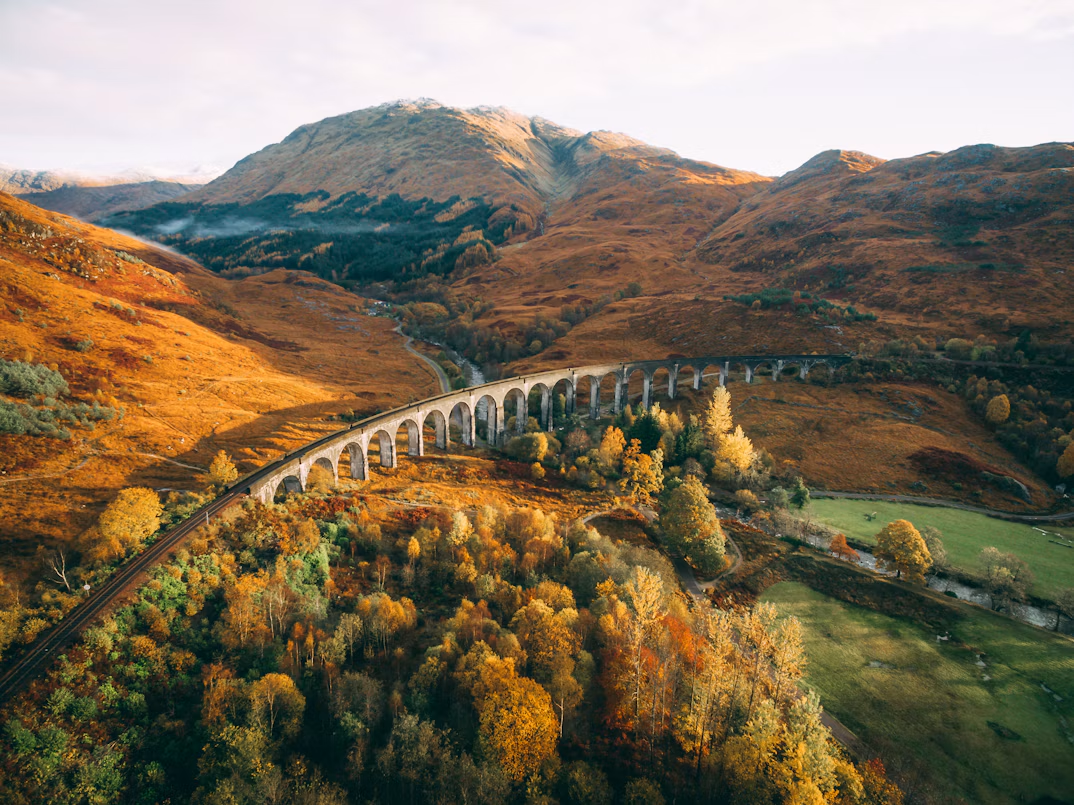
From Mallaig, follow the A830 toward Fort William. Known as the Road to the Isles, this scenic drive takes around 1–1.5 hours, but you'll likely want to stop for photos and a couple of detours, such as Glenfinnan, famous for its railway viaduct that appeared in the Harry Potter films.
Once you've arrived in Fort William, head to your lodging, where you'll spend 2 nights. Often described as the Outdoor Capital of the UK, it gives you time to enjoy plenty of adventures. You can hike Ben Nevis, Britain's highest mountain at 4,413 feet, walk through the valley of Glen Nevis, and visit nearby attractions like Neptune's Staircase, an eight-lock staircase on the Caledonian Canal.
On day 9, follow the A82 south toward Glencoe. Stop at the Glencoe Visitor Center to learn more about the area's history before continuing to the Three Sisters viewpoint, where you can enjoy some of the most stunning views in the area.
Then continue along the A82 south toward Loch Lomond and the Trossachs National Park. Take your time, as there are plenty of viewpoints along the way. Spend the night around Loch Lomond in either Luss or Balloch, ready for the journey to Northern Ireland the next day.
Loch Lomond → Cairnryan → Belfast · approx. 100 miles by car, plus ferry crossing
Today it's time to swap the Scottish Highlands for Northern Ireland's capital. In the morning, take the A82 south and follow the M8 east, M77 and A77 toward Cairnryan. The journey takes around 2–2.5 hours, but allow plenty of time for check-in and boarding at the Cairnryan ferry port. If you're traveling with a rental car, always check the rental company's rules to see whether you're allowed to take the car across to Northern Ireland.
Once you arrive at Cairnryan, board the ferry with your car and enjoy the crossing, which usually takes about 2 hours 15 minutes.
After you arrive in Belfast, drive off the ferry and head to your lodging, ready to spend a couple of days exploring this vibrant city.
There's plenty to keep you busy in Belfast. Admire Belfast City Hall, wander through the Botanic Gardens and visit Titanic Belfast to learn all about the story of the famous ship. Other highlights include the Cathedral Quarter, with its traditional Irish pubs and live music bars, and St George's Market, where you can sample local produce. If you want a break from the driver's seat, a Black Taxi Tour is also a fascinating way to explore the city.
Belfast → Carrickfergus → Giant's Causeway → Portrush · approx. 100 miles by car
Today you'll embark on one of Northern Ireland's most scenic drives, the Causeway Coastal Route. Located on the north coast, it winds past beautiful sandy beaches, dramatic cliffs and charming fishing villages.
Leave Belfast via the M2 and M5, making your first stop at Carrickfergus, a historic town known for its waterfront castle. Then continue along the coast, stopping at villages such as Glenarm or Cushendall for lunch or a scenic stroll.
If time allows, take a detour to Torr Head, where you can enjoy historic ruins and dramatic views toward Scotland.
Continue to Portrush, where you'll stay for the next two nights. With its beautiful sandy beaches and plenty of restaurants and bars, it's a convenient base for exploring the Causeway Coast.
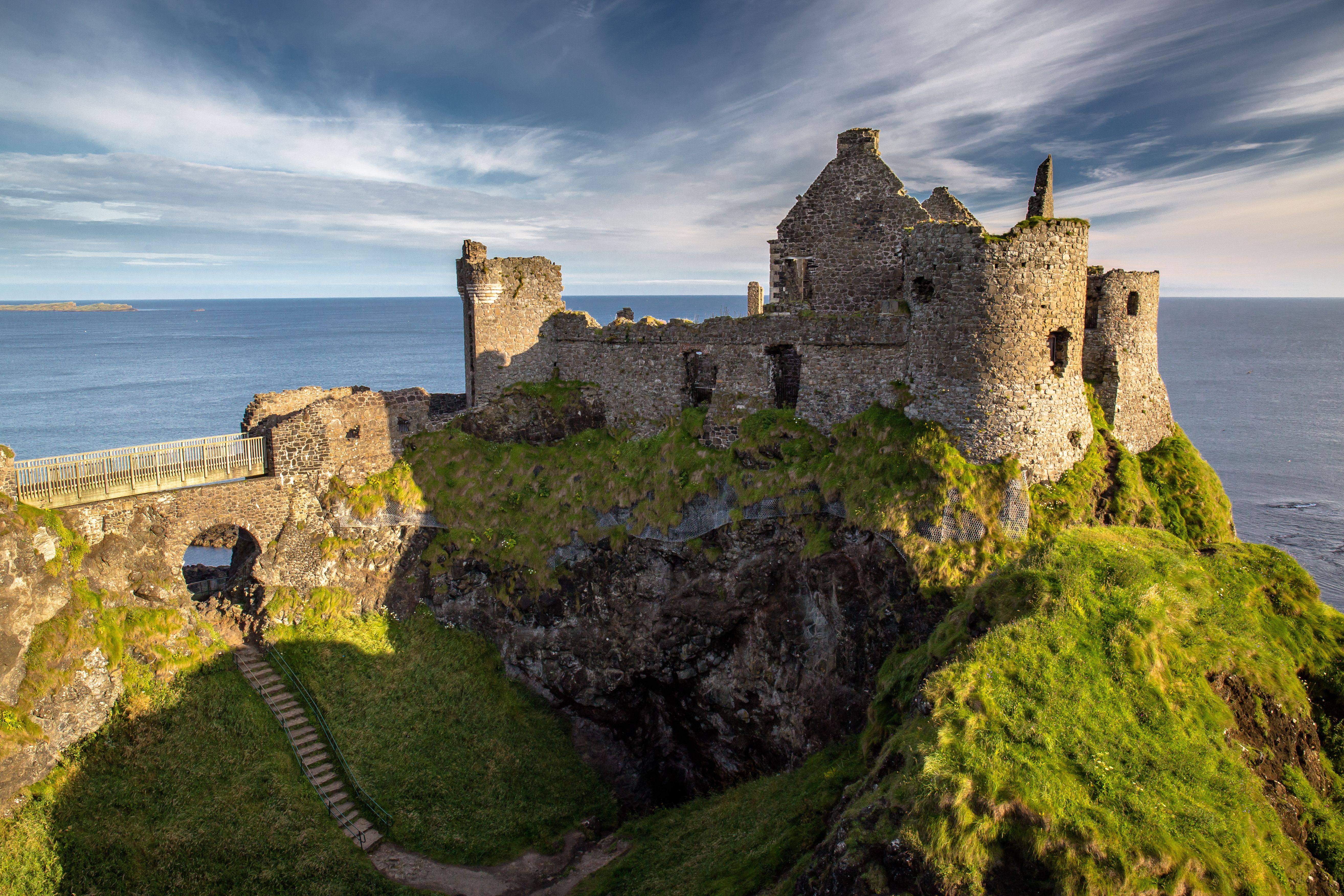
In the morning, drive to the Giant's Causeway, a UNESCO World Heritage Site known for its thousands of interlocking basalt columns, formed by volcanic activity. Spend time exploring this natural wonder and soaking up the impressive views, then head to the Carrick-a-Rede Rope Bridge, which connects the mainland to a small island with incredible panoramas. If you have time, Dunluce Castle, a medieval cliffside fortress, is also worth visiting. Afterward, return to Portrush for a relaxing evening ahead of your next adventure.
Causeway Coast → Derry → Donegal · approx. 85 – 100 miles by car
On day 14, it's time to make your way from Northern Ireland into the Republic of Ireland. Instead of driving straight to Donegal, stop in Derry, which is only around an hour's drive from Portrush. Explore the historic city, best known for its 17th-century city walls. Walk along the ramparts and visit sights like the Guildhall and the Peace Bridge.
Then drive west toward Donegal and watch the landscapes become more and more dramatic. Spend the late afternoon wandering around the town, visiting Donegal Castle and soaking up the lively atmosphere in its traditional Irish pubs.
The next day, experience Donegal's incredible coastal scenery with a drive to the Slieve League cliffs. Walk along the dramatic clifftops and enjoy the amazing views over the Atlantic. If you have time, Malin Beg is also worth a stop, with its breathtaking sandy bay and peaceful atmosphere.
Donegal → Sligo → Westport → Galway · approx. 165-175 miles by car
The next leg is just as scenic, as you explore some of the highlights of the Wild Atlantic Way. Allow plenty of time for photo stops along the way, as there's beautiful scenery at every turn.
From Donegal, follow the N15 south to Sligo, known for its literary heritage and surfing scene. It makes a great first stop for coffee and a short break from driving.
Then continue south into County Mayo, stopping for a bite to eat in the charming town of Westport. Admire the Georgian architecture and take a stroll along the river before tucking into a pub lunch.
Afterward, continue to the lively city of Galway, where you'll spend the next two nights. There's plenty to keep you busy. Wander through the vibrant Latin Quarter, where you'll find many traditional pubs and restaurants, visit the historic Spanish Arch, learn more about the city at the Galway City Museum and take a scenic stroll along the Salthill Promenade.
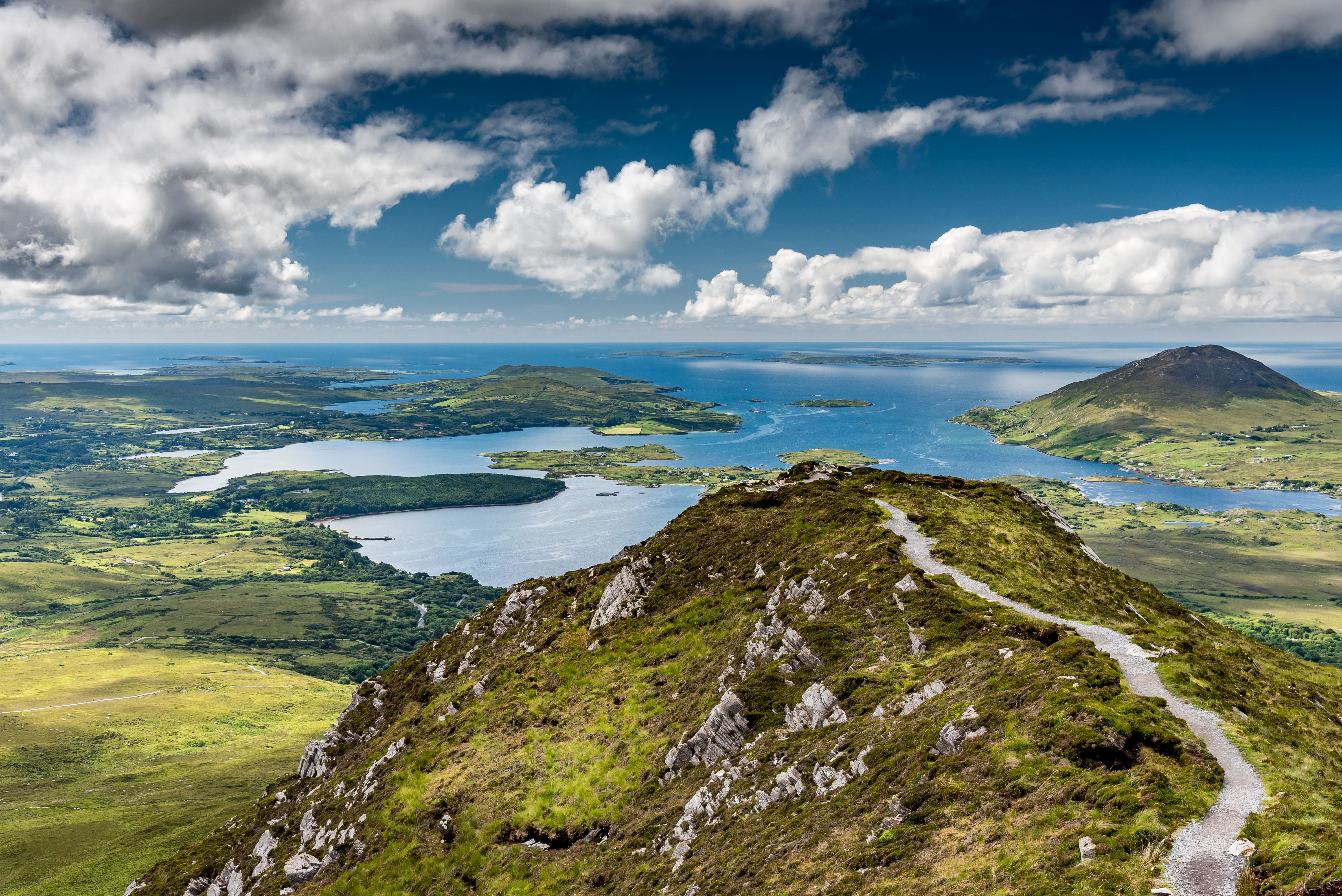
From Galway, you can also take a day trip to Connemara or the Cliffs of Moher.
Galway → Athlone → Dublin · approx. 130 miles by car
Head east toward Dublin, following the M6 and then the M4. Athlone makes a convenient stop en route for coffee or a bite to eat. Walk along the river and explore the town's historic castle.
If you'd like a detour, Clonmacnoise is another option, a medieval monastic site where you can explore ancient ruins and enjoy scenic views across the river. Continue to Dublin, where you'll spend the final two nights of your Irish adventure. If your lodging doesn't have parking, we recommend finding a garage on the outskirts of the city center. Dublin is best explored on foot or by public transit, so you can take a break from driving once you arrive.
Spend the next couple of days exploring Dublin's famous landmarks. Must-visits include Trinity College and the Book of Kells, Dublin Castle, the National Botanic Gardens and Kilmainham Gaol. The Guinness Storehouse is also a popular attraction, where you can learn all about Ireland's most famous stout.
Along with its impressive sights, Dublin is known for its nightlife, with traditional Irish pubs and live music bars where you can enjoy a lively atmosphere.
Dublin → Belfast → Cairnryan → Edinburgh · approx. 105 miles to Belfast, plus ferry and onward drive of around 125 miles
It's time to say goodbye to Dublin and begin your journey back to Edinburgh. Depart Dublin and follow the M1 north toward Belfast, a drive that usually takes about 2 to 2.5 hours depending on traffic.
We recommend spending your final night in Belfast rather than trying to catch a ferry the same day. It makes for a more relaxed journey and gives you plenty of time to reach the port for your morning sailing. Plus, you get one final night in Belfast.
The next morning, make your way to the Belfast ferry port, allowing plenty of time for check-in and boarding. We recommend booking a morning ferry from Belfast to Cairnryan, leaving you plenty of time for the final drive back to Edinburgh.
Once you've arrived in Scotland, drive off the ferry and follow the A77 north before joining the M77 and M8 toward Edinburgh. Allow approximately 3–3.5 hours, depending on traffic.
Scotland and Northern Ireland are part of the United Kingdom, while the Republic of Ireland is an independent country. Although they share many similarities, you can expect some differences along the way.
A road trip of this scale can be daunting. But preparation goes a long way. Here are some practical tips for a smooth and stress-free road trip:
Ready for an unforgettable adventure? Start planning your three-week road trip around Scotland, Northern Ireland and Ireland today. Use Direct Ferries to compare ferry crossings and find a sailing that suits your itinerary.