Sustainable Travel

Sustainable Travel
There are many things to think about when planning a trip, such as your budget, destination and what to pack. But, it's becoming increasingly more common to think about the most sustainable way to travel, too. As concerns about climate change continue to rise, more travelers are seeking ways to lower their environmental impact.
And that's where ferries come into the mix. Traveling by ferry not only gives you the chance to relax, but it can also help minimize your environmental impact compared with some other modes of transport.
On this page, we take a closer look at two key reasons ferries are considered a greener way to travel: their carbon footprint and the steps ferry companies are taking to protect the environment.

A quick look at the figures shows that the difference in emissions between ferries and other modes of transport – such as planes – is significant. On average, a passenger on a ferry generates around 19 grams of CO₂ per kilometer. By contrast, a short-haul flight produces around 244 grams of CO₂ per kilometer per passenger. Although taking a car on a ferry increases emissions slightly, they're still nowhere near those of a flight.
| Mode of transport | Average emissions per passenger | Emissions per 500 km* |
|---|---|---|
| Train | 14 g | 7 kg |
| Ferry | 19 g | 9.5 kg |
| Bus | 28 g | 14 kg |
| Car (average occupancy) | 104 g | 52 kg |
| Car (single passenger) | 170 g | 85 kg |
| Short-haul flight | 244 g | 122 kg |
*Sample calculated based on a distance of 500 km (e.g. Milan–Rome)
To put these figures into perspective, let's look at a typical holiday scenario. Imagine two people traveling to a popular summer destination such as Sardinia, Sicily or Greece. When planning a trip like this, the question often arises as to whether it makes more sense to travel by ferry or by plane.
So, how do the emissions compare? The examples below show the estimated carbon footprint of each option, helping you see the difference in a real-world travel situation:
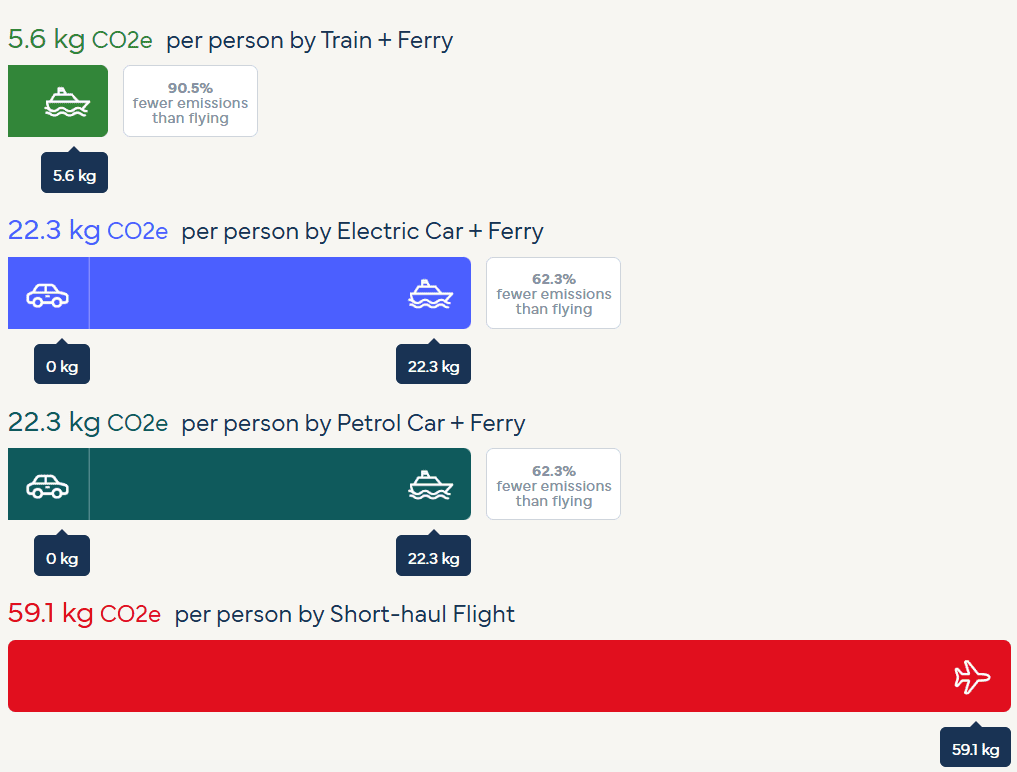
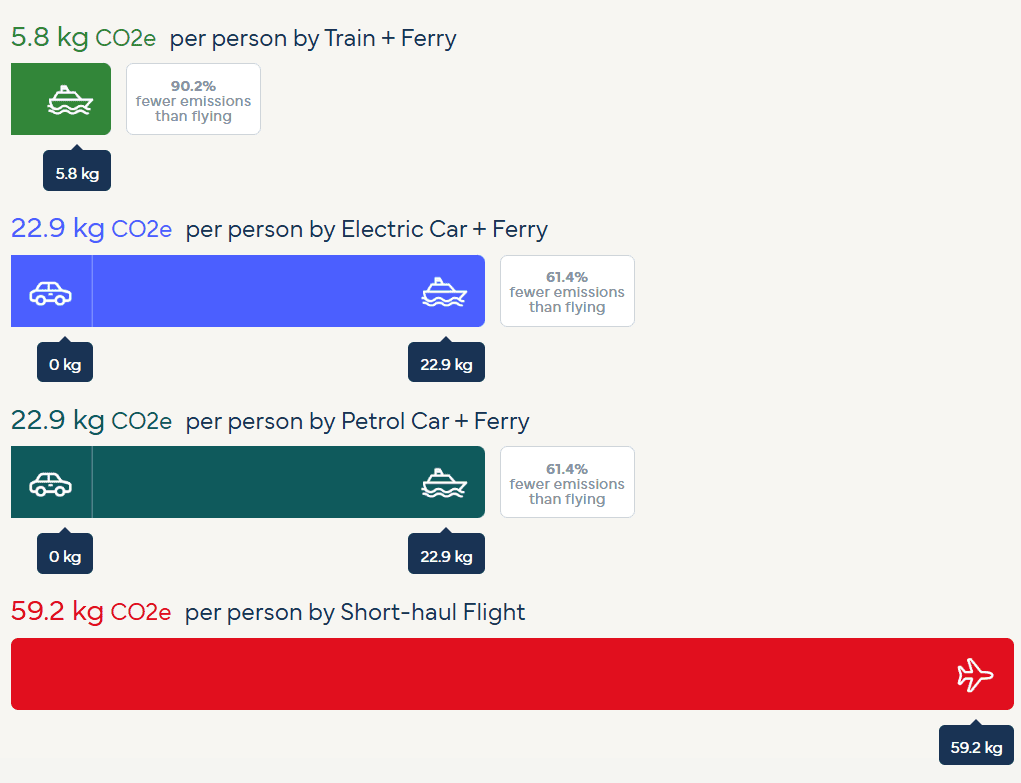
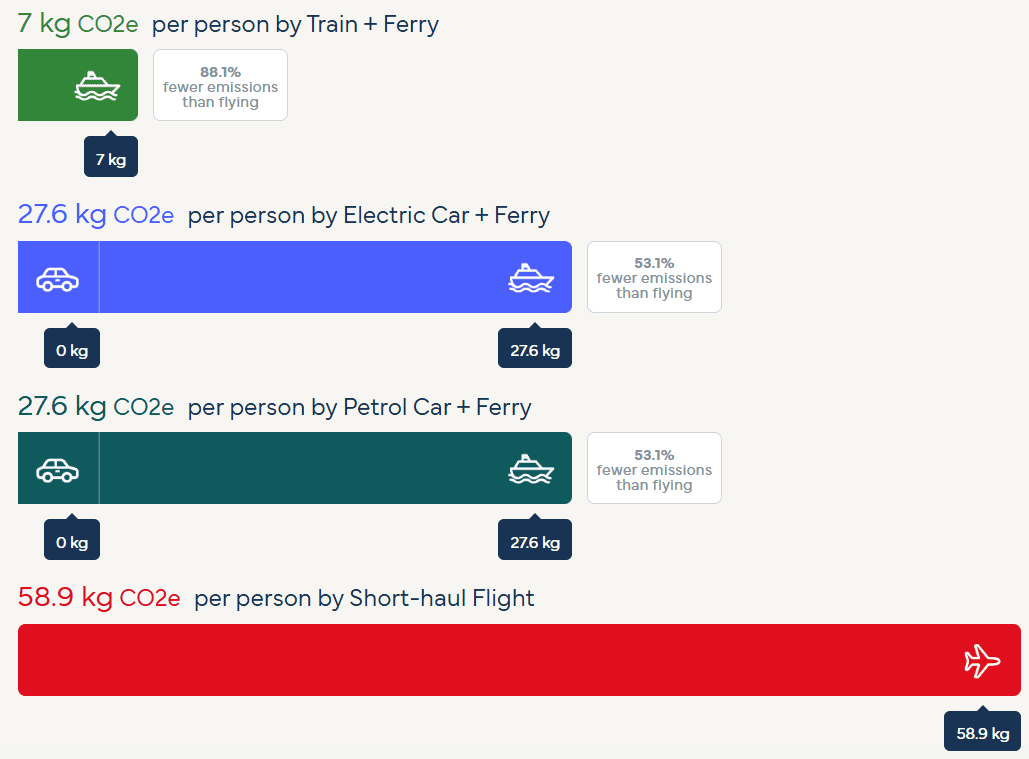
You can check the emissions for your chosen itinerary using our free online CO₂ calculator.
Sustainability is becoming an increasingly important focus across the ferry industry. To reduce their environmental impact, many ferry operators are investing in new technologies and initiatives that help make their vessels more environmentally friendly. These efforts include:
Many of these sustainability initiatives are already making a difference across Europe's ferry networks today.

Even small, conscious decisions can make a difference when it comes to making your trip more sustainable. Direct Ferries is a great place to start, offering useful information, practical tools and expert tips to help you plan your journey.
Sustainable travel isn't about creating the perfect trip or getting every decision right. Instead, it's about making positive changes where you can and taking small steps towards more responsible travel each time you plan a holiday. Over time, those choices can add up to make a meaningful difference.
If you're not sure where to start, our blog is a great source of inspiration. You'll find practical travel guides, destination ideas and helpful tips to help you plan a more sustainable trip.
If possible, consider traveling outside the peak season, or at least avoiding the busiest months, such as July and August. Not only can this help reduce strain on popular destinations, but you'll get to enjoy a more relaxed and enjoyable travel experience. When choosing where to stay, it's also worth looking at accommodation outside of busy tourist hotspots and visiting major attractions as part of a day trip.
It's a good idea to pack items that help reduce waste whilst you travel, such as a reusable water bottle, a set of travel cutlery or other small, practical essentials. If you use wet wipes, look for plastic-free alternatives where possible.
You can also make more sustainable choices when it comes to snacks and food. Products with minimal or paper-based packaging are generally a more environmentally-friendly option.
It's a good idea to research your destination before you travel. For example, if you're visiting coastal areas with sensitive marine life, use a sun cream that doesn't harm the ecosystem. There are now many 'reef-safe' products available that are formulated to be more coral-friendly.
It's also worth thinking carefully about the souvenirs you buy. It's better to support local businesses rather than buying mass-produced goods with no connection to your destination. A handmade product or locally-made items with a regional connection often make for a more sustainable and personal keepsake.
Alternatively, you could collect postcards, brochures or small mementos and use them to create your own travel album when you return home.
If you have any questions about your booking, check out our FAQ section.
Even small, conscious choices can help make your trip more sustainable, and in doing so, you'll be making a meaningful contribution to protecting the planet. It's never too early to explore the available ferry routes in our search engine or to discover the latest offers and personalized discounts from ferry operators.
More routes than anyone else.

Compare fares, times & routes in one place.
Change plans easily with flexi tickets.

Book e-tickets & manage trips in-app.
Live ship tracking & real-time updates.

Top-rated customer support when you need it.