Oktoberfest: The Complete Guide to Munich's Legendary Beer Festival
Events & Festivals
Events & Festivals


Every autumn, a quiet meadow on the edge of Munich transforms into the world's largest folk festival. Step into a world of Lederhosen, brass bands, roast chicken, and beer served by the liter. Oktoberfest attracts visitors from every corner of the globe, but between the dates, the dress code, and the beer tent etiquette, first-timers often have more questions than answers.
This guide will explain exactly what Oktoberfest is, when it happens, what it costs, and how to make the most of your visit.
Oktoberfest is the world's largest beer festival that takes place annually in Munich, Germany, on a fairground called the Theresienwiese. Spanning 16 days from mid- or late September into early October, it features 14 giant beer tents, traditional Bavarian food, amusement rides, parades, and folk music, drawing approximately six to seven million visitors from around the world each year.
Despite the name, the majority of Oktoberfest takes place in September, not October. The festival combines a beer garden atmosphere with a full-scale traveling carnival, complete with roller coasters, Ferris wheels, and game stalls, all set against a backdrop of brass bands and long communal tables.
Oktoberfest doesn't land on fixed calendar dates. By long-standing tradition, it gets underway on the third Saturday in September and continues until the first Sunday in October — unless that Sunday happens to fall on October 1st or 2nd, in which case the festival is extended to include the German national holiday on October 3rd.
| Year | Start Date | End Date | Duration | Opening Ceremony |
|---|---|---|---|---|
| 2026 | Saturday, September 19 | Sunday, October 4 | 16 days | Noon, September 19 |
| 2027 | Saturday, September 18 | Sunday, October 3 | 16 days | Noon, September 18 |
The opening ceremony is a highlight of the festival and a carefully staged tradition. At midday on the opening day, Munich’s Lord Mayor officially taps the first keg inside the Schottenhamel tent, typically requiring two or three strikes with a mallet before declaring “O’zapft is!” (“It’s tapped!”). Only after this moment is beer permitted to be served across the festival grounds, meaning that even guests seated inside the tents beforehand will be offered only soft drinks and light refreshments until the ceremony is done.
Planning tip: The opening weekend and the final weekend (which usually includes the Traditional Costume and Riflemen's Parade) are the busiest days of the entire festival. Weekday afternoons in the first week are much calmer by comparison.
Oktoberfest takes place exclusively in Munich, the capital of the state of Bavaria, in southern Germany. Munich is a major European city of approximately 1.5 million inhabitants, best known for its array of grand 19th-century architecture, museums, and easy access to the Alps. However, for two and a half weeks each year, all eyes turn to the Theresienwiese.
The festival is held on the Theresienwiese, otherwise known as "Theresa's Meadow", a large open square in the Ludwigsvorstadt-Isarvorstadt district, just southwest of Munich's city center. Locals affectionately shorten it to "die Wiesn," and that nickname is often used interchangeably with "Oktoberfest" itself. The site was so named after Princess Therese of Saxony-Hildburghausen, whose wedding celebration is what started the tradition in the first place.
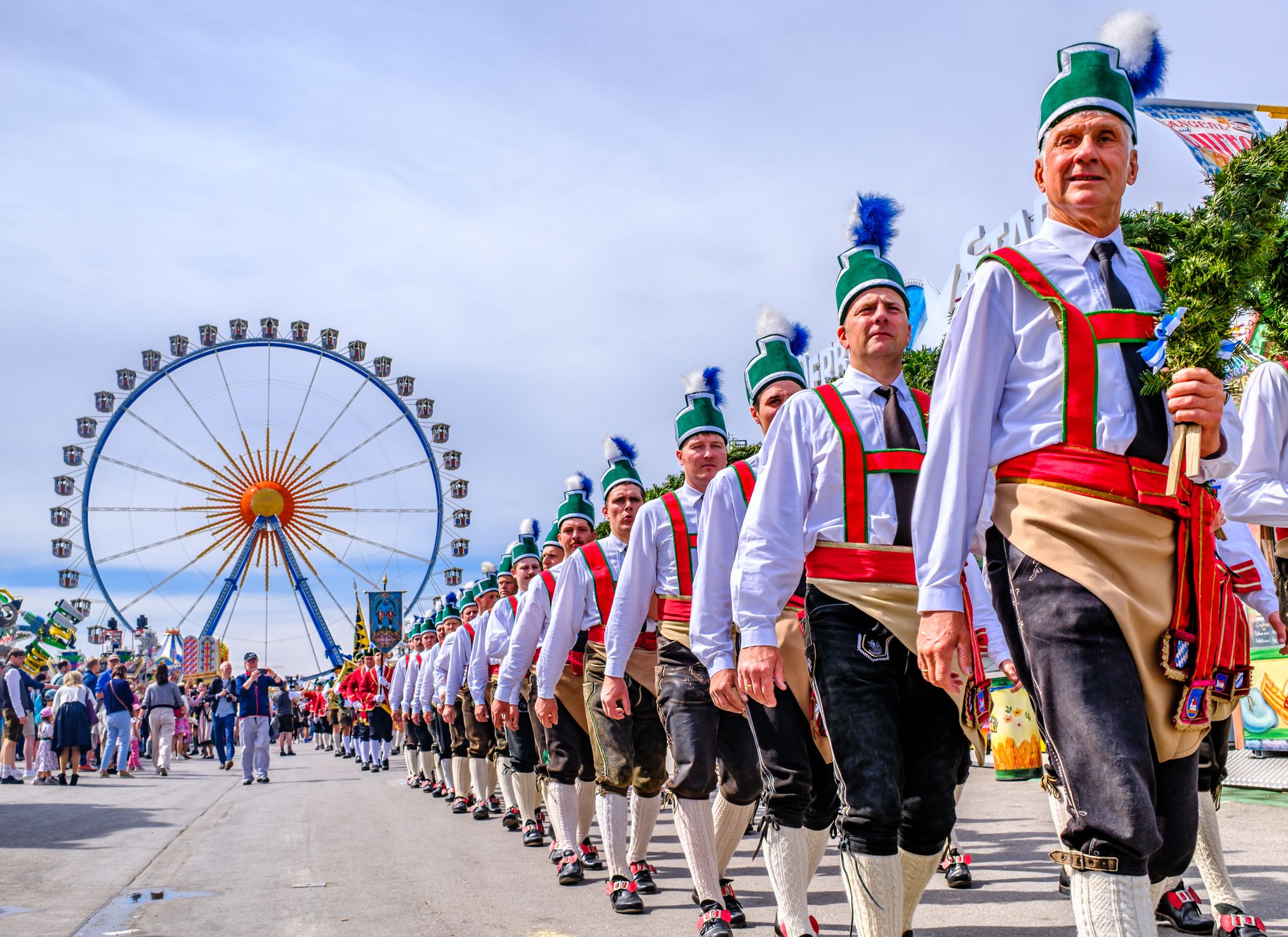
Believe it or not, Oktoberfest started not as a beer festival, but as a wedding party. On October 12, 1810, Crown Prince Ludwig of Bavaria — later King Ludwig I — married Princess Therese of Saxony-Hildburghausen. To celebrate the occasion, the citizens of Munich were invited to festivities on the fields just beyond the city gates, crowned by a horse race a few days later. The public had such a good time that the city decided to repeat the celebration the following year, and so the tradition was born.
Over the following decades, the event grew far beyond its royal-wedding roots. Agricultural shows, carnival booths, and the first small beer stands were added throughout the 19th century. The festival's dates gradually moved to earlier in September to take advantage of the drier weather, even though the "Oktoberfest" name stuck. By the early 20th century, the beer tents had grown into the massive, brass-band-filled halls recognizable today.
Munich Airport (MUC) is the main international gateway, located around 25 miles (40 km) northeast of the city center. It's well connected to cities across Europe, North America, and Asia. From the airport, two S-Bahn suburban rail lines, S1 and S8, run directly into central Munich in around 45 minutes, and the Lufthansa Express Bus provides a similar travel time to the main train station.
Munich's main train station, the Hauptbahnhof, is a main hub for high-speed ICE and EC trains arriving from cities like Berlin, Frankfurt, Vienna, Zurich and Paris. It's an especially convenient option for visitors already traveling elsewhere in Europe. From the Hauptbahnhof, the Theresienwiese fairground is within easy walking distance or a single stop away by U-Bahn.
When you arrive in Munich, the U-Bahn is the easiest way to reach the festival grounds. During Oktoberfest, trains depart more frequently, including night services on weekends.
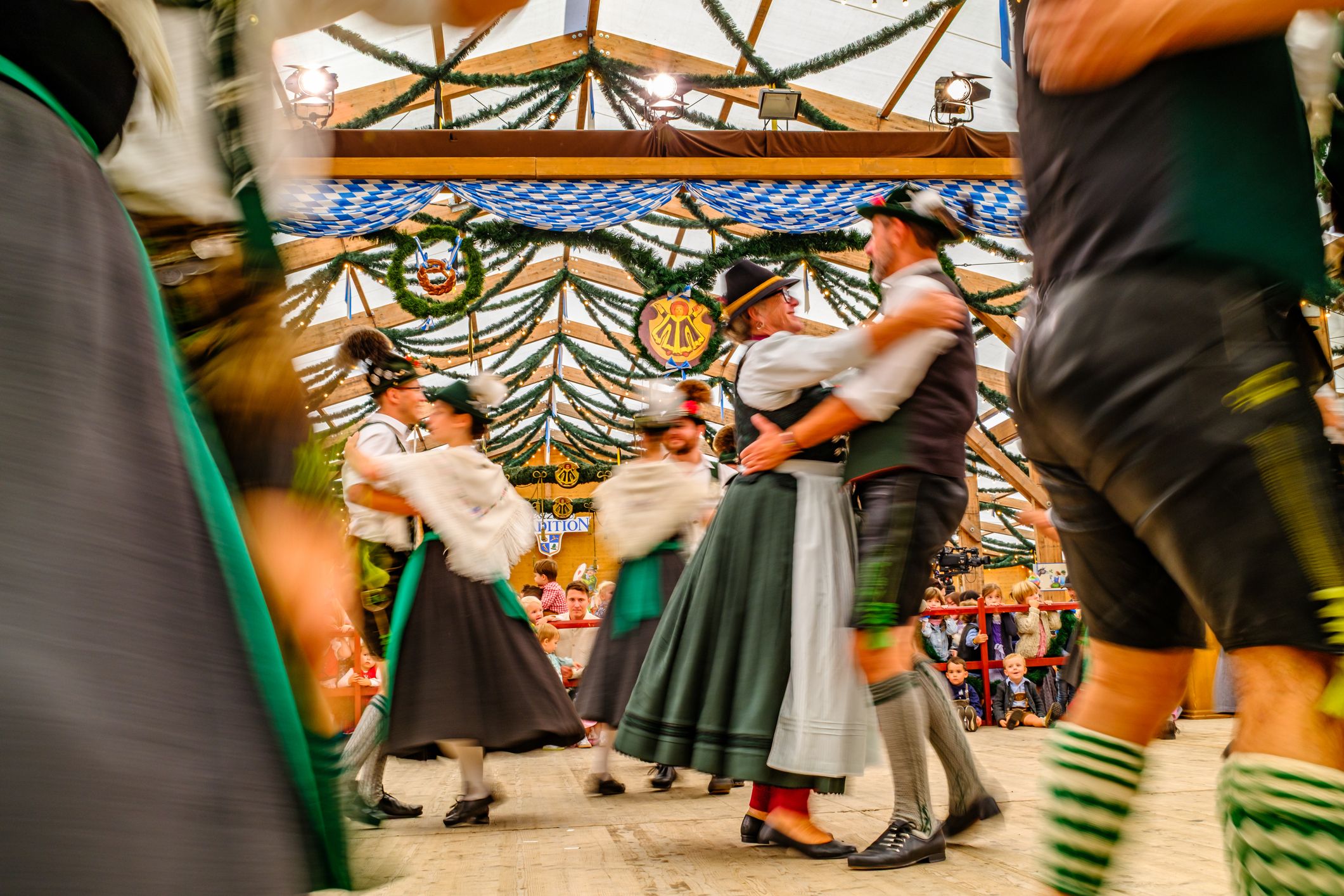
The heart of Oktoberfest is the beer tents. These are vast temporary halls, built fresh each year and torn down again afterwards, some capable of seating close to 10,000 people between the indoor hall and outdoor beer garden.
Each tent is independently run by a private landlord, usually a Munich brewing family, and is contractually tied to serving beer from just one of the six official Munich breweries: Augustiner, Hacker-Pschorr, Löwenbräu, Paulaner, Spaten, or Hofbräu.
The 14 large tents are the ones most people associate with Oktoberfest: cavernous halls, live oompah bands, long wooden benches and a rowdy atmosphere. Smaller tents, of which there are around 20, are usually quieter and more specialized, with some focusing on wine or sparkling wine instead of beer, and others catering to families. Both types serve full meals alongside drinks, but the experience inside varies from tent to tent.
Entry to Oktoberfest and its beer tents is free, so no ticket is required to access the festival grounds. However, the catch is that service is only available if you have a seat, and tables fill up quickly during evenings, weekends, and on opening and closing days. Reservations guarantee a table for a specific time slot, often in exchange for pre-ordered food and drink vouchers. Walk-in visitors must arrive early—particularly at peak times—to secure available seating before it is taken.
Entry to Oktoberfest is completely free, with no admission ticket required for either the festival grounds or the beer tents. Most of your expenses will come from food, drinks, rides, and accommodation, which can vary depending on your travel style and timing. The following table outlines the typical costs you can expect to pay during your visit.
| Category | Typical Price Range | Notes |
|---|---|---|
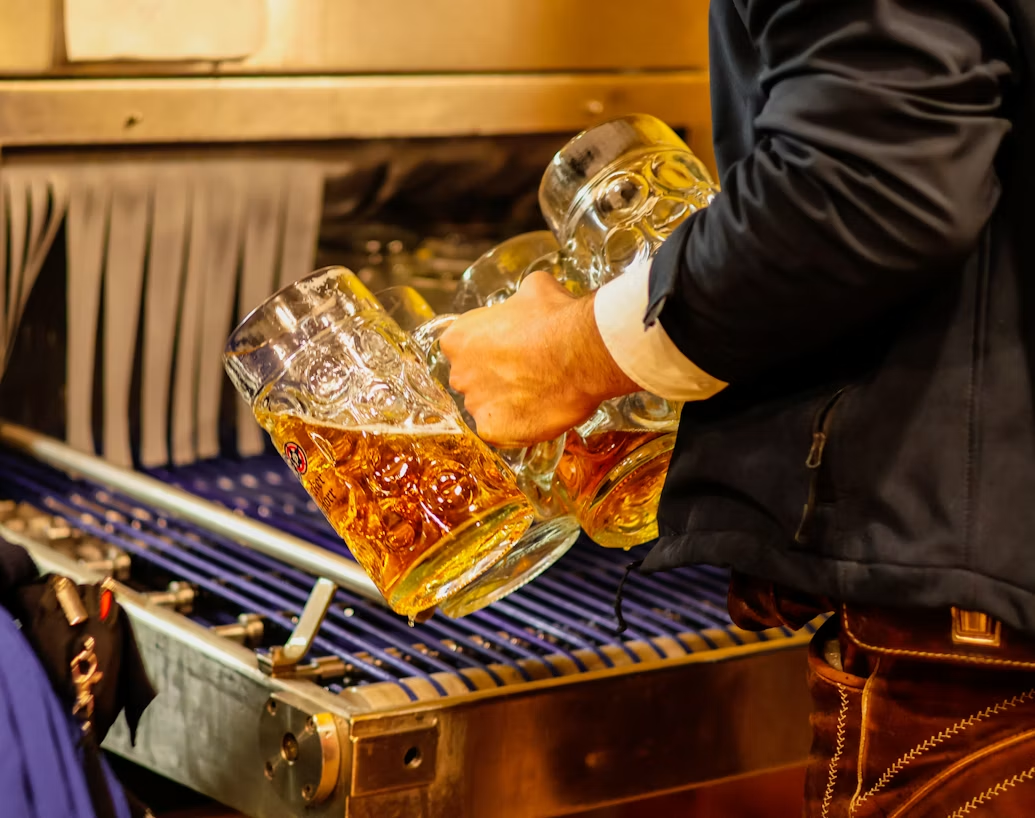
| Beer (1-liter Maß) | $17.80 – $18.50 | Set by each tent's landlord; add $2 customary tip |
| Non-alcoholic drinks | $13 – $15 per liter | Water, Spezi, and lemonade cost nearly as much as beer |
| Food (half roast chicken, pretzel, etc.) | $8 – $23 per dish | Pretzels are cheapest; roast chicken and pork knuckle run higher |
| Accommodation (per night) | $46 – $200+ | Hostel dorm beds to central hotel rooms; rates spike 3–5x normal during the festival |
| Local transport | $3 – $11 per ride, or $11 day pass | Single U-Bahn tickets or a Munich day travel pass covering all zones needed |
As a rough guide, a relaxed day inside the festival (including a few beers, a meal, no rides) tends to cost around $70 to $100 per person, while accommodation is usually the single biggest swing factor in a total trip budget.
Traditional Bavarian clothing, known as Tracht, plays a central role in the Oktoberfest atmosphere. Women typically wear a Dirndl, a fitted dress consisting of a bodice, blouse, skirt, and apron, whereas men wear Lederhosen—leather shorts or trousers often paired with a checked shirt, suspenders, and sturdy footwear.
A well-known piece of Oktoberfest folklore suggests that the position of a Dirndl’s apron bow indicates the wearer’s relationship status, though this is generally treated as a light-hearted tradition.
There is no official dress code for entering Oktoberfest or its beer tents, with many visitors attending in casual clothing such as jeans and t-shirts. However, wearing traditional Tracht is extremely popular among both locals and tourists and contributes significantly to the overall atmosphere of the festival. As a result, many first-time visitors choose to embrace the tradition by purchasing or renting an outfit.
Most tourists opt for an affordable Dirndl or Lederhosen set specifically for their visit, often paired with comfortable, closed-toe shoes suitable for standing and walking on grass and cobblestones for extended periods. We also suggest that you bring layers, as Munich evenings in late September can become noticeably cooler, even after warm daytime temperatures.
Oktoberfest is the world’s largest beer festival that takes place every year in Munich, Germany, at the Theresienwiese fairground. The event typically runs for around 16 to 18 days and features large beer tents, traditional Bavarian food, amusement rides, and cultural parades. It attracts millions of visitors from around the world each year, making it one of Europe’s most iconic and internationally recognized festivals.
Oktoberfest usually goes on for 16 days, beginning on the third Saturday in September and ending on the first Sunday in October. In certain years, the festival is extended to include October 3rd, which is German Unity Day, allowing for an additional day of celebrations. The extended schedule offers more flexibility for visitors and often increases attendance during peak years.
Yes, entry to Oktoberfest is completely free, including access to the festival grounds and all beer tents. Visitors only pay for food, drinks, rides, and any reserved seating once they arrive at the event. This format makes the festival widely accessible, although costs can still add up depending on spending habits.
No general admission ticket is required to attend Oktoberfest or enter the beer tents. However, table reservations are available and strongly recommended for evenings, weekends, and peak dates, as seating capacity is limited and in high demand. Securing a reservation in advance can guarantee space and improve the overall experience during busy periods.
Oktoberfest attracts approximately six to seven million visitors each year, making it one of the largest public festivals in the world. In recent years, attendance has reached record levels, with around 7.2 million visitors reported in 2023. The scale of the event highlights its global appeal and its significance as a major cultural and tourism attraction.
Whether you’re visiting for the beer, the atmosphere, or the tradition, Oktoberfest is an experience unlike any other. Arrive early and make the most of your time to enjoy one of the world’s most iconic festivals at its very best.