Traveling with a Bicycle
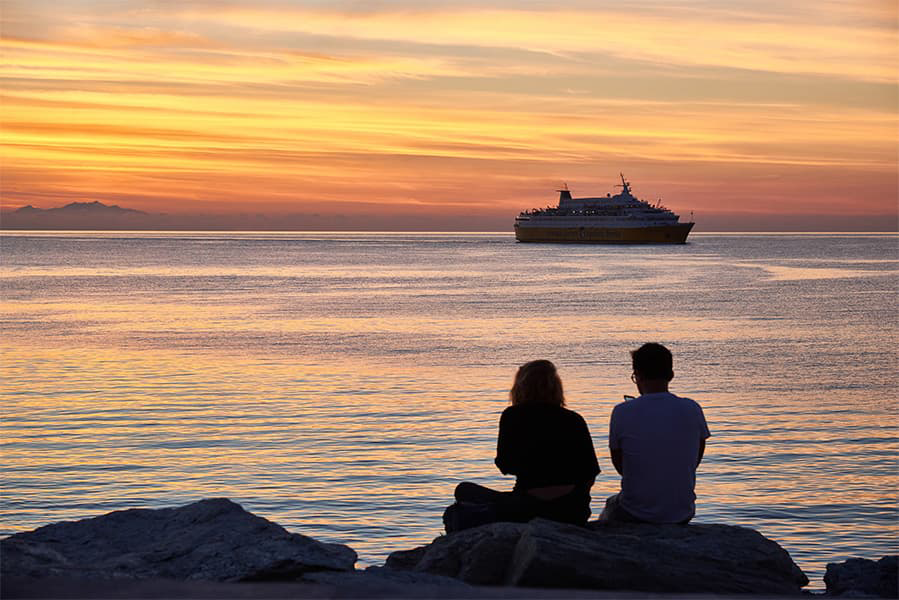
Traveling with a Bicycle
If you enjoy traveling on two wheels, bringing your bike on the ferry can open up incredible cycling adventures across islands, coastlines, and scenic regions. Many ferry routes allow passengers to take their bicycles on board, making it easy to combine sustainable travel with memorable rides.
Whether you're planning a long-distance cycling trip or a weekend bike getaway, ferries offer a convenient and bike-friendly way to travel. In this cycling guide, find out everything you need to know about bringing a bike on a ferry, including booking tips, luggage rules, and the best ferry routes for cyclists.
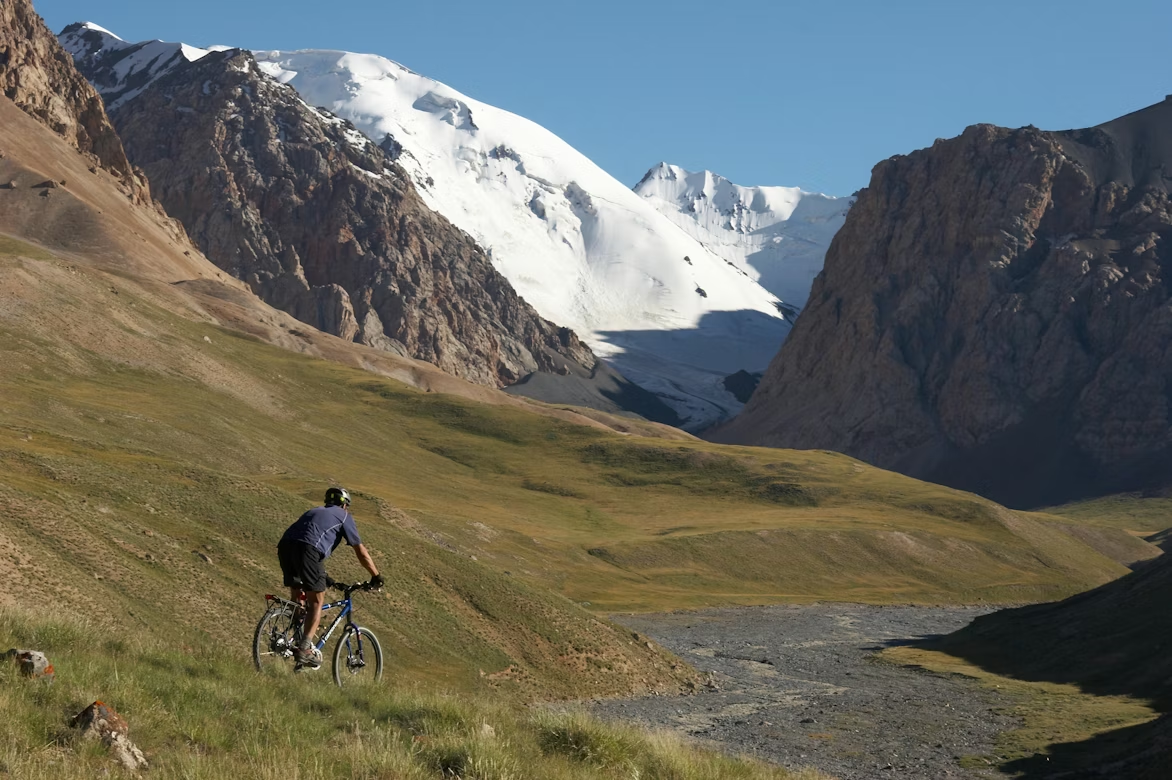
The ferry is one of the most convenient forms of travel for cyclists. Unlike flying, you usually don’t need to disassemble your mountain bike, touring bike, or gravel setup and pack it into a box. In most cases, cyclists can simply roll their bike onto the vessel and relax until they reach their destination.
This ease of boarding makes ferries particularly attractive for bikepacking and touring trips. There’s no need to worry about airline baggage restrictions, oversized luggage fees, or the risk of damage during transit. Many ferry operators provide bike racks or storage areas where bicycles can be safely secured for the entirety of the crossing.
Ferries also enable cyclists to transport more gear than they otherwise would if flying. Panniers, frame bags, and handlebar rolls can usually remain attached to the bike, which saves time when boarding and disembarking. This is particularly beneficial for multi-day tours where riders depend on camping equipment, spare clothing, and repair tools.
Last but not least, ferry travel can be more relaxing after a long day in the saddle. Many vessels offer comfortable seating, restaurants, and sometimes cabins on longer routes. Instead of stressing about transporting your bike through airports, you can enjoy the crossing and arrive ready to cycle again.
You can bring almost any bike on a ferry. The choice all depends on the terrain at your chosen destination, rather than any restriction from the ferry operator.
A hardtail or full-suspension mountain bike is a great ferry companion when your route includes gravel tracks, forest paths, or rough coastal terrain. Modern mountain bikes are usually robust enough to handle being wheeled across loading ramps and secured in vehicle decks. Please be careful of suspension forks when storing: if leaning against a wall for a long crossing, take the weight off the front end to avoid oil migration in the lower legs.
Road bikes are ideal for paved coastal routes and are especially popular on longer European ferry crossings such as those between the UK and France, Spain, or the Netherlands. Carbon framesets require extra care when the bike is secured on deck. Please use your own padding around contact points for extra protection.
Loaded tourers and bikepacking bikes are the most common choice on ferries due to their practical geometry, wider tires and lower gearing. For a bikepacking setup on a road bike, a lightweight frame bag and a small saddle pack keeps the profile narrow enough to navigate ferry gangways easily.
Top Tip:
Ensure that you always check whether your ferry route has a designated cycle lane onto the ship. Many Scotland island ferries and Scandinavian routes offer walk-on cycle boarding, meaning you avoid the vehicle deck entirely for shorter crossings.
The rules vary considerably between operators, routes, and vessel types. Getting this wrong can mean a missed sailing or an unexpected surcharge at the terminal.
Most car ferries require cyclists to ride down to the vehicle deck, secure their bike alongside cars and lorries, and then ascend to the passenger decks for the duration of the crossing. Bikes are often expected to be kept on their own stands, but on rougher crossings or longer sailings, the crew might ask you to use straps or bungee cords to secure it to a railing. Please bring your own strap for extra protection.
On smaller ferries, especially those in Greece and Scotland, bikes may travel in a cargo area separate from the passenger deck, or even on the open deck. In this scenario, a lightweight cover or a secured frame bag protects against salt spray.
There are very few ferry operators that enforce weight restrictions on standard bicycles. However, if you are traveling with a bicycle travel case or a bike box for air travel, many operators treat them as oversized luggage with a surcharge. E-bikes may require a specific booking due to excessive weight.
Please check the lithium battery policy before boarding an e-bike or transporting a spare battery in your luggage. Most ferry operators follow IATA-style restrictions on lithium cells due to fire risk. Batteries above a certain watt-hour rating may be refused.
Whether you're planning a weekend escape or a month-long international tour, the ferry route you choose shapes everything: the terrain waiting on arrival, the daily distances, the culture, and the scenery. Below is a guide to the most popular crossings among cyclists, from quick island hops to overnight passages to mainland Europe.
These crossings form the spine of cycle touring in the British Isles. Short enough to complete in an afternoon, they connect riders to some of the finest cycling landscapes in the UK and Ireland.
| Route | Avg. Sailing Duration | Weekly Sailings (approx.) | Main Operator(s) |
|---|---|---|---|
| Holyhead to Dublin Ferry | 2 hrs 15 min (fast) / 3 hrs 30 min | 28–35 | Irish Ferries, Stena Line |
| Fishguard to Rosslare Ferry | 3 hrs 15 min | 14 | Stena Line |
| Cairnryan to Belfast Ferry | 2 hrs 15 min | 28–42 | Stena Line, P&O Ferries |
| Oban to Craignure Ferry | 45 min | 35–49 | CalMac |
| Ullapool to Stornoway Ferry | 2 hrs 45 min | 14 | CalMac |
| Lymington to Yarmouth Ferry (IOW) | 40 min | 56–70 | Wightlink |
These longer sailings connect Britain to mainland Europe, granting cyclists easy access to the most famous cycling routes, including those in the Loire Valley, the EuroVelo routes, the Dutch Coastal Path, and the Spanish Camino.
Cyclists often prefer overnight sailings as you can rest during the crossing and wake up refreshed for a full day of riding when you arrive. Many of these routes also provide comfortable cabin accommodation for you to relax.
| Route | Avg. Sailing Duration | Weekly Sailings | Main Operator(s) |
|---|---|---|---|
| Portsmouth to Caen Ferry | 6 hrs (day) / 7 hrs (night) | 14 | Brittany Ferries |
| Portsmouth to St Malo Ferry | 8 hrs 45 min (overnight) | 7 | Brittany Ferries |
| Portsmouth to Santander Ferry | 24 hrs | 4–7 | Brittany Ferries |
| Dover to Calais Ferry | 1 hr 30 min | 140+ | DFDS, P&O Ferries |
| Harwich to Hook of Holland Ferry | 6 hrs 30 min (day) / 8 hrs (night) | 14 | Stena Line |
| Newcastle to Amsterdam Ferry | 15–16 hrs (overnight) | 7 | DFDS |
| Hull to Rotterdam Ferry | 11–12 hrs (overnight) | 7 | P&O Ferries |
| Plymouth to Roscoff Ferry | 5 hrs 30 min (day) / 8 hrs (night) | 7–14 | Brittany Ferries |
For cyclists looking to explore Nordic scenery, the Scandinavian ferry network is one of the most extensive and reliable in the world. Ferry routes cross the Baltic Sea and connect countries such as Denmark, Sweden, Norway, Finland, Germany, and Estonia, making it easy to plan long-distance cycling adventures across the region.
Many of these ferries operate like overnight cruise ships. Bicycles are stored safely below deck, while passengers can relax in comfortable cabins, making the journey both practical and enjoyable for traveling cyclists.
| Route | Avg. Sailing Duration | Weekly Sailings | Main Operator(s) |
|---|---|---|---|
| Copenhagen to Oslo Ferry | 16–17 hrs (overnight) | 7 | DFDS |
| Stockholm to Helsinki Ferry | 14–16 hrs (overnight) | 14 | Viking Line, Tallink Silja |
| Tallinn to Helsinki Ferry | 2 hrs – 2 hrs 30 min | 35–56 | Tallink Silja, Viking Line, Eckerö Line |
| Hirtshals to Bergen Ferry | 16–17 hrs | 7 | Fjord Line |
| Rostock to Trelleborg Ferry | 5 hrs 45 min | 28 | TT-Line, Stena Line |
The Mediterranean ferry network is perfect for cyclists who wish to experience riding and island hopping. Ferries regularly connect destinations such as the Greek islands, ports along Italy’s Adriatic coast, and routes between Spain and Morocco, making it easy for cyclists to travel with their bikes.
During the summer months, ferries operate regularly and offer plenty of options for planning a cycling trip. However, schedules are usually reduced in winter, and some routes only operate between May and October, so it’s important to check ferry timetables in advance.
| Route | Avg. Sailing Duration | Weekly Sailings | Main Operator(s) |
|---|---|---|---|
| Athens (Piraeus) to Heraklion Ferry | 8–9 hrs (overnight) | 14–21 | Minoan Lines, SeaJets |
| Brindisi to Igoumenitsa Ferry | 7–8 hrs | 7–14 | Grimaldi Lines |
| Venice to Corfu Ferry | 24 hrs | 1 | Anek Superfast |
| Algeciras to Ceuta Ferry | 1 hr | 70+ | Balearia, FRS, Naviera Armas |
| Barcelona to Palma Ferry | 7 hrs 30 min (overnight) | 14 | Baleària, GNV, Trasmed GLE |
Please keep in mind that ferry schedules and prices may vary depending on when you decide to travel. For the most current timetables across all the routes listed above, use our Deal Finder.
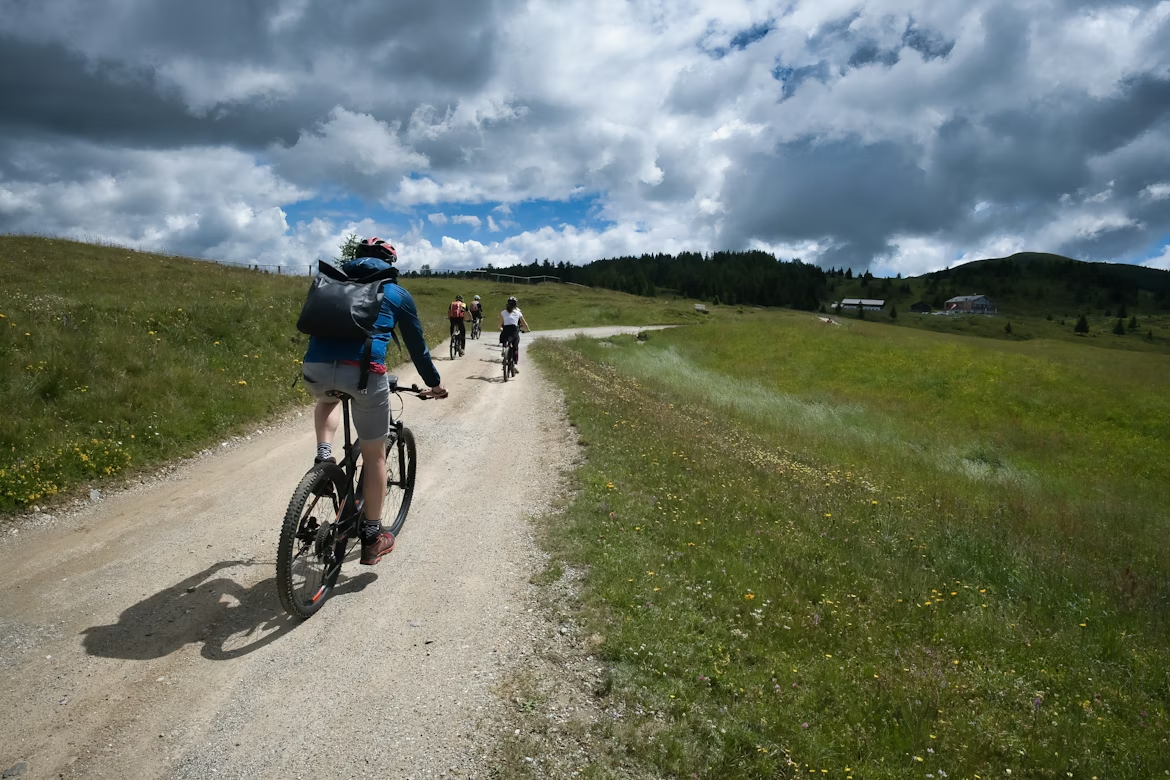
On most ferry crossings, packing your bike means ensuring your luggage is balanced, and that the bike is in a rideable state for disembarkation. However, if your journey involves both air travel and rail (where dismantling is required), or you need to protect an expensive frame in transit, understanding proper packing becomes very important.
If your travel itinerary involves both a flight and a ferry, you'll need to properly disassemble and pack your bike. The main steps are universal regardless of which type of bike travel bag you have:
The rise of bikepacking has transformed the way cyclists plan trips. Rather than the traditional loaded tourer with four heavy panniers, bikepacking prioritizes lightweight bags mounted directly to the frame, minimizing weight and maximizing the ride feel of the bike.
Bikepacking combines the independence of cycle touring with the freedom of off-road riding. A standard bikepacking setup on a road bike is designed to be lightweight and compact. Instead of large panniers, riders usually carry smaller bags fixed directly to the bike.
For example, many cyclists use a 10–15-liter saddle bag, a 4–6-liter frame bag that fits within the bike’s main triangle, and a handlebar roll for items like a sleeping bag or lightweight camping gear. A small top-tube bag is also common for best access to snacks or navigation devices.
Bike touring for beginners can seem intimidating at first. Long distances, packing your gear, and being self-dependent can feel like a lot to manage. A cycling trip by ferry is a perfect way to start because it gives your journey a clear structure.
Instead of planning one long ride, you cycle to the ferry terminal, board the ferry, and continue exploring upon arrival. The ferry acts as a natural break in the trip and provides a clear destination, which can make the experience feel much more manageable.
For a first tour, consider routes like the Sustrans Caledonian Way, which includes several Scottish island ferry crossings. Another option is the Trans Pennine Trail with a Humber ferry crossing, or a short weekend ride between ports in England and Ireland. These routes are very popular as they pass through towns where you can easily find accommodation, food, and bike repair shops.
Knowing how to plan a bikepacking trip can be a mission in itself. Here are some key pointers to help you:
Don't attempt to optimize your bikepacking setup before your first trip. Use what you have and refine your system from experience rather than from reviews alone.
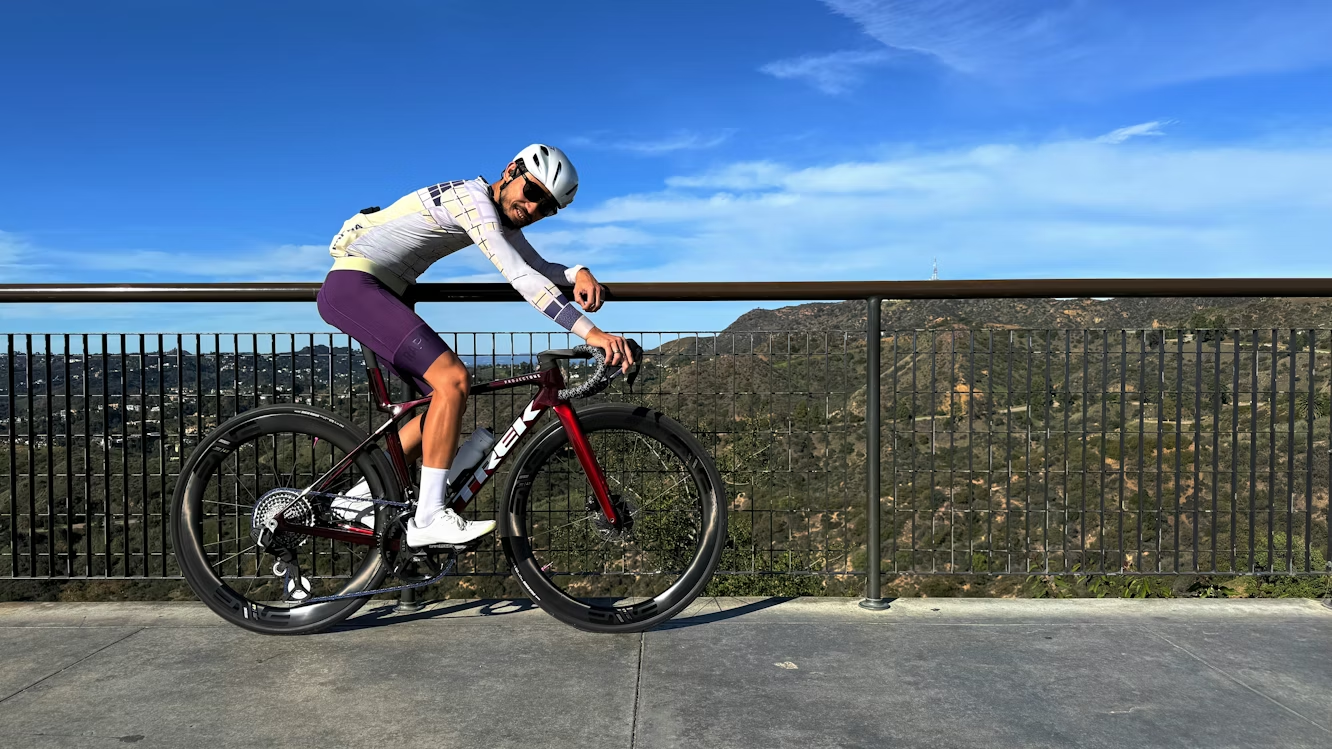
Yes, most car and passenger ferries allow you to bring mountain bikes onboard, including full-suspension models. You simply wheel your bike onto the vessel, secure it on the vehicle deck as directed by crew, and collect it on arrival. No disassembly is required. If you are traveling as a foot passenger, please select the "bicycle" ticket category when booking.
A bikepacking setup on a road bike typically consists of a saddle pack (8–16 liters) mounted under the seat, a frame bag fitted to the main triangle, and a handlebar roll or small front bag. The system prevents pannier racks and keeps weight distributed close to the bike's center of gravity, preserving much of the road bike's handling. Total capacity is usually 20–30 liters — lighter than traditional touring but sufficient for multi-day trips in mild weather when combined with lightweight camping equipment.
Start off small. A single overnight trip, whereby you ride for 40 to 60 km, stay one night, and return the following day. This teaches you more about your setup than any amount of research. Decide on a popular touring route, pack lighter than you think you need to, and test everything before embarking on a long trip.
Most ferries allow e-bikes, but with certain restrictions. The main concern is the lithium battery. Many ferry operators adhere to aviation-style battery rules, restricting or banning batteries above a certain wattage, and often requiring batteries to be either removed and transported in a separate fireproof bag, or presented at check-in for inspection. Please make sure that you check the specific operator's policy before booking your ferry tickets, as rules differ between companies and are updated frequently.
There are many essential items you must bring for a multi-day tour including: two spare inner tubes, a patch kit, tire levers, a compact pump, a multi-tool with chain breaker, a spare chain, chain lube, a first aid kit, a lightweight waterproof jacket, sufficient food, a fully-charged portable battery for phone or GPS, and cash for areas with limited card payment. For bikepacking with camping, also pack a lightweight tent, a sleeping bag, and a small stove if you plan on cooking food.
Wherever you are planning to go this year, ferries make traveling with your bike simple and enjoyable. With easy boarding, bike storage, and routes connecting some of the most scenic cycling destinations in the world, ferry travel is a great choice for cyclists. Book your bike on a ferry today and start your two-wheeled adventure.
More routes than anyone else.

Compare fares, times & routes in one place.
Change plans easily with flexi tickets.

Book e-tickets & manage trips in-app.
Live ship tracking & real-time updates.

Top-rated customer support when you need it.