Your Complete Seasonal Guide to Ferry Travel in Europe and Southeast Asia
Ferry travel tips
Ferry travel tips

Ferry travel is one of the under-appreciated pleasures of slow tourism — and for travelers who know how to plan by season, it transforms an ordinary trip into something extraordinary. Whether you're sailing to the Greek Islands in summer or gliding between limestone karsts in Thailand, timing is everything.
This guide covers the best seasonal ferry itineraries across two of the world's most popular regions for travel: Europe and Southeast Asia. We'll look at which routes shine in which months, how to choose between ferry operators, what a realistic ferry trip cost looks like, and when the sea is your best friend or a rolling adversary that’s best avoided.
Before we jump into specific itineraries, a word on seasonality. Ferry travel is, above all, subject to the weather. Unlike air travel, ferries feel every swell, every crosswind, and every storm front. The difference between a calm morning crossing in May and a bumpy November passage on the same route can prove the difference between a highlight reel and a sick bag.
Seasons also dictate which routes are actually operating. Many island ferries in both Europe and Southeast Asia run reduced or suspended schedules outside of peak tourism months.
Spring is arguably the finest season for European ferry travel. The hordes of tourists are yet to arrive and prices are reasonable, making it an especially great option for those who are traveling on a tight budget.
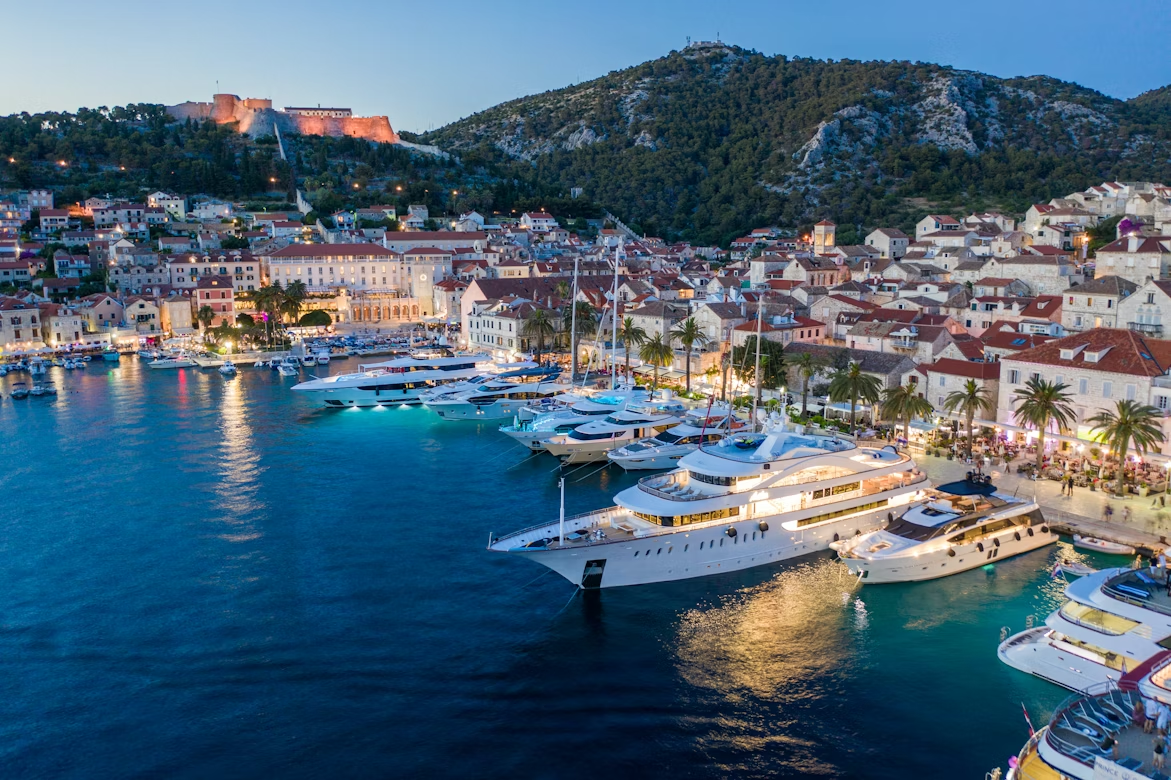
The Dalmatian coast of Croatia is the perfect place for island-hopping, and spring is when it's most authentic: fragrant with wild sage, dotted with almond blossom, and refreshingly uncrowded. Begin your journey in Split, Croatia's magnificent second city, which lies directly on the waterfront and has one of the most scenic ferry terminals in Europe, a long marble promenade where you can eat grilled fish while watching ferries dock.
Take the short ferry from Split to Hvar with Jadrolinija or TP Line, a 1-hour crossing that delivers you to one of the Adriatic's most beautiful towns. In spring, the famous lavender fields of Hvar are just beginning to bloom. From Hvar, proceed south to Korčula before the final leg to Dubrovnik. This full route can be done in five to seven days.
Pro tip: Most of these crossings offer both indoor and outdoor seating. In spring, wear a few layers. While the outdoor deck is appealing for its views, the Adriatic breeze can be unforgiving in March.
Summer is peak season in the Aegean, and it’s easy to see why. The meltemi wind keeps temperatures bearable in the northern islands, while the water is warm enough to dive straight in. Better yet, this is when Greek ferry operators offer the most sailings, giving you additional flexibility when it comes to departures.
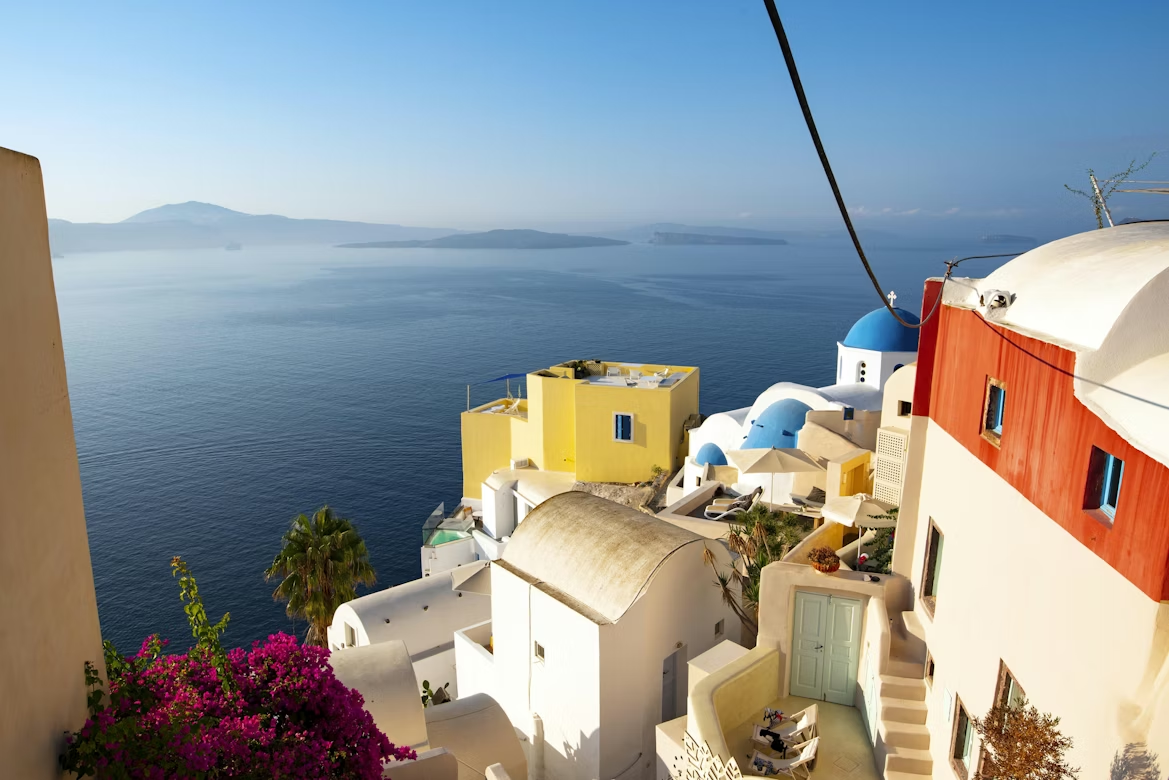
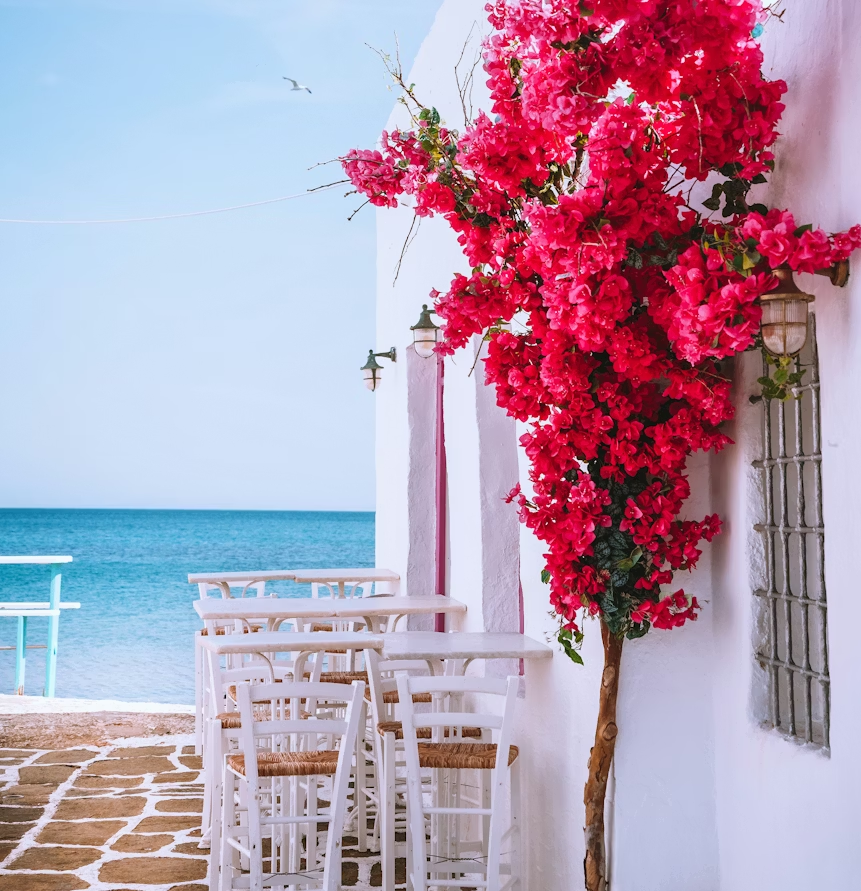
The Cyclades islands in Greece offer one of the most classic ferry itineraries. The combination of whitewashed villages, volcanic beaches, and blue domed churches covered in bougainvillea creates a setting of remarkable beauty. The journey typically begins at Piraeus, the main port of Athens, which is large and can feel overwhelming, but operates efficiently.
Take the Athens to Paros ferry and reach the island in approximately 3 hours by conventional ferry or in under two hours by high-speed catamaran operated by SeaJets or Blue Star Ferries. Paros serves as an excellent introduction to the Cyclades, offering stunning scenery, mouthwatering seafood, and a charming old town, while remaining less crowded than Santorini.
The next stop is Santorini, a journey of around two to three hours. Spending two or three nights here gives you enough time to experience its iconic caldera views and miraculous sunsets. After Santorini, the itinerary becomes more tranquil with a ferry to Folegandros, a smaller island that retains a slower pace and a more traditional atmosphere.
The route is best completed with a visit to Milos, famous for its distinctive lunar landscapes and colorful fishing houses, which are among the most photographed in Greece. Several ferry operators operate this circuit, including Hellenic Seaways and Blue Star Ferries.
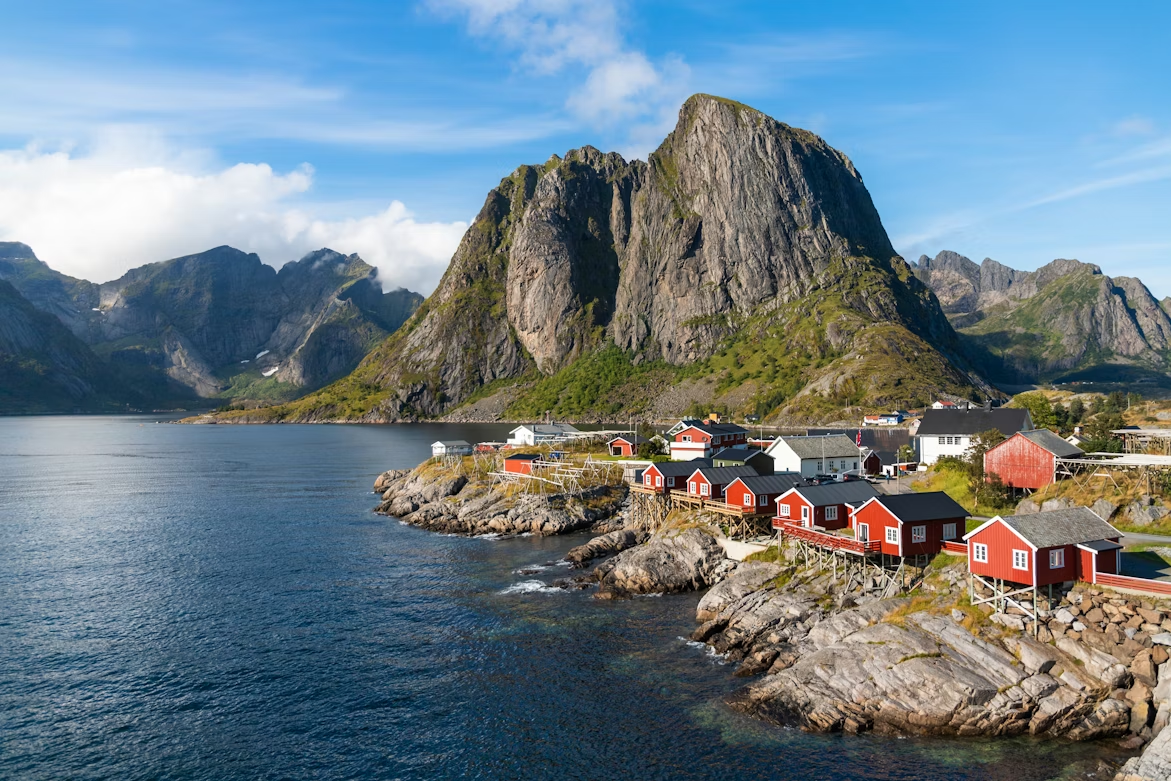
As the Mediterranean winds down for another year, Scandinavia enters its most theatrical season. Autumn turns the landscape of Norway into a riot of amber, copper, and gold, and the fjords take on an almost surreal quality in the low September light.
Hurtigruten coastal route in Norway is widely regarded as one of the most iconic ferry journeys in Europe. This historic route traces the full length of the Norwegian coastline. However, for a more focused autumn experience, the Nærøyfjord route offers a striking alternative.
The journey gets underway in Bergen, followed by a train ride to Flåm on one of the most scenic rail routes in the world. From Flåm, take a fjord ferry to Nærøyfjord, a UNESCO World Heritage site known for its dramatic natural beauty. Towering cliffs rise to 1,700 meters above the water, creating an imposing and unforgettable landscape.
During wetter months, waterfalls spill down the cliff faces and often reach the deck of the ferry. Between the sounds of the engine, the surrounding silence adds to the atmosphere, lending the experience a calm and almost reverential quality. The ferry journey from Flåm to Gudvangen takes approximately 2 hours with The Fjords company.
After reaching Gudvangen, travelers can return to Flåm and continue back to Bergen or extend the journey further north toward Ålesund for additional fjord exploration. Ferries on this route are equipped with both indoor and outdoor observation areas, allowing passengers to enjoy the scenery comfortably.
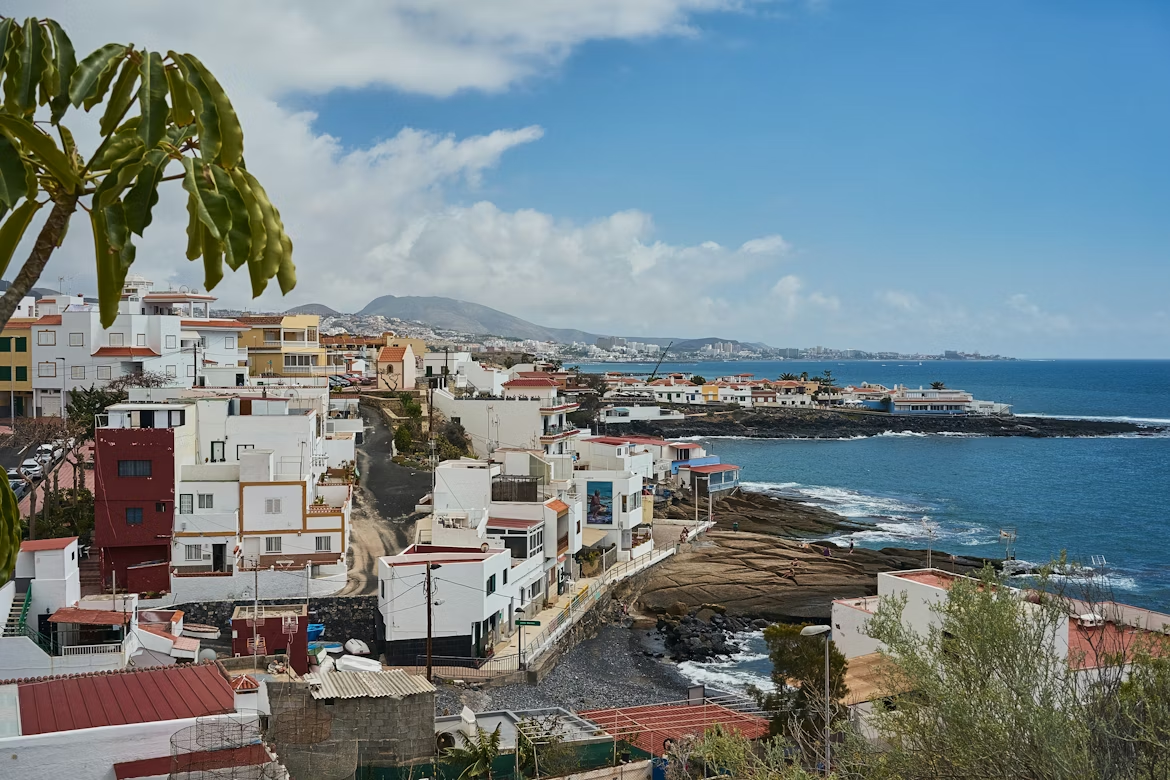
Winter in northern Europe is exactly as grim as advertised, which is why thousands of tourists escape to the Canary Islands via Trasmediterránea and Fred Olsen Express.
The Canaries are a year-round destination, but winter is when they truly earn their stripes. While many European cities experience cold weather, these volcanic islands enjoy average temperatures of around 20°C. The inter-island ferry network is frequent and relatively affordable, making it easy to travel between each of the islands.
Fred Olsen operates high speed ferries that connect Gran Canaria to Fuerteventura in under an hour. From Fuerteventura, travelers can continue north to Lanzarote, known for its striking contrast of black volcanic landscapes and bright white architecture, much of which was influenced by the artist César Manrique. The journey can be extended with a short ferry crossing to La Graciosa, a small island without paved roads, where white sand paths link a small number of quiet villages. It is widely considered one of the most peaceful winter destinations in Europe.
During the winter months, it is worth checking for promotional fares from ferry operators such as Fred Olsen and Naviera Armas. These companies often offer discounted inter island routes outside of peak Spanish holiday periods. Additional savings and current offers for Canary Islands ferry routes can be found on our dedicated offers page.
Southeast Asia’s cool season is widely considered the best time to travel. Lower humidity, consistent sunshine, and calmer seas create ideal conditions for island ferry journeys across Thailand and Indonesia.
Thailand’s Gulf islands are connected by a well-established ferry network, with reliable operators such as Raja Ferry, Songserm, and Lomprayah providing regular services from the mainland port of Surat Thani. The journey begins in Koh Samui, the largest and most developed island, where visitors can enjoy palm lined beaches and a wide range of restaurants and bars.
From Koh Samui, travelers can proceed north by ferry to Koh Phangan. While the island is known for its Full Moon Party, it also offers quieter and more scenic areas. Bottle Beach in the northern part of the island provides a glimpse of Thailand’s coastline before large scale tourism took over.
The final stop is Koh Tao, a smaller island renowned for its coral reefs and diving opportunities. High speed ferries operated by Lomprayah complete the journey from Koh Phangan to Koh Tao in approximately 1 hour. These ferries usually offer both indoor and outdoor seating, allowing passengers to enjoy the surrounding scenery throughout the crossing.
Ferry costs for this route generally range from 600 to 900 Thai Baht per leg, which is approximately 17 to 25 US dollars. This makes it one of the most affordable and accessible ferry networks for island travel.
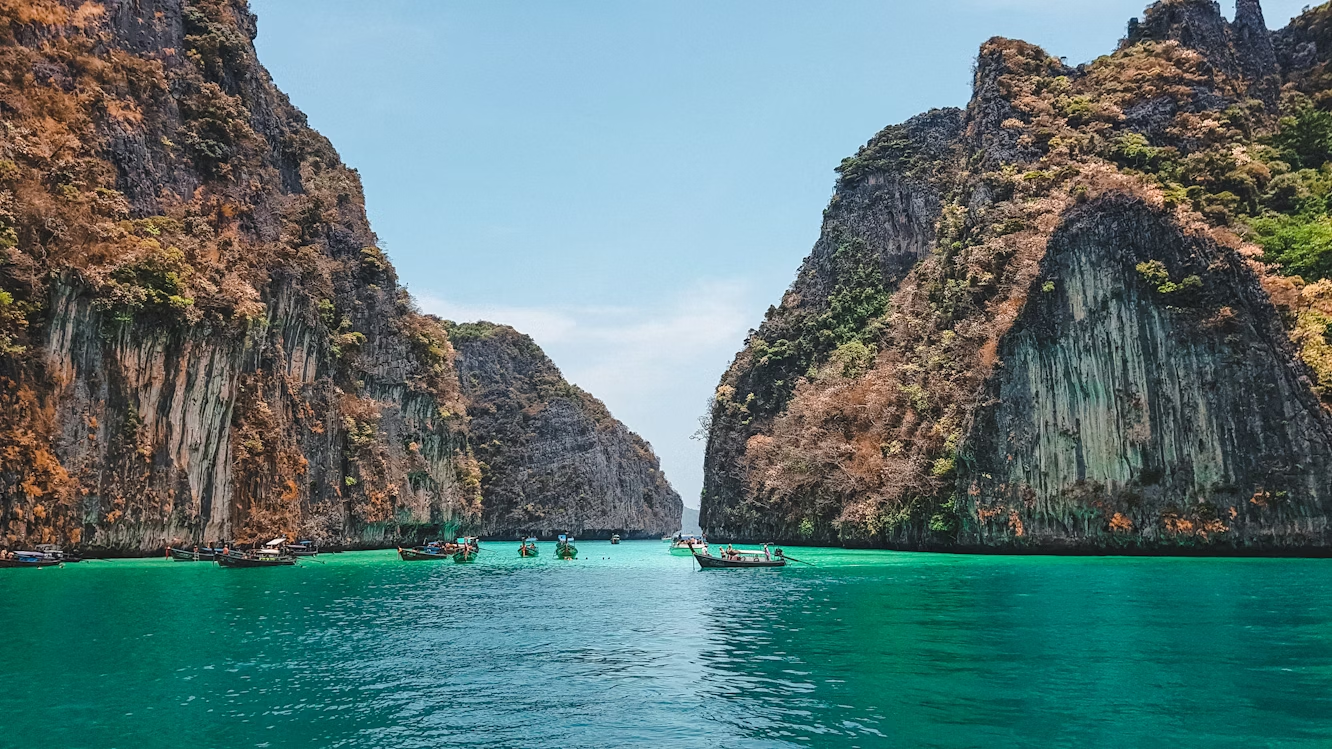
The monsoon season is not uniform across Southeast Asia, as weather patterns vary by region. Indonesia offers a strong alternative during this period, particularly across parts of the archipelago where conditions remain suitable for ferry travel. With thousands of islands and an extensive ferry network, it provides a compelling setting for a multi-stop itinerary.
Bali serves as a major transport hub, with frequent ferry departures to nearby islands. From Sanur or Padang Bai, fast boats connect to Nusa Lembongan in around 30 minutes. This small island is known for its relaxed atmosphere, clear waters, and coastal views.
From Nusa Lembongan, travelers can continue on to Nusa Penida, which has become increasingly popular for its dramatic cliffs, natural rock formations, and viewpoints such as Kelingking Beach. The crossings between these islands are short and run multiple times daily, depending on sea conditions.
The journey can then be extended to Lombok, reached by fast ferry from either Bali or Nusa Penida in approximately one and a half to two hours. Lombok offers a quieter alternative to Bali, with unspoiled beaches, traditional villages, and access to the Gili Islands nearby.
Scoot Fast Cruises, Rocky Fast Cruise, and BlueWater Express provide regular services along this route. As with much of Southeast Asia, schedules can vary depending on weather conditions, so it is advisable to confirm departures in advance. You can also use our real time ferry tracking tool available on the Direct Ferries App, which is particularly helpful when traveling during changeable seasons.

Here are some expert travel tips to help you out if you are taking any of these journeys by ferry.
Whether you are planning a summer journey through the Aegean, an autumn crossing of Norway’s fjords, or a winter escape between the Canary Islands, ferry travel offers a perspective that no flight can match. The gradual arrival, the open horizon, and the connection to the landscape create a more meaningful way to travel.
Whenever you’re traveling this year, book your ferry tickets in advance to guarantee the best availability and prices. The next destination is not just where you arrive, but also how you get there.