The Best Hikes in New Zealand: Complete Guide to Trails, Great Walks & Day Hikes
Things to do
Things to do

New Zealand is a hiker’s paradise. From volcanic plateaus and subtropical coastlines to glacier-carved valleys and alpine passes throughout the North and South Islands, the country offers some of the best hikes you will find anywhere on the planet. This comprehensive guide covers the top multi-day Great Walks, classic day hikes, logistics, seasonal tips, and how to combine hikes with the best New Zealand road trips.
New Zealand’s trail network (locally known as “tramping”) showcases dramatic scenery in compact, readable routes. Trails range from short, family-friendly walks to multi-day wilderness routes with DOC huts and backcountry experience. Many hikes are well-marked and maintained, making the country accessible to a wide range of hikers with various degrees of experience.
Distance: ~53.5 km • Typical duration: 3–4 days
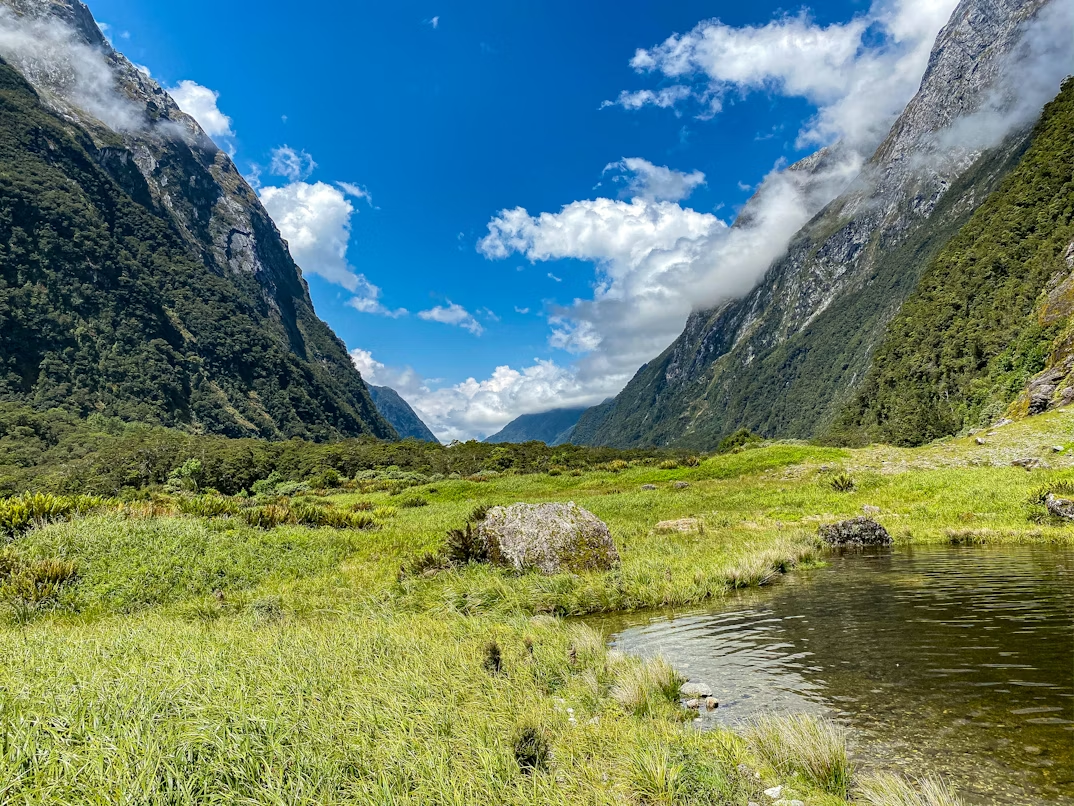
Often described as “the finest walk in the world,” the Milford Track is famous for its towering fiords, cascading waterfalls, ancient rainforest, and dramatic alpine scenery. The journey begins with a boat transfer across Lake Te Anau to Glade Wharf, where hikers follow the gentle Clinton River through lush beech forest to Clinton Hut. On day two, the valley bottlenecks as you approach Lake Mintaro, surrounded by steep mountains and the imposing Mackinnon Pass ahead.
The most challenging and rewarding section is the climb to Mackinnon Pass (1,154 meters), where panoramic views stretch across Fiordland National Park. A short side trip leads to the Mackinnon Memorial, offering sweeping vistas of the Clinton Valley. From the pass, the track descends past the spectacular Sutherland Falls, one of New Zealand’s tallest waterfalls at 580 meters, which plunges dramatically from a hanging valley.
Distance: ~32 km • Typical duration: 2–3 days
The Routeburn Track is a classic alpine track renowned for its dramatic mountain scenery, glacier-carved valleys, and crystal-clear lakes. Spanning approximately 32 kilometers, the trail connects Fiordland National Park with Mount Aspiring National Park, making it one of the most spectacular short multi-day hikes in New Zealand.
From the Routeburn Shelter near Glenorchy, the track follows the Route Burn through native beech forest before climbing steadily toward Routeburn Falls and the nearby Routeburn Falls Hut. As the trail ascends above the trees, hikers are rewarded with sweeping alpine views across the Humboldt and Darran mountain ranges. The highest point, Harris Saddle (1,255 metres), offers expansive vistas over the Hollyford Valley and the surrounding peaks.
Distance: ~60 km • Typical duration: 3–4 days
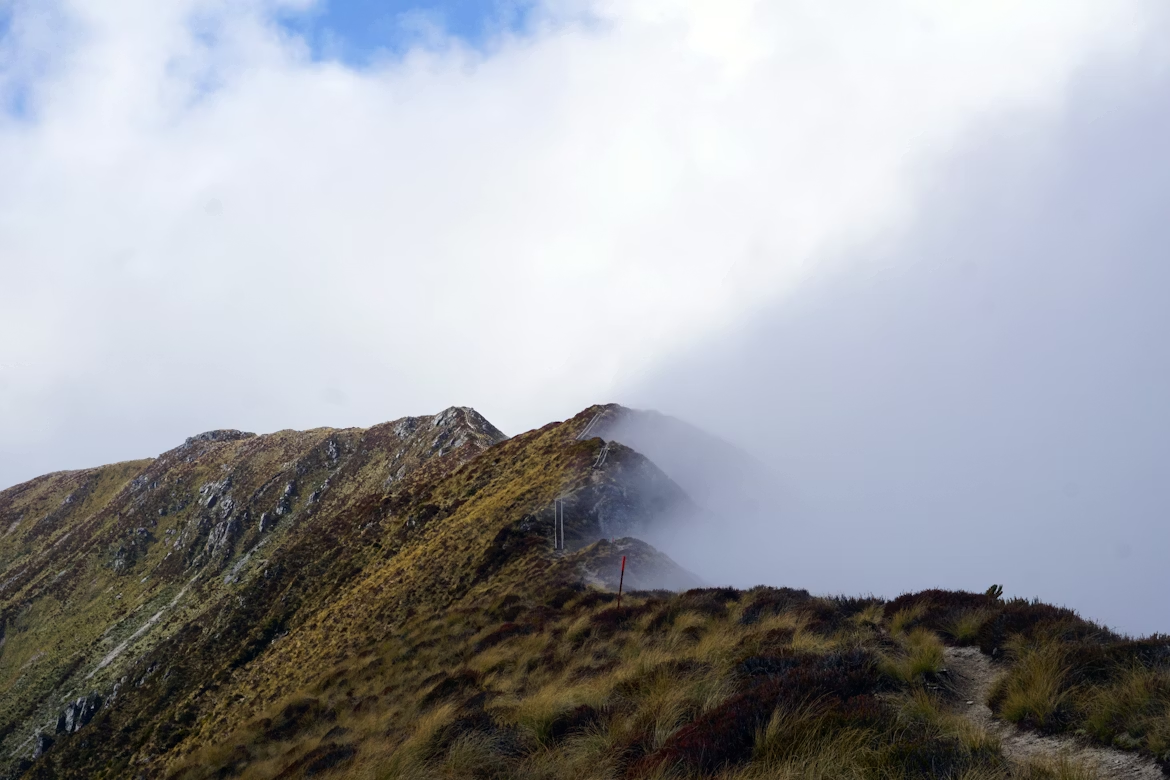
The Kepler Track is a spectacular 60-kilometre loop walk in Fiordland National Park, beginning and ending near Lake Te Anau. Designed as one of New Zealand’s Great Walks, the track combines lakeside forest, alpine ridgelines, and expansive mountain views, making it one of the most varied multi-day hikes in the country.
The journey typically begins at the Kepler Track car park near Te Anau, following the Waiau River through peaceful beech forest to Luxmore Hut. A short side trip from the hut leads to the impressive Luxmore Caves, a limestone cave network worth exploring with a headlamp. The highlight of the track comes on day two as hikers climb to Mount Luxmore (1,472 metres), where sweeping views extend across Lake Te Anau and the Murchison Mountains.
Distance: ~60 km • Typical duration: 3–5 days
The track begins at Marahau and follows a well-formed coastal path through lush regenerating forest to iconic spots such as Anchorage Bay and Bark Bay. Along the way, hikers cross swing bridges suspended over tidal estuaries, pass secluded coves, and enjoy panoramic viewpoints overlooking the Tasman Sea. One of the most photographed landmarks is Split Apple Rock (Tokangawhā), a naturally split granite formation just offshore near Kaiteriteri.
Further north, highlights include the sweeping sands of Onetahuti Beach and the tidal crossing at Awaroa Inlet, where timing your walk with the tides is essential. The northern section of the track winds toward Tōtaranui and finishes at Wainui Bay, with boat transfers available for flexible start and end points. Thanks to its gentle gradients, well-maintained huts and campsites, and the option to combine hiking with kayaking or water taxis, the Abel Tasman Coast Track is ideal for families and first-time multi-day hikers.
Distance: ~46 km • Typical duration: 3–4 days
The Lake Waikaremoana Track is a remote 46-kilometre Great Walk located in Te Urewera on New Zealand’s North Island. Most hikers start at Onepoto, crossing the lake by water taxi before climbing steadily through dense native forest to Panekire Bluff. This ridge section is the highlight of the track, with sweeping views over Lake Waikaremoana’s inlets and forest-covered hills stretching to the horizon. On a clear day, the panoramic outlook from Panekire Bluff is one of the finest viewpoints in the North Island.
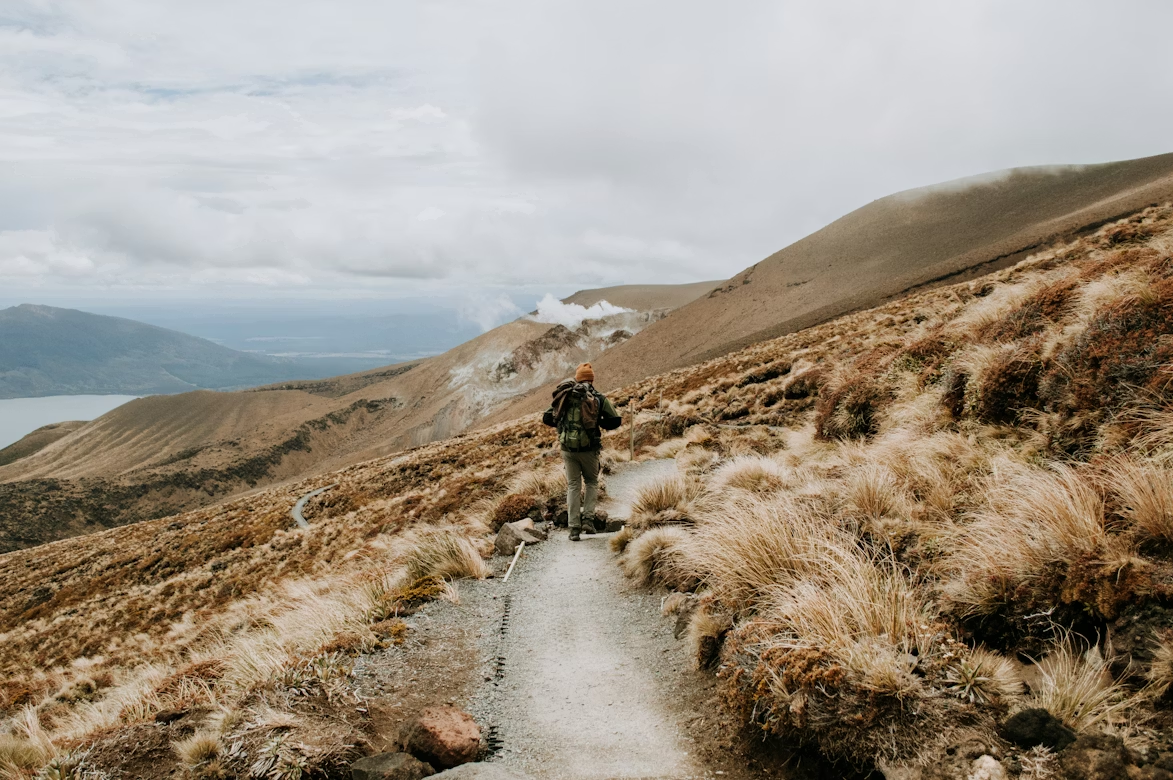
The Tongariro Alpine Crossing is widely considered the best day hike in New Zealand and one of the top one-day treks in the world. Stretching approximately 19.4 kilometers across the volcanic heart of Tongariro National Park, a dual UNESCO World Heritage Site, the trail showcases dramatic crater landscapes, steaming vents, and vividly colored alpine lakes.
The hike usually begins at Mangatepopo Road, where a gradual boardwalk leads hikers through open volcanic terrain toward the base of the Devil’s Staircase. This steep climb ascends to the South Crater, a vast basin surrounded by towering volcanic peaks. From there, the track climbs again to the highest point of the crossing at the Red Crater (1,886 meters), offering sweeping views across the Central Plateau.
Distance: ~10 km return • Typical duration: 3–4 hours
The Hooker Valley Track is one of the most rewarding hikes in New Zealand, offering spectacular alpine scenery over a relatively short and manageable distance. Located in Aoraki / Mount Cook National Park on the South Island, this 10-kilometre return track delivers scenic views of New Zealand’s highest peak, Aoraki / Mount Cook (3,724 meters), without requiring technical hiking experience.
The trail begins at the White Horse Hill Campground, following a well-maintained gravel path through open alpine tussock and glacial valleys. Early on, hikers pass the viewpoint for the Mueller Glacier Lake, where floating icebergs can often be seen drifting across milky blue water formed by glacial melt. The track then crosses three impressive suspension bridges spanning the Hooker River, each offering panoramic views of surrounding peaks and dramatic river gorges.
Distance: ~16 km return • Typical duration: 5–7 hours
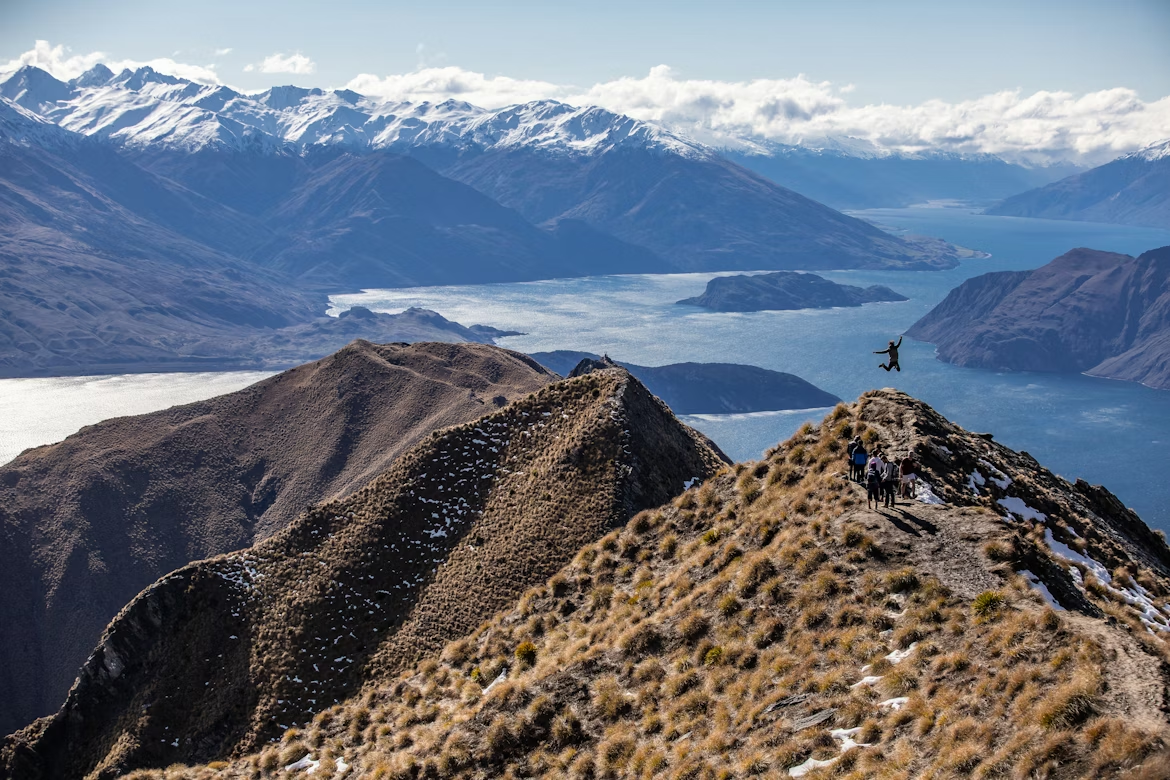
The Roys Peak Track is one of the most iconic day hikes in New Zealand, famous for its sweeping views over Lake Wānaka and the jagged peaks of the Southern Alps. Located just outside the lakeside town of Wānaka on the South Island, this 16-kilometre return hike is known for its steady climb and extraordinary panoramic vistas.
The track starts at the Roys Peak car park on Mount Aspiring Road and immediately ascends through open farmland before transitioning into alpine tussock terrain. The climb is continuous and exposed, with no tree cover, so sun protection and adequate water are essential. As hikers gain elevation, the views open up dramatically, revealing the deep-blue waters of Lake Wānaka and the surrounding mountain ranges.
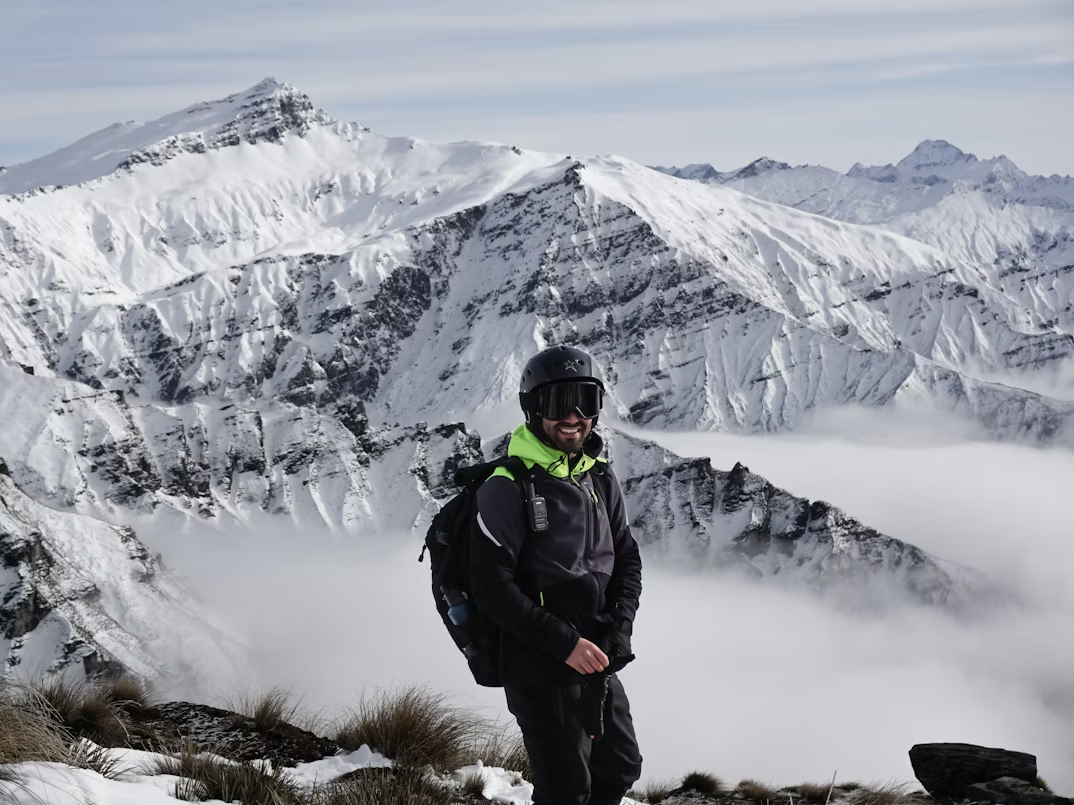
Distance: ~2–3 hours return depending on route • Typical duration: 1.5–2.5 hours
The Cathedral Cove Walk is one of the most famous coastal hikes in New Zealand, located on the eastern side of the Coromandel Peninsula in the North Island. This relatively short but spectacular trail leads to a natural rock archway that frames one of the country’s most photographed beaches.
The walk begins at the Cathedral Cove car park (or via shuttle services during peak season) and follows a coastal path with sweeping views over the Pacific Ocean. Along the way, hikers pass scenic lookout points offering panoramic views of offshore islands and turquoise bays. A short detour leads down to Gemstone Bay, a sheltered cove popular for snorkeling thanks to its marine reserve status and abundant sea life.
The South Island is generally stronger for alpine, glacier and fjord-focused hiking: most Great Walks with dramatic mountain scenery are here. For example, Routeburn, Milford and Kepler. The North Island offers unique volcanic landscapes (Tongariro) and coastal tracks, often shorter day hikes as opposed to long alpine routes.
Choose the South for epic vistas and long-distance tramping; choose the North for geothermal landscapes, coastal scenery, and accessible day hikes.
Many hikers pair trails with scenic drives. Here are some of our favorites:
Combining hikes with road trips offers flexibility and gives you the opportunity to experience New Zealand’s varied landscapes in a single itinerary. If you are traveling between the North and South Islands, you can bring your vehicle on the Wellington to Picton ferry with either Interislander or Bluebridge.
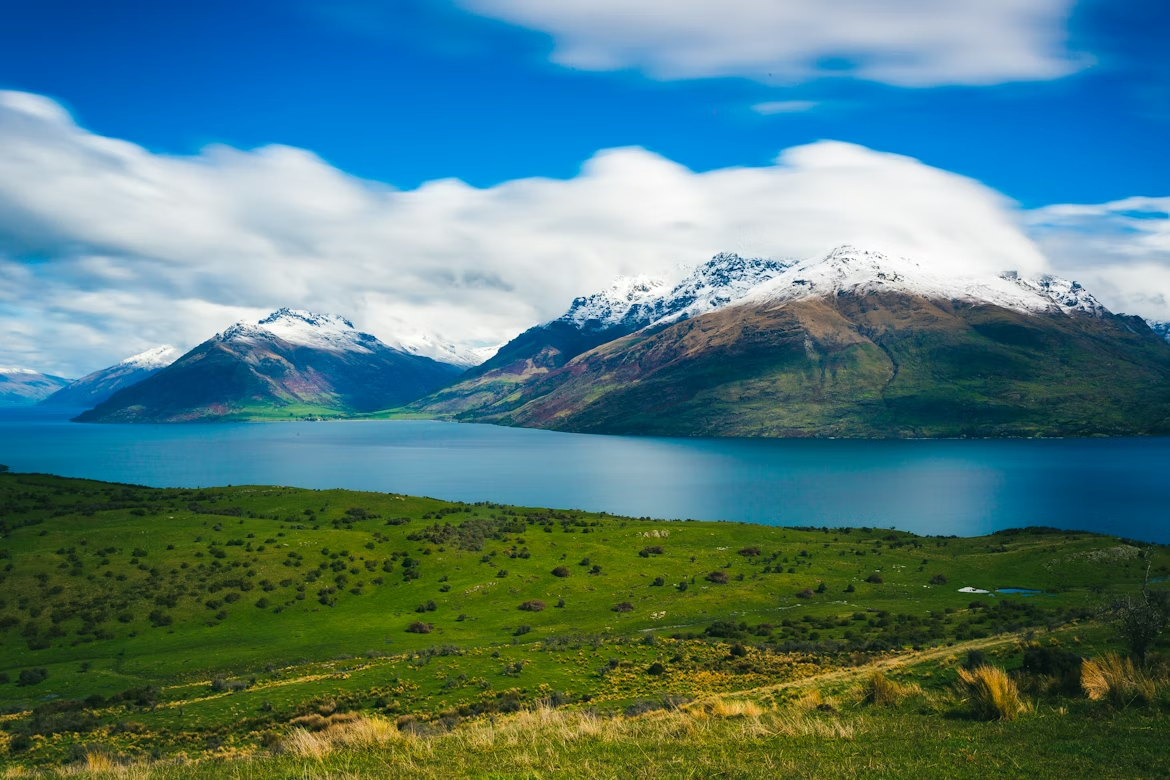
The best time to hike in New Zealand is during the Great Walks season from late October to April, when most alpine tracks are snow-free and huts are fully serviced.
Summer (December–February) offers the most stable weather conditions with the warmest temperatures and longest daylight hours, making it ideal for high-altitude hikes such as the Routeburn Track or Tongariro Alpine Crossing. However, it is also the busiest time, so advance bookings are essential.
Alternatively, Spring (October–November) and autumn (March–April) are excellent shoulder seasons with fewer crowds and cooler temperatures, though weather can be less predictable.
Fitness requirements vary depending on the track. Most Great Walks are classified as moderate and suitable for hikers with a reasonable level of fitness who can walk 4 to 8 hours per day carrying a backpack. Tracks such as the Abel Tasman Coast Track are relatively gentle, while others like the Kepler Track and Routeburn Track involve sustained climbs and exposed alpine sections.
You do not need technical mountaineering skills for most Great Walks during the official season, but preparation is still imperative. Training with long walks before your trip, carrying a properly fitted pack, and reviewing elevation gain and daily distances will help ensure an enjoyable experience.
Guided hikes can be extremely worthwhile for first-time visitors, solo travelers, or those tackling alpine or glacier terrain. Guided operators often provide meals, accommodation logistics, safety briefings, and in-depth knowledge about local history and native wildlife.
For hikes such as glacier walks on Franz Josef or Fox Glacier, guided tours are mandatory for safety reasons. On multi-day tracks like the Milford or Routeburn, guided options offer more comfort and support, while independent hikers can enjoy lower costs and greater flexibility.
Ideally, allow at least 7 to 10 days per island if you want to combine several of the best hikes in New Zealand without rushing. Many travelers pair iconic day hikes with one multi-day Great Walk. If you are short for time, focus on one region, like Fiordland in the South Island or Tongariro National Park in the North Island.
We also suggest adding buffer days as weather conditions can delay alpine hikes or reduce visibility. Flexibility is key when planning a hiking-focused itinerary.
For most Great Walks, hut and campsite bookings are required during the official season and should be made well in advance via the Department of Conservation (DOC). Outside the peak season, facilities may operate on a first-come, first-served basis, but weather risks increase significantly.
Day hikes such as the Tongariro Alpine Crossing or Hooker Valley Track do not require permits, though parking and shuttle services may need to be pre-booked during busy periods. Always check official DOC updates for track conditions, closures, and safety advisories before setting out.
Whether you’re chasing alpine summits in the South Island or volcanic wonders in the North, New Zealand’s trails reward those who plan carefully and respect the land. Choose a hike that matches your fitness, book popular huts early, and consider linking your walk to one of the best New Zealand road trips for the adventure of a lifetime.