Driving in New Zealand: Everything You Need to Know
Car & Road Trips
Car & Road Trips

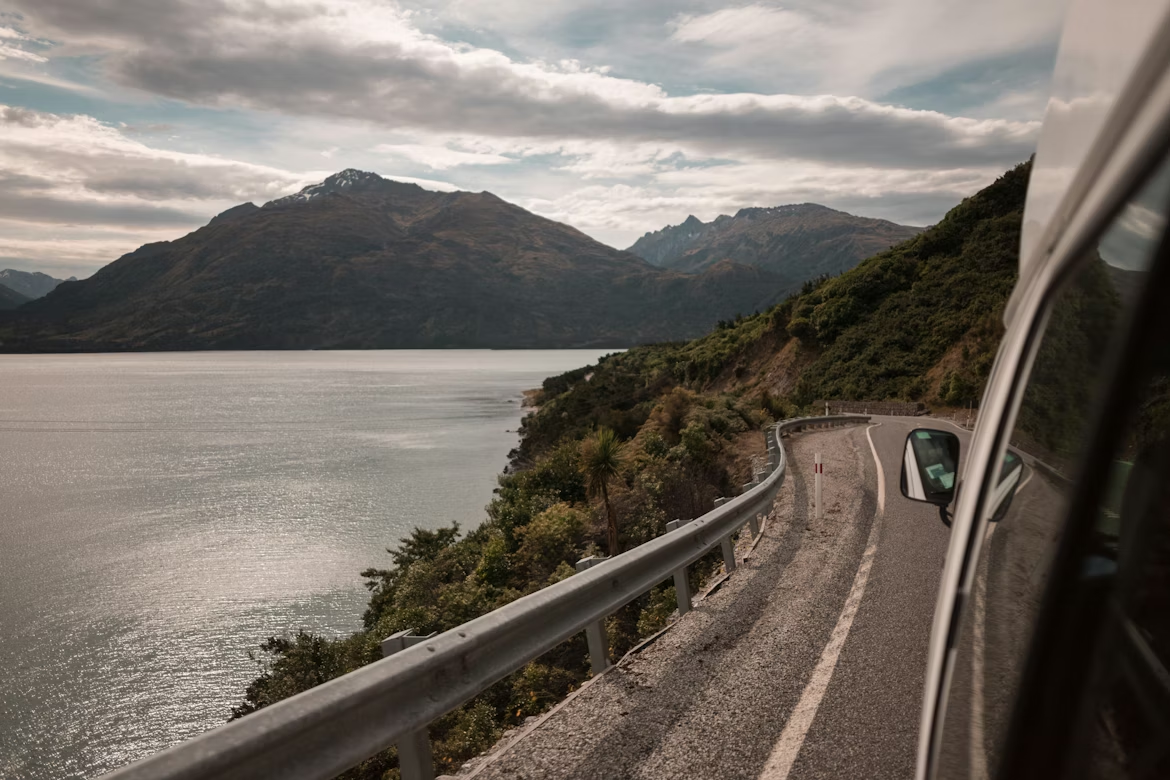
New Zealand is the kind of place that makes you want to pull over every five minutes. Jagged mountain peaks give way to glassy fjords, volcanic plains stretch into native bush, and coastal roads hug cliffs above water so blue it looks ethereal. The best way to see all of it? Behind the wheel, at your own pace, with no fixed agenda.
This guide covers everything, from road rules and speed limits to the drives that will genuinely stop you in your tracks. Consider it your co-pilot for the road ahead.
Planning your New Zealand road trip starts well before you collect your rental keys. The single most important document you'll need is a valid driver's licence from your home country, and it must be written in English, or accompanied by a certified translation. Visitors from over 100 countries can drive in New Zealand on their foreign license for up to 12 months, provided the license is current.
If your license isn't in English or doesn't use the Roman alphabet (for example, Arabic, Chinese, Japanese or Korean script), you'll need an International Driving Permit (IDP) alongside your original license. Obtain this before leaving your home country. They're issued by your national motoring authority and are typically inexpensive and quick to obtain.
Pro Tip: Book your rental car well in advance during peak season (December–February) and school holidays. Popular campervans and 4WDs sell out months ahead, especially for South Island itineraries.
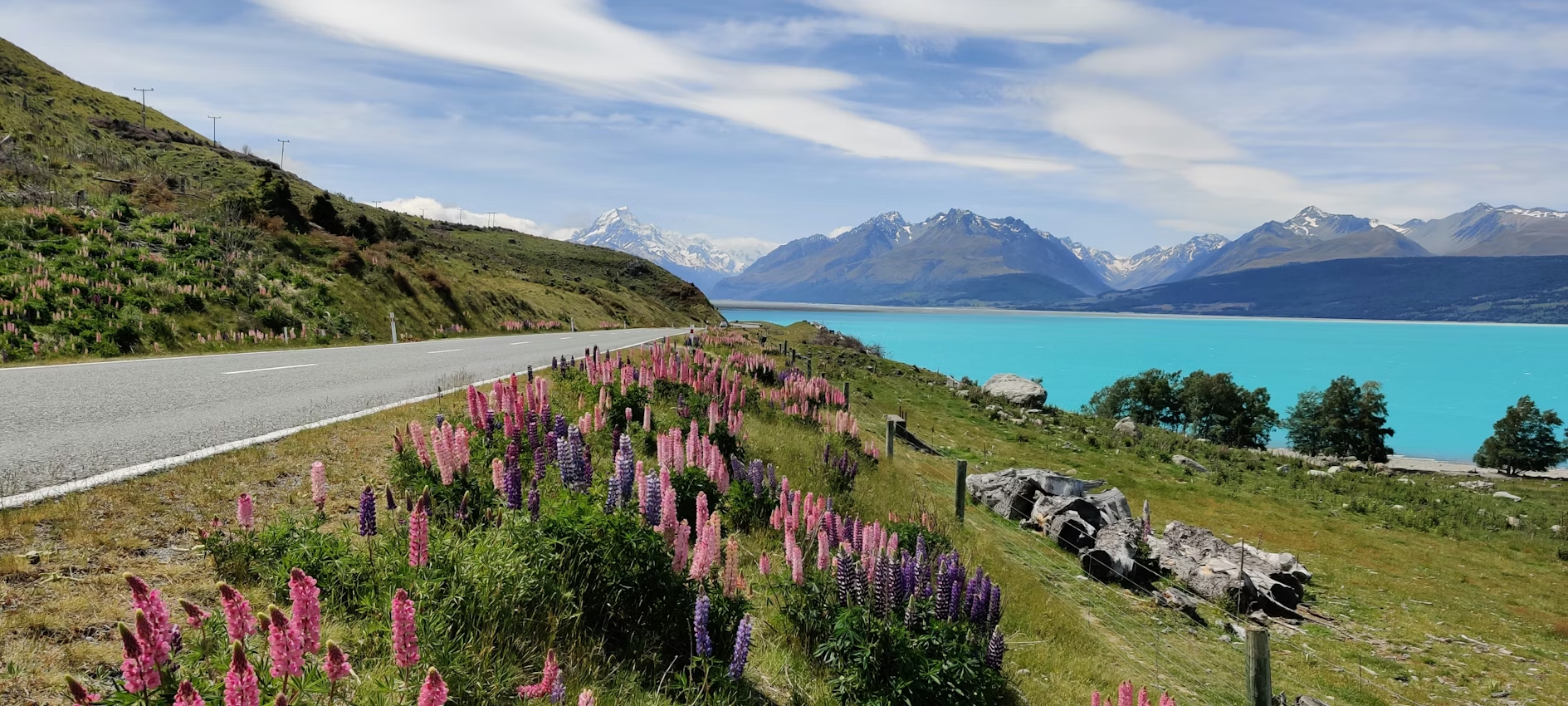
New Zealand road rules largely follow the British model, with a few distinctly local nuances you need to know before you drive.
At unmarked intersections, you must give way to traffic coming from your right. At T-intersections, traffic on the continuing road always has right of way over vehicles turning from or into the terminating road. This catches many overseas visitors off guard so please take extra care at rural intersections where signage can be sparse.
Overtaking is permitted on the right-hand side only, unless traffic is stationary or moving very slowly and there is a designated lane. On New Zealand's many narrow single-lane roads, overtaking opportunities can be rare so patience is your best tool.
Handheld mobile phone use while driving is illegal in New Zealand. This includes calling, texting, and using apps. Use a mounted hands-free device or pull over safely to use your phone. Fines are significant, and it's simply not worth it on roads that demand your full attention.
New Zealand has a strict drink-driving limit of 50mg of alcohol per 100ml of blood for drivers over 20, and zero tolerance (zero alcohol) for drivers under 20. Please don't risk it! Penalties include heavy fines, disqualification, and criminal conviction.
If you're visiting from North America, continental Europe, or much of Asia, driving on the left will be the biggest adjustment you'll make. Most drivers adapt within a day or two, but the highest-risk moments are specific and predictable: pulling out of a car park, leaving a petrol station, turning at intersections, and driving on empty rural roads where there's no other traffic to follow.
A genuinely useful trick is to remind yourself whenever you get back in the car. You could even place a small sticky note on your dashboard to prompt yourself if needed. The moments of danger come after stops, not while you're in flow. Roundabouts also flow clockwise in New Zealand, which means you give way to traffic already on the roundabout (coming from your right).
New Zealand's default open road speed limit is 100km/h (62mph), and 50km/h in urban areas unless otherwise stated. Many tourist routes, particularly in Fiordland, the Catlins, and Northland, include sharp corners and unsealed sections where the advisory speed is considerably lower.
Speed cameras and mobile police units operate throughout New Zealand, including on rural highways. Fines begin at NZ$30 for minor infringements and escalate rapidly. Exceeding the limit by more than 40km/h can result in immediate license seizure. Speed tolerance in New Zealand is tight as some cameras trigger at just 4km/h over the limit.
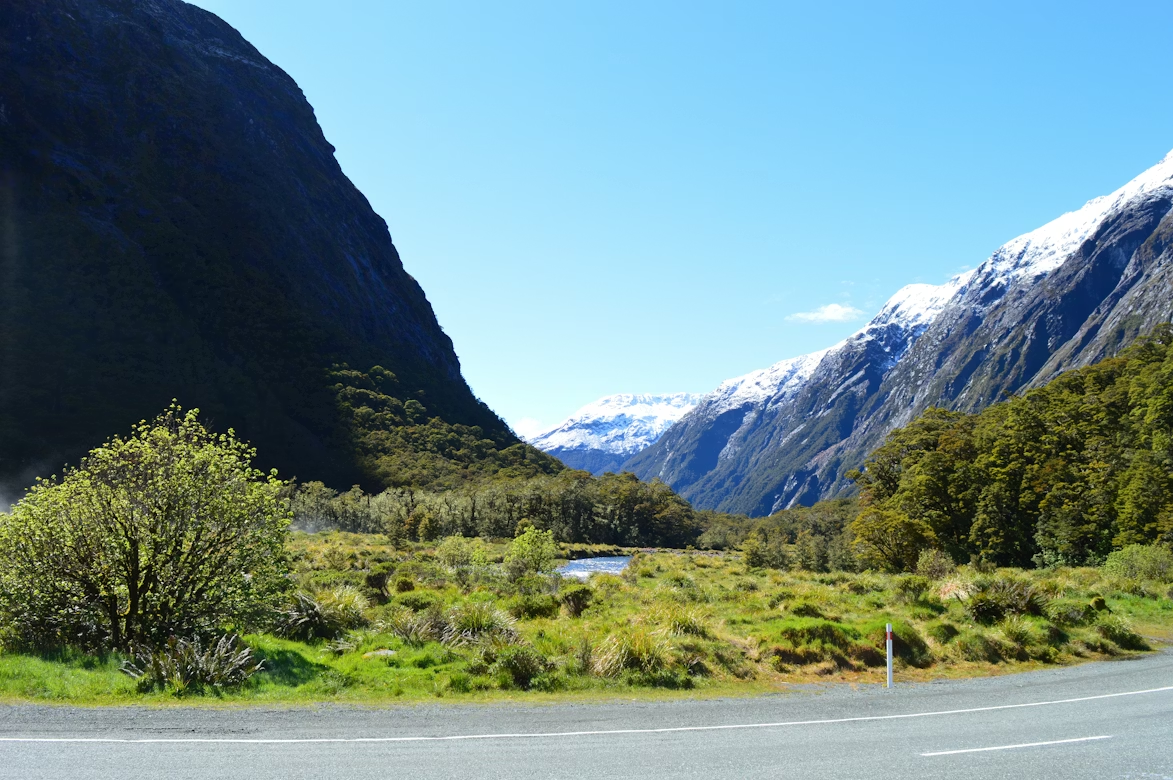
New Zealand has a well-developed rental market with options for every budget, from budget hatchbacks and compact SUVs to fully self-contained campervans. For the South Island in particular, a campervan (motorhome) offers tremendous freedom: you're never far from a Department of Conservation (DOC) campsite, and you eliminate the hassle of booking accommodation at every stop.
Major international operators like Hertz, Avis, Budget have offices at Auckland, Wellington, and Christchurch airports. Local specialists like Jucy, Britz, and Maui offer competitive campervan deals. Always check whether your rental includes a Collision Damage Waiver (CDW) and what the excess is. Standard excess can be NZ$3,000 or more, and reducing it is often worth the daily fee.
New Zealand's roads range from smooth multi-lane motorways around Auckland to unsealed gravel tracks in the backcountry. Many highly scenic routes, including the Skippers Canyon Road near Queenstown and sections of the Lewis Pass, are specifically excluded from rental agreements. Always check your rental company's restricted roads list before departing.
Weather can transform road conditions rapidly, particularly in the South Island's alpine areas. The Haast Pass, Crown Range, and Lewis Pass can close during heavy snow in winter (June to August). Check the New Zealand Transport Agency (NZTA) website or the Waka Kotahi Journey Planner before driving mountain passes in winter months. Carrying snow chains is compulsory on some alpine roads from June to October.
This is, ultimately, why you're here. New Zealand is densely packed with world-class driving routes.
| Route | Distance | Highlight |
|---|---|---|
| Milford Road (SH94) | 119km | Fiordland's most dramatic scenery; Homer Tunnel |
| The Crown Range Road | 45km | NZ's highest sealed road; panoramic Queenstown views |
| Pacific Coast Highway (SH35) | 330km | Māori heartland, rugged coast, East Cape lighthouse |
| Forgotten World Highway (SH43) | 155km | Remote Taranaki backcountry; bridge tunnels |
| The Haast Pass (SH6) | 145km | West Coast rainforest to Central Otago in one journey |
| Coromandel Peninsula | ~200km loop | Cathedral Cove, Hot Water Beach, kauri forests |
The Milford Road may be the most spectacular 119 kilometers of highway on Earth, and it's best experienced at dawn, before the tour buses depart.
For more travel inspiration, please read about the 10 best places to visit in New Zealand.
Petrol and diesel are widely available in towns, but rural stretches, particularly on the West Coast of the South Island, can go 100km or more between stations. Always fill up when you have the opportunity and consider carrying a small jerry can for very remote routes. Fuel prices in New Zealand are moderate by international standards, though prices climb in remote areas.
Parking in Auckland and Wellington city centers can be expensive and competitive. Most towns outside the main cities offer free or very low-cost parking. Yellow lines indicate no parking; broken yellow lines mean limited parking during certain hours. Download the ParkMate or PayMyPark app for hassle-free urban parking payment.
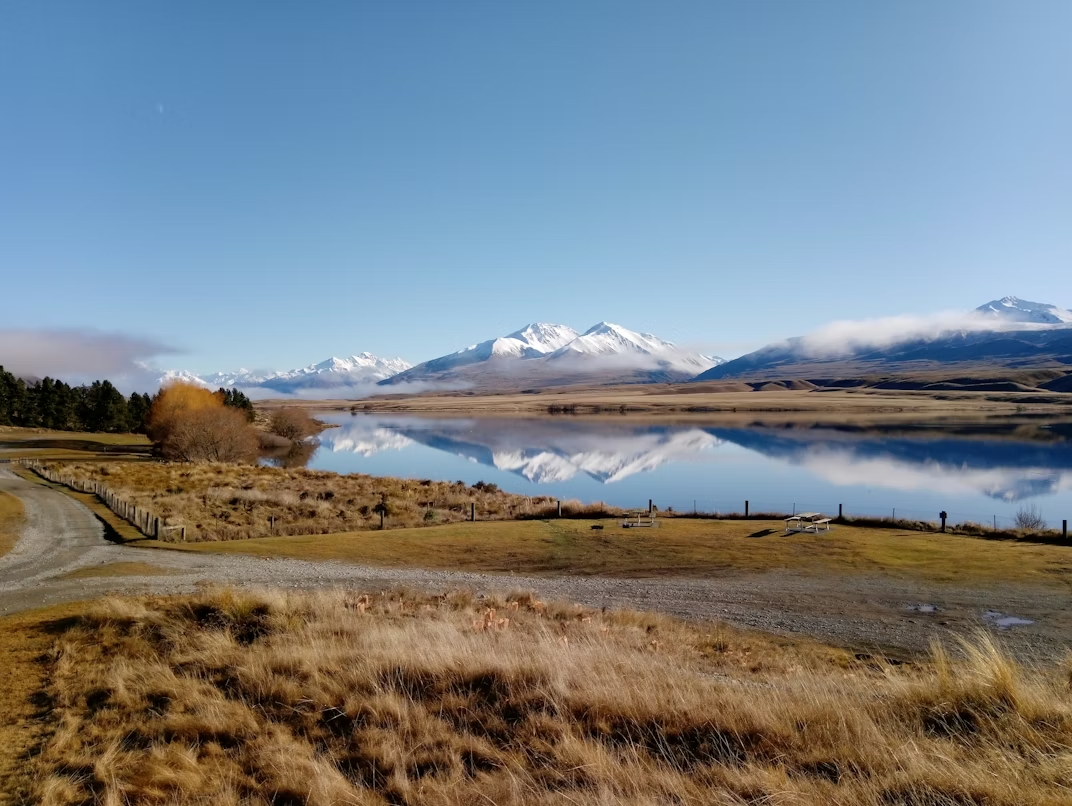
New Zealand has a relatively high road fatality rate compared to similar countries. This is partly due to road quality, partly due to driver inexperience on unfamiliar terrain. The most important habits to adopt are:
Single-lane bridges are common throughout New Zealand, particularly in rural Northland and the West Coast. One side has priority as indicated by a give way sign. Approach slowly and be ready to stop if a vehicle is already crossing. Wildlife is another genuine hazard: sheep, cattle, and the occasional kiwi or seal near coastal roads can appear without warning, especially at dawn and dusk.
Dial 111 for police, fire, or ambulance in any emergency. For non-emergency road incidents, contact NZ Police on 105. The AA Roadside Assist number is 0800 500 222 and covers most rental agreements.
Before you set off on your New Zealand road trip, run through this checklist:
Most standard rental cars can travel on the Cook Strait ferries, but you must check with your rental company first. Some operators require advance notification and a few budget providers prohibit ferry crossings entirely. Book your vehicle space separately when you book your passenger ticket, as car deck space sells out well ahead of foot passenger capacity, especially in summer. The Wellington to Picton ferry takes around three to three and a half hours with Interislander and Bluebridge.
No special license is required for most campervans. A standard car license covers vehicles up to 6,000kg, which includes most rental motorhomes. Larger, truck-based vehicles may require a class 2 license, but rental companies will flag this clearly at booking. What you will need is confirmation that your campervan holds a current self-containment certificate if you plan to freedom camp.
It's best avoided where possible, particularly on rural roads. Many of New Zealand's highways are unlit, have no road markings, and pass through areas where livestock, deer, and occasionally wildlife cross without warning. If you're arriving on a late international flight and collecting a rental car, consider staying near the airport overnight and starting your drive fresh in the morning.
Call your rental company's 24-hour emergency line first. The number should be printed on your rental agreement. Most vehicles are covered by AA Roadside Assist (0800 500 222). If you have no cell coverage, stay with your vehicle, make it visible with hazard lights or a bright item, and wait for passing traffic. New Zealand's remote roads do see regular traffic, and locals will always stop to help.
There are only a handful of toll roads in New Zealand, all of which are in the North Island — the Northern Gateway Toll Road north of Auckland, the Tauranga Eastern Link, and the Takitimu Drive in Tauranga. Tolls are not paid at a booth; you pay online at the NZTA website within five days of travel. Rental companies may handle this for you for a small admin fee, or you can pay directly yourself to avoid the surcharge.
New Zealand rewards those who take the time to do it properly. The roads here aren't just a means of getting from A to B — they are the experience. And the experience doesn't stop at the water's edge. If your road trip takes you between the North and South Islands, book your vehicle on the Interislander or Bluebridge ferry early. Spaces fill fast in peak season, and this is one connection you don't want to miss.