The 24 Hours of Le Mans 2026 Guide
Events & Festivals
Events & Festivals

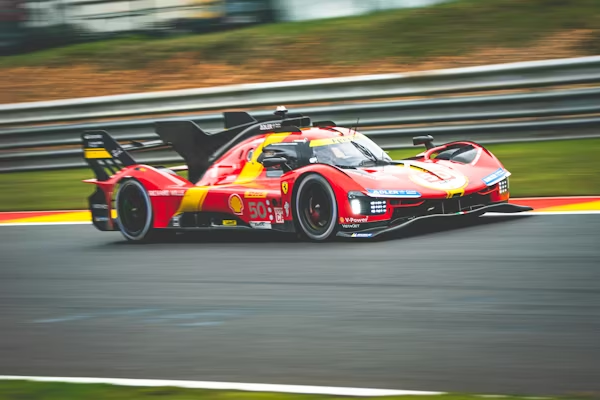
Held at the legendary Circuit de la Sarthe in France, the 24 Hours of Le Mans is the pinnacle of motorsport, attracting fans from across the UK, Europe, and beyond. Whether you are searching for Le Mans 2026 tickets, travel advice, camping options, or insider tips on the best viewing spots, this guide covers everything you need to know. If you have not yet made the journey, this is the year to do so.
The 24 Hours of Le Mans, otherwise known in French as the 24 Heures du Mans, is the oldest active endurance motor racing event on the planet. Its first edition took place in 1923, when a handful of brave souls decided to race production cars around a rough triangle of public roads in the French department of the Sarthe for an entire day and night. Over a century later, the format is essentially unchanged. The race is still 24 hours long and, most importantly, still has the same appeal.
This year will mark the 95th edition of the 24 Hours of Le Mans, held on June 13–14, 2026. The race is organized by the Automobile Club de l'Ouest (ACO) and symbolizes the crown jewel of the FIA World Endurance Championship (FIA WEC). Its reputation in global motorsport is almost impossible to overstate. Alongside the Formula 1 Monaco Grand Prix and the Indianapolis 500, Le Mans makes up one of the three legs of the Triple Crown of Motorsport. It also anchors the Triple Crown of Endurance Racing with the 24 Hours of Daytona and the 12 Hours of Sebring.
"To win at Le Mans once is immortality. To keep coming back for more — that is the true spirit of this race."
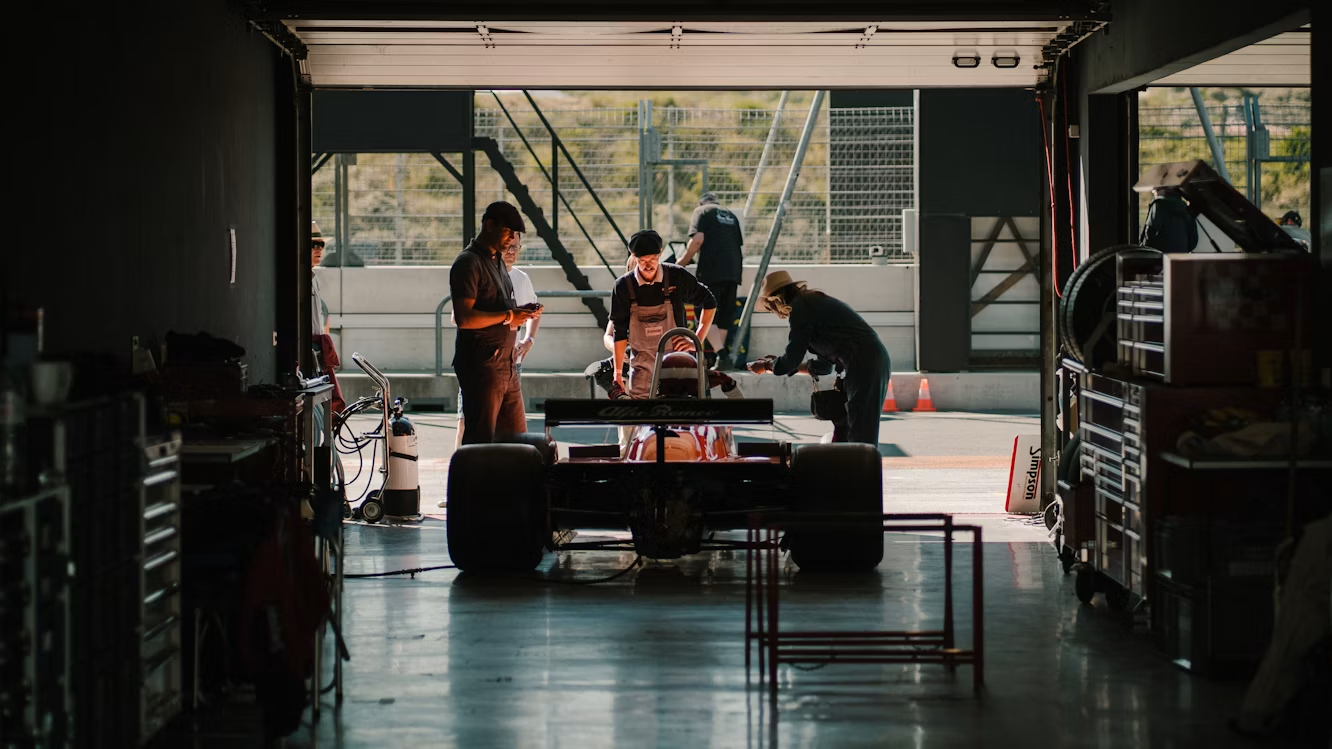
The circuit de la Sarthe is unlike any other racing venue on the planet. Stretching 13.65 kilometers (8.47 miles) per lap, it brings together permanent track sections with closed public roads, forming a layout that is part race circuit, part living museum. Each corner holds a story. The Dunlop Chicane. The Esses. Indianapolis. Arnage. The Ford Chicanes. And of course, the legendary Mulsanne Straight — even in its chicane-interrupted modern form, still one of the most dramatic stretches in motorsport.
The best view of the track is, of course, everywhere. However, first-timers usually tend to gravitate toward the The Goodyear Bridge for a sweeping panorama of the start-finish straight, or toward the Porsche Curves for a closer taste of the action. Wherever you stand or sit, the scale of the circuit means you'll always hear the cars long before you see them.
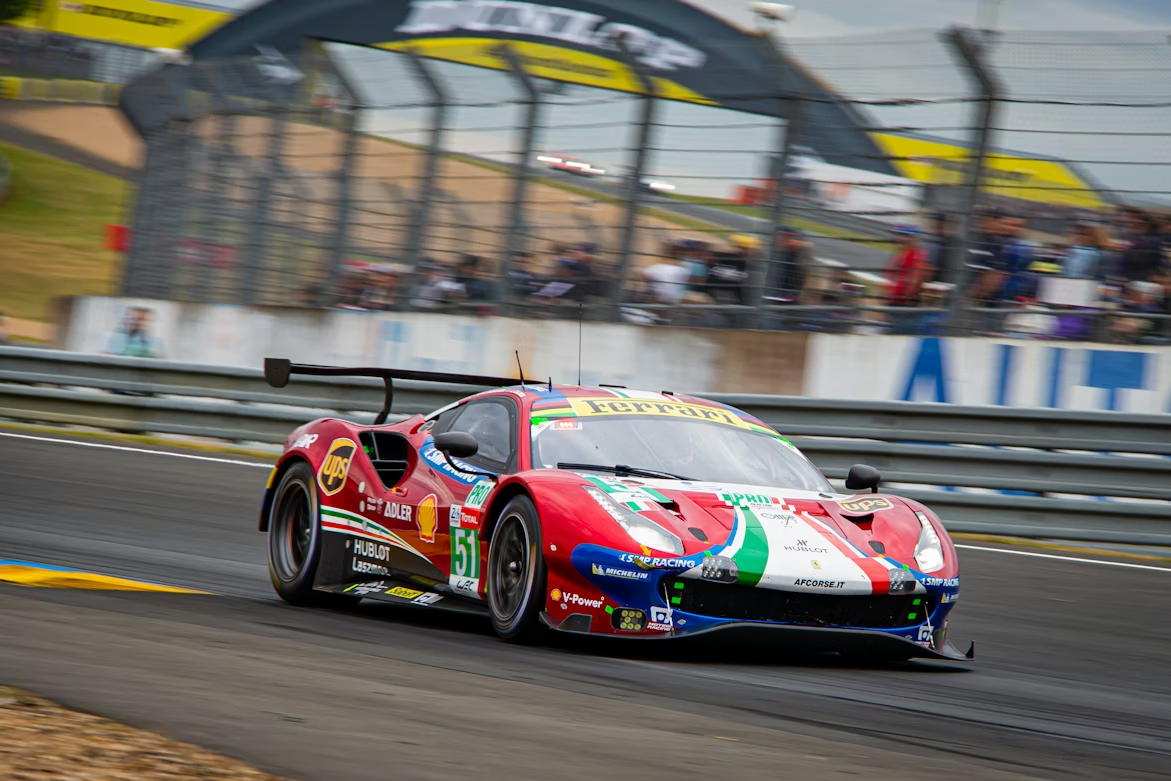
The top Hypercar class has never been more competitive. In 2026, no fewer than nine manufacturers bring full factory efforts to the Circuit de la Sarthe, making it the most crowded and fiercely contested top class in the race's history. This is the 95th 24 hours of Le Mans — and it promises to be one for the ages.
If the 24 Hours of Le Mans represents the present and future of endurance racing, Le Mans Classic can be considered its beating heart. Established in 2002 by Peter Auto in partnership with the luxury watchmaker Richard Mille, and in association with the ACO, this celebration of historic motorsport takes place on the same Circuit de la Sarthe used for the 24 Hours, spanning the full 13.65 kilometers. Few experiences in motorsport compare to witnessing cars from bygone eras racing along the same roads once mastered by legends such as Jacky Ickx, Derek Bell, and Tom Kristensen.
Originally hosted every two years, Le Mans Classic became an annual event from 2025, alternating between two distinct formats. Classic Heritage focuses on cars from 1923 to 1975, while Classic Legend showcases cars from 1976 onward. In 2025, the event attracted 238,000 spectators, forming a passionate and knowledgeable audience that appreciates historic racing with genuine enthusiasm.
The 2026 Le Mans Classic will be held as the Legend edition from July 2 to 5, providing a natural complement to the main race and making a second visit within the same season both practical and highly appealing.
For many North American and British fans, the journey to Le Mans is half the adventure. Traveling by car and ferry is the most convenient way to make the pilgrimage for many reasons. It allows you to bring more luggage than you could by plane, arrive on your own schedule, and make the trip part of the experience rather than just a means to an end. From England, there are three main cross-Channel ferries to consider booking.
The ferry from Portsmouth to Caen is the best way to get to Le Mans. Brittany Ferries operates this crossing with a sailing time of around 6 hours on the day sailing or overnight on the Commodore Clipper. Caen is located just 3 hours from Le Mans by road.
The ferry from Portsmouth to Cherbourg is a slightly longer crossing, operated by Brittany Ferries, taking approximately 8 hours and 30 minutes and delivers you into Normandy with enough time for a comfortable motorway drive south. The onward journey to Le Mans typically takes around 3.5 hours.
The ferry from Poole to Cherbourg with Brittany Ferries is a convenient option for travelers coming from the southwest of England. The driving time to Le Mans is comparable to the Portsmouth to Cherbourg route, with the added benefit of a more relaxed departure experience from Poole Quay.
The ferry from Dover to Calais is the fastest crossing available, taking approximately 1 hour and 30 minutes with DFDS, Irish Ferries or P&O, or around 35 minutes via the Eurotunnel. From Calais, the drive to Le Mans takes approximately 5 hours via the A28. This route is especially useful for travelers arriving from the southeast or those who prefer a longer drive through France.
Whichever route you choose, it’s always best to book well in advance, particularly for race week in June. Crossings fill quickly once special offers become available, and departures on the Saturday before the race are often in high demand. Traveling midweek before the event or returning on the Monday afterwards generally offers better availability and a more relaxing experience.
For fans flying in from the US, Canada, Brazil, Argentina, Australia, New Zealand, or elsewhere, Paris Charles de Gaulle provides the most direct connections. Le Mans is a 55-minute TGV train ride from Paris Montparnasse, making it entirely feasible to arrive at the circuit within a few hours of landing.
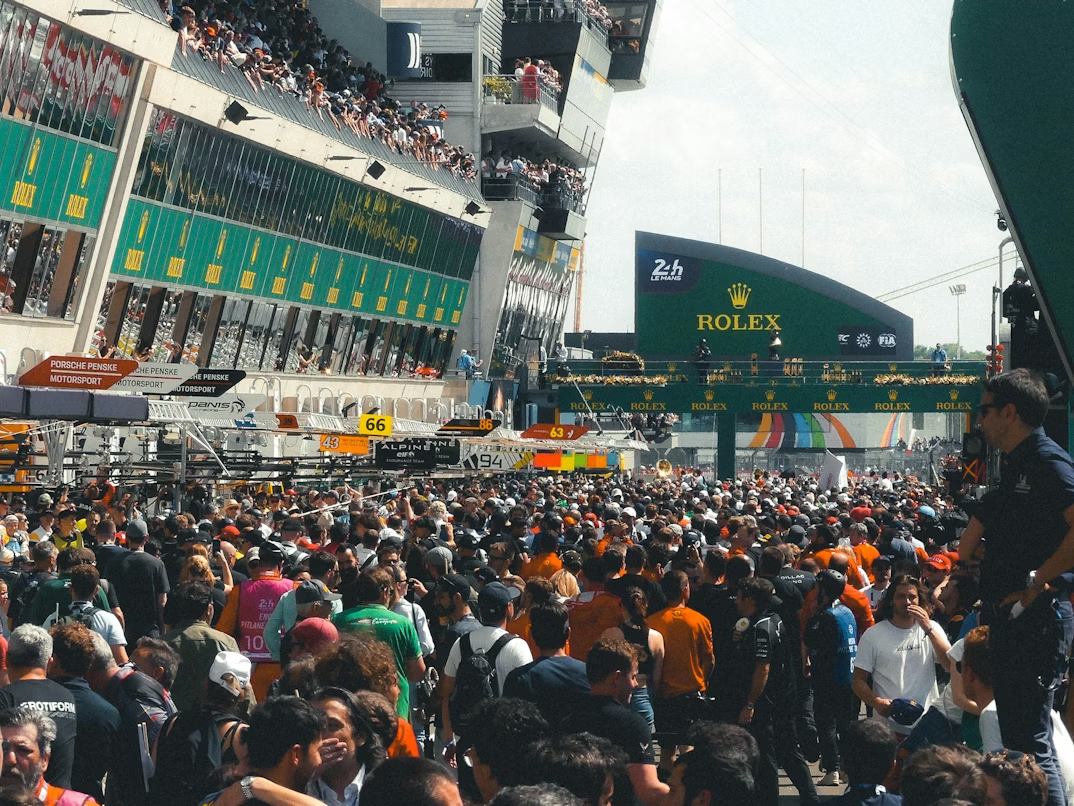
If you have booked your ferry tickets but you're unsure where to stay, Team Langoustine have got you covered. They are an official ticketing agent and private campsite operator for the Le Mans 24h and Le Mans Classic, built by motorsport enthusiasts for fellow enthusiasts.
Team Langoustine is best known for its premium private camping experiences at the Circuit de la Sarthe, hosting more than 1,700 guests across the Le Mans 24 Hours and Le Mans Classic events. Get into the racing spirit and book your accommodation today!
The private campsite is located at Tertre Rouge — and getting here from the UK is easier than you might think. If you're crossing the Channel via Calais ferry port, you're looking at approximately 4 to 4.5 hours of driving to reach Tertre Rouge, covering around 265 miles (426 km). The recommended route takes you south on the A16/A28 via Rouen, then onto the N138 towards Alençon before joining the autoroute into Le Mans.
Alternatively, if you're arriving via Cherbourg ferry port, you're even closer — the drive is approximately 3 hours, covering around 176 miles (283 km). Head south from Cherbourg on the N13, picking up the D974 towards Caen before joining the A88 and A28 south to Le Mans.
Once you're set up, the famous Circuit de la Sarthe is right on your doorstep — the Tertre Rouge corner itself is part of the circuit boundary, meaning the Le Mans pits, start/finish line and grandstands are just a short walk away, with the start line reachable in around 20–25 minutes on foot via the circuit's pedestrian tunnels.
The 24 Hours of Le Mans 2026 is more than just a race; it is an unforgettable experience that belongs on every motorsport fan’s calendar. From the roar of Hypercars through the night to the atmosphere that surrounds the Circuit de la Sarthe, there is nothing else like it in the world.
With demand already building, now is the time to start planning your journey. Secure your route early by booking your ferry to France. Book your ferry tickets today and take the first step toward experiencing Le Mans 2026 in person.