Helsinki to Tallinn Ferry Travel Guide
Route Guides
Route Guides


Trust me when I say that traveling by ferry from Helsinki to Tallinn is one of the easiest and most rewarding cross-border journeys that Northern Europe has to offer. Connecting Finland and Estonia across the Baltic Sea via the Gulf of Finland, this short route enables travelers to experience two distinct yet complementary capitals in a single itinerary.
With 71 weekly departures and a crossing that takes just 2 hours, the Helsinki to Tallinn ferry is absolutely packed with tourists, business commuters, locals popping over for the day, you name it. The frequency is brilliant if you're planning a quick day trip, but it also works perfectly if you're heading over for a longer adventure. And honestly? The crossing itself is pretty comfortable, with plenty onboard to keep you entertained along the way.
Most ferries to Tallinn depart from Helsinki’s West Terminal (Länsiterminaali 2), which thankfully is very easy to reach, even if it’s your first time visiting the city. The terminal is located approximately 2.5 km from the city center, in the Jätkäsaari district, and is well connected by public transport.
The easiest way to reach the terminal is by tram. I usually take tram 7 or 9, both of which stop right outside the terminal at "Länsiterminaali T2". If you’re traveling from the Central Railway Station, tram 7 is the obvious choice, arriving in 15 to 20 minutes depending on traffic.
If you prefer taking the bus, routes such as bus 15 (connecting to the metro at Ruoholahti) can also take you close to the port area, though trams are generally more direct. Taxis are widely available too, and a ride from the city center typically takes around 10 minutes in light traffic.
The terminal building itself is modern and straightforward to navigate, with clear signage in English and Finnish to avoid confusion. Before boarding, I like to pick up a coffee from one of the cafes and head over to the seating area that overlooks the harbor. Nearby, you will also find luggage facilities and self-service check-in kiosks for certain operators.
Boarding is usually smooth and well-organized, with passengers guided through clearly marked lanes. If you’re traveling with a car, I always allow extra time for vehicle check-in and follow the signs carefully, as vehicle boarding is handled separately from foot passengers.

The route between Helsinki and Tallinn is provided by 3 ferry operators, each offering multiple daily departures and a range of onboard services. The primary companies operating this route include Tallink Silja Line, Viking Line, and Eckerö Line.
One thing that surprised me the first time I took this ferry was just how much there is to do onboard. It feels less like a short crossing and more like a mini cruise. Most vessels feature buffet and à la carte restaurants, casual cafés for coffee and snacks, and well-stocked bars with sea views. I also love to browse the duty-free shops, which sell everything from perfumes and cosmetics to Finnish and Estonian spirits, as well as convenience stores for last-minute travel essentials.
Most of the ferries from Helsinki to Tallinn that I have traveled on also have panoramic lounges, live music or entertainment areas, children’s play zones, and even small spas or sauna facilities on select vessels. If you’re looking for a quieter experience, I would consider upgrading to a business lounge to give yourself access to complimentary drinks and a more relaxed atmosphere away from the main crowds.
Although all operators offer a high standard of safety and service, the overall experience can vary slightly depending on the ship and departure time. Weekend sailings tend to be livelier and more social, whereas midweek sailings are calmer and better suited to working or relaxing.
From my experience, it’s best not to cut it too fine when it comes to arrival time. If you’re traveling as a foot passenger, aim to get there around 45–60 minutes before departure. If you’re bringing a car, I’d give yourself at least 60–90 minutes.
Each ferry company operates its own check-in schedule and deadlines, which must be followed carefully to avoid missing your sailing:
Eckerö Line: Check-in typically opens approximately 2 hours before departure and closes 45 minutes prior to sailing.
Viking Line: Check-in opens around 1 hour and 30 minutes before departure and closes 20 minutes prior to sailing. While the closing time is slightly later than other operators, it is still recommended to arrive at least 45 minutes in advance to allow for queues and boarding procedures.
Tallink Silja Line: Check-in is available on the day of departure during terminal opening hours and generally closes 30 minutes before departure. Tallink Silja offers self-service check-in kiosks and mobile boarding passes, which effectively expedites the process.
Travelers with vehicles should plan to arrive 60 to 90 minutes before departure. Speaking from experience, this gives you plenty of time to complete vehicle check-in, security procedures, and boarding logistics without feeling rushed off your feet.
Me? I'm usually happy with a standard class ticket. It gives you access to the general seating areas, which are honestly perfectly comfortable for a short hop like this. But if you've got the budget and want to treat yourself, there are some genuinely nice upgrade options worth considering.
The business lounge is one that catches a lot of people's attention, and for good reason. You get a quieter space away from the crowds, complimentary snacks and drinks, Wi-Fi, and some beautiful views out across the sea. It's brilliant if you're trying to catch up on work during the crossing, or you just fancy a bit of peace and quiet to yourself.
Then there are private cabins, available on most ferries. I wouldn't say they're essential for a short journey, but they're genuinely brilliant if you've got a family, a big group, or you're traveling with lots of luggage.
Please keep in mind that upgrading to a business lounge or booking a cabin will add to your overall ticket cost, so factor that into your budget planning.
Ferry tickets can be purchased through our Deal Finder. We strongly urge that you book your tickets in advance, especially during weekends, holidays, and the summer tourist season when demand is at its highest.
Advance reservations often provide access to lower fares, promotional offers, and a wider selection of departure times. However, prices may vary depending on the time of day, availability and whether you have a vehicle or not.
Travelers should also review cancellation policies and ticket flexibility, especially when planning return journeys or multi-day trips.
Planning to drive onto the ferry? Here's the thing—you absolutely need to mention it when you book your ticket. I've seen travellers show up at the gate expecting to bring their vehicle only to hit a roadblock because their booking didn't include one. Not every ferry can accommodate cars, so getting this sorted early on saves you a whole lot of stress at the port.
You'll also want to budget for an extra vehicle fee. The cost varies depending on what you're bringing along—a compact car costs less than a van or anything with a trailer in tow. It makes sense really: bigger vehicles need more deck space, so the pricing reflects that.
One more heads-up: getting your car onboard is a bit different from walking on as a foot passenger. You'll need to arrive earlier to allow time for check-in, stick to the vehicle lanes, and follow whatever boarding instructions the ferry operator gives you. That said, here's my take after exploring this region: you don't really need a car to enjoy Tallinn itself. But if you're keen to venture into the rest of Estonia or thinking about a longer European road trip, then bringing your own wheels makes total sense.

For travelers planning to return to Helsinki on the same day, purchasing a return ticket is often more cost-effective than booking two separate one-way journeys. Many operators provide discounted return fares, especially for same-day travel.
A return ticket is especially advantageous for those undertaking a day trip to Tallinn. With early morning departures and late evening returns, I can confirm that it’s entirely feasible to spend several hours exploring the city before returning to Helsinki.
However, those intending to stay overnight or longer may benefit from booking flexible one-way tickets, depending on their travel itinerary.
I have always found the ferry from Helsinki to Tallinn to be stable and comfortable, and this is primarily due to the sheltered nature of the Gulf of Finland. The route spans approximately 80 kilometers (50 miles), and the vessels operating this service are large, modern Ro-Pax ferries built with advanced stabilization systems designed to minimize motion in rough weather conditions.
Between May and September, sea conditions are generally calm, with wave heights often remaining below one meter. However, it should come as no surprise that autumn and winter crossings are more volatile. I’m no weatherman but from what I know, low-pressure systems moving across the Baltic Sea generate stronger winds, causing choppier seas and wave heights that can exceed 2 meters. While modern vessels are fully capable of handling such conditions safely, passengers can experience moderate movement during these periods.
Travelers who are sensitive to motion should take precautionary measures. I would highly recommend sitting in the midship area on lower decks, where movement is less noticeable. Additionally, over-the-counter motion sickness medication or acupressure wristbands will certainly help mitigate symptoms.
Despite occasional rougher conditions in winter, the Helsinki to Tallinn route maintains a high level of operational reliability. Having traveled this route many times myself, I can safely say that cancellations and significant delays are uncommon, as ferry operators are well-equipped to manage adverse weather and adjust schedules when necessary.
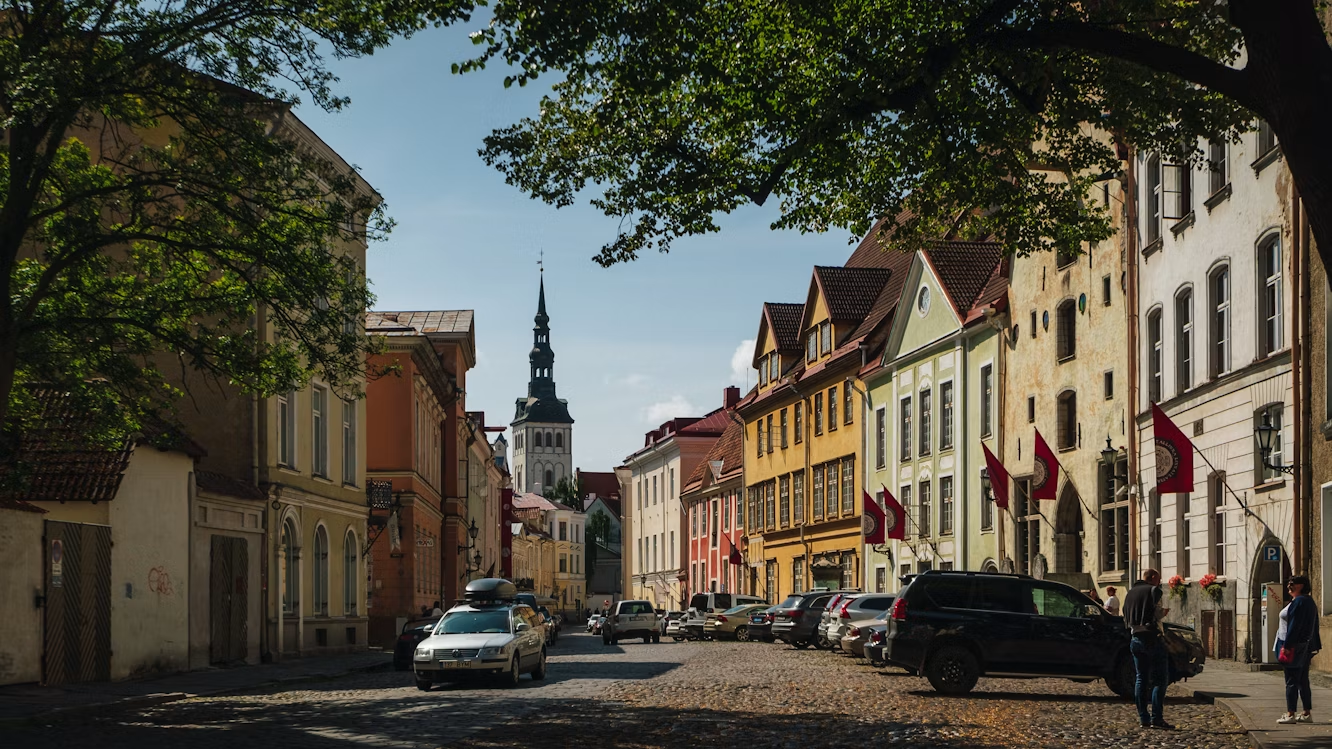
Ferries from Helsinki arrive at Tallinn’s main passenger harbor (Reisisadam), which is conveniently located just a short distance from the city center. The port provides immediate access to one of Europe’s best-preserved medieval cities. From most terminals, Tallinn’s UNESCO-listed Old Town can be reached on foot in approximately 15–20 minutes.
From the moment you arrive, Tallinn makes things refreshingly easy. Whether you’re hopping into a licensed taxi, booking a ride through an app, or jumping on one of the city’s trams or buses, getting around is very straightforward. Having said that, you might find—like I did—that the best way to experience Tallinn is simply on foot. Its compact layout encourages you to slow down and stumble upon hidden corners you’d otherwise miss.
What makes this journey truly unforgettable, though, is the dramatic shift in atmosphere between Helsinki and Tallinn. One moment you’re immersed in Helsinki’s sleek Nordic minimalism, and the next, you’re stepping into what feels like a living fairy-tale. Tallinn’s Old Town greets you with Gothic spires piercing the skyline, cobbled streets winding past ancient city walls, and beautifully preserved merchant houses that have stood for centuries.
If you are lucky enough to arrive in winter, head straight to Tallinn Christmas Market. This is unquestionably one of the most magical European Christmas markets alongside Helsinki Christmas Market.
If this is your first time traveling between Helsinki and Tallinn by ferry, the following expert tips will help ensure a smooth and enjoyable experience:
Taking the ferry from Helsinki to Tallinn is not only about getting from A to B, but also enjoying the experience. In just a couple of hours, you can sip coffee with sea views, browse the onboard shops, and watch the Nordic coastline disappear into the distance before arriving in a completely different country.
With frequent departures, affordable prices, and plenty of onboard comforts, it’s easily one of the simplest and most enjoyable ways to explore two European capitals in a single day. Whether you’re planning a quick day trip or a longer stay in Tallinn, this is one journey that’s as memorable as the destination itself—and one I would happily recommend adding to any Baltic travel itinerary. Book your ferry tickets today!