Hakata (Fukuoka) - Busan
Ferries to South Korea
Hakata (Fukuoka) - Busan
Ferries to South Korea
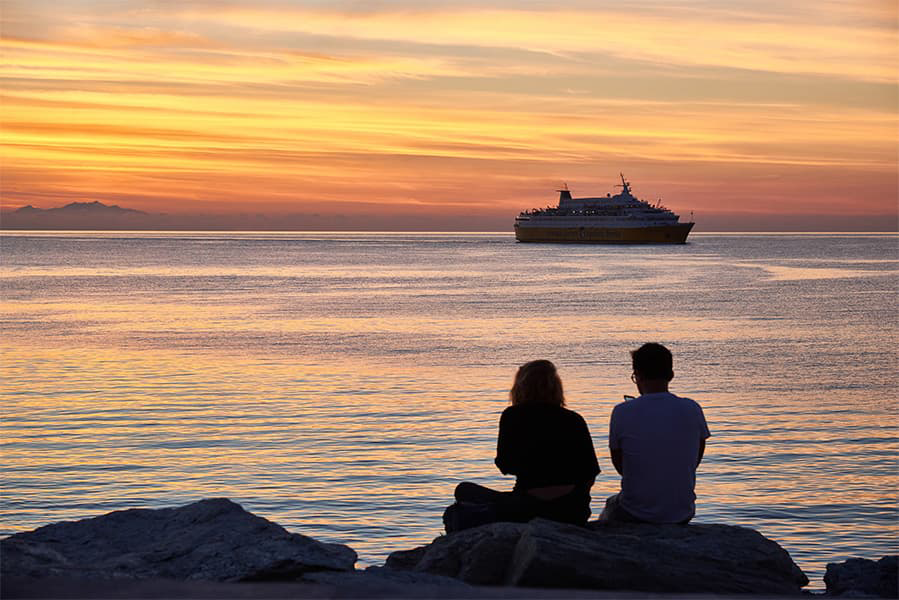
Ferries from Hakata (Fukuoka) to Busan are operated by 1 ferry company: Camellia Line. The crossing typically takes around 6 hours. There are currently 6 weekly sailings on this route, with prices starting from as little as $47. Use our Deal Finder to compare prices and availability, and book your ferry to Busan today.

Hakata (Fukuoka) to Busan ferry prices typically range from $25 to $337. The average ferry price from Hakata (Fukuoka) to Busan is around $132. The cheapest fares usually start from $25. The average foot passenger ticket costs $132.
Prices may vary depending on passenger numbers, vehicle type, route, and sailing time. Please be aware that pricing data excludes service fees and is based on searches from the last 30 days. This was last updated September 26.
The cheapest tickets on the Hakata (Fukuoka) to Busan ferry cost approximately $25.09. However, prices can reduce to as little as $56.19 in the winter.
Direct Ferries makes it easy to compare ferry tickets and prices worldwide, so you can find the best deal for your journey. Please visit our Special Offers page to see current discounts on selected routes and operators. Booking early is typically the most reliable way to secure lower fares and better availability.
Yes, Direct Ferries offers a range of discounts throughout the year. Where available, senior discounts are applied automatically during the search process: simply select the relevant age range when entering passenger details.
Students and recent graduates can receive a 5% discount on ferry tickets. To claim this, register with our partner Student Beans and verify your student or graduate status. Once confirmed, you'll receive a discount code to use at checkout.
Resident discounts are available on selected routes in Spain and Italy. When applicable, choose the "Residents" option during booking and the discount will be applied automatically. Please note that proof of residence or a valid ID showing the correct address must be presented at check-in.
There are around 6 weekly sailings from Hakata (Fukuoka) to Busan.
Camellia Line provide 1 sailing daily, 6 sailings weekly. Please keep in mind that ferry timetables often increase during the high season.
The first ferry from Hakata (Fukuoka) to Busan usually departs at around 12:30, with the last sailing leaving Hakata (Fukuoka) Port at approximately 20:00.
Due to the longer crossing time, ferries between Hakata (Fukuoka) and Busan are generally better suited to weekend breaks or longer stays. For ideas on the best things to do in Busan, please visit our blog.
The fastest ferry from Hakata (Fukuoka) to Busan is with Camellia Line in 6 hours.
The fastest ferries from Hakata (Fukuoka) to Busan usually cost around $132.46.
No, ferry operators currently do not allow cars on sailings between Hakata (Fukuoka) and Busan. If you wish to bring your car, then you can use our Deal Finder to find alternative routes.
Whether you can take a campervan or caravan on the ferry depends on the operator and vessel used for your chosen crossing. Enter your travel details into our search bar to see which operators and vehicle options are available on the Hakata (Fukuoka) to Busan ferry.
For more advice and travel inspiration when taking a car, campervan, or caravan, please visit our blog.
Bicycles are currently not permitted on ferries sailing between Hakata (Fukuoka) and Busan. Please look for alternative ferry routes that accommodate bicycles using our Deal Finder.
Yes, foot passengers are welcome on ferries from Hakata (Fukuoka) to Busan with Camellia Line.
First class is available on ferries from Hakata (Fukuoka) to Busan with Camellia Line.
Unlike the lounge-style upgrades on shorter routes, Camellia Line's First Class is located above the shared Second Class bunks and below the top-end Special Rooms and Royal Suite. First Class typically includes:
Yes, you can book cabins on ferries that sail from Hakata (Fukuoka) to Busan with Camellia Line. The price of a cabin on the Hakata (Fukuoka) to Busan ferry ranges from $46.61 and $835.87, with an average price of $125.27. Please note that prices may vary depending on the type of cabin you book.
Camellia Line provides a multi-tier cabin hierarchy on the New Camellia, from shared budget rooms up to a private suite with a balcony. From lowest to highest tier:
Whether an overnight ferry runs between Hakata (Fukuoka) and Busan depends on the operator and timetable. Enter your travel details in our search bar to check if an overnight option is available, alongside current timetables and alternative daytime crossings. Please be aware that overnight crossings can sometimes take a little longer than daytime sailings.
Pets are currently not allowed on ferries traveling from Hakata (Fukuoka) to Busan. Please use our Deal Finder to search for alternative routes that allow pet travel.
Please be aware that even where pets are not permitted on board, different regulations may apply to passengers traveling with guide dogs or assistance dogs. We recommend contacting our customer service team directly to confirm the specific rules for your preferred sailing. For general information, visit our Special Assistance Help page.
The Hakata to Busan ferry is one of the most travelled international sea crossings in East Asia, connecting the Japanese city of Fukuoka with South Korea's second largest city across the Korea Strait. With a crossing time of 6 hours, overnight accommodation is not essential on most services but might be necessary for those seeking a restful trip. Here are some facilities passengers can expect to find onboard.
The standard option across all operators on this route. Enclosed passenger saloons with fixed or cushioned seating provide a comfortable base for the crossing. Camellia Line offers standard seating adequate for the majority of travelers, with sufficient space to sit comfortably.
Most conventional ferries on the Hakata to Busan route feature open-air deck areas with seating and standing space. The departure from Hakata Port offers views back across the Fukuoka skyline and the wooded hills of northern Kyushu, while the approach into Busan reveals one of East Asia's great port cities rising dramatically from a narrow coastal plain hemmed in by mountains.
Camellia Line offers upgraded seating in cabin areas with additional legroom, enhanced comfort, and a quieter environment separate from the main passenger saloons. A worthwhile consideration for business travelers making the Japan-Korea crossing regularly, or for those who want a more relaxed experience.
Full restaurant and self-service café facilities are available on Camellia Line vessels, serving hot meals, Japanese and Korean dishes, noodles, snacks, and drinks throughout the crossing. The onboard dining experience on the longer conventional crossing is a welcome feature of a sailing that spans a full mealtime, and the restaurant tends to be busy on peak sailings.
Onboard bars serving alcohol, soft drinks, beer, and hot beverages are available on most vessels, along with small duty-free retail areas offering Japanese and Korean goods, snacks, cosmetics, and travel essentials at tax-free prices.
Open deck areas are available on conventional ferries throughout the crossing and offer expansive views across the Korea Strait. On clear days the transition from the Japanese island chain to the Korean peninsula is a visually compelling passage, with the sea lanes between the two countries among the busiest in Asia.
Camellia Line operates car ferries on this route, accommodating vehicles on the lower vehicle decks with passengers directed to the upper passenger decks for the duration of the crossing. Taking a vehicle between Japan and South Korea involves specific documentation, insurance, and customs requirements for both countries. Travelers planning to cross with a vehicle are strongly advised to confirm all necessary paperwork, including Korean vehicle insurance and temporary importation requirements, well in advance of travel.
The larger conventional ferries operated by Camellia Line include comfortable family seating areas and sufficient onboard space to make the crossing manageable for families traveling with young children.
Designated luggage storage areas are available in the passenger saloons on Camellia Line. As an international crossing between Japan and South Korea, travelers should keep passports and any immigration documentation easily accessible in hand luggage throughout the crossing.
You can get a direct ferry from Hakata to Busan. Although flights are available too, getting a ferry is one of the easiest and most convenient ways to travel between Hakata and Busan.
Depending on the operator you choose, ferries offer much more flexibility, allowing you to bring your vehicle and pet along too. Plus, you can often take more luggage than you usually can on a plane. Traveling by ferry is also a relaxing and scenic experience, so you can arrive in Busan feeling refreshed and ready to explore!
How early you need to arrive at Hakata ferry port depends on the ferry company you are traveling with and how you are traveling, so it's always best to check your booking confirmation in advance.
Hakata is easy to navigate with clear signs directing you where to go. However, arriving early is essential for a smooth and stress-free journey, especially during the peak summer months.
As a general rule of thumb, we recommend arriving 45–60 minutes before departure if you're traveling as a foot passenger. If you're bringing a car or campervan, aim to arrive 60–90 minutes in advance to allow time for check-in and vehicle procedures.
Yes, parking is available at Hakata port, so you don't need to worry about leaving your car behind. Most ports offer both short and long-term parking options close to the terminal, although it's a good idea to check availability in advance.
A large car park is located near the main ferry terminal, which is perfect for long stays.
If possible, we recommend pre-booking your space, as port car parks can fill up quickly, especially during the busy summer months or at weekends.
If you're looking for accommodation near the port of Hakata before your journey, be sure to check out our Accommodation page for the best deals and prices. You'll find a wide range of options to suit different budgets and travel styles.
Staying close to the port can make your journey much more relaxing – just wake up and head straight to your ferry! We recommend booking as early as possible to secure the lowest prices and availability, especially during peak travel periods when accommodation can fill up quickly.
Many ferry operators aim to accommodate passengers with reduced mobility, but facilities can vary by ship. For more information, we recommend checking directly with the ferry operator you are traveling with.
Ferries are often equipped with facilities such as step-free access, accessible cabins and toilets and dedicated seating areas. If you require assistance on board, then make sure you let the ferry operator know well in advance, so they make any special arrangements to ensure your journey is as comfortable as possible.
Camellia Line:
Luggage allowances on ferries between Hakata and Busan can vary depending on the operator. Whilst many ferries don't have strict limits, it's always best to check in advance, as larger or additional items may incur an extra fee. If you're traveling with a vehicle, you'll usually be able to bring more luggage with you.
Ferries to Busan from Hakata arrive at Busan International Ferry Terminal, located in the Jung-gu district close to the city center. From the terminal, taxis and local buses are readily available if you wish to explore the city. For onward travel, Busan station is easily accessible, connecting Busan to destinations across South Korea including Seoul via the KTX high-speed rail service. For more information, check out our port guide below.
Travel requirements vary by route, so it's important to confirm which documents you need before you travel. On most international routes, you will need a valid passport to travel from Hakata (Fukuoka) to Busan, and possibly a visa or national ID depending on your nationality and the destination's entry rules.
To avoid delays at check-in, see our Check-in, Travel Documents & Tickets guide and our blog post on traveling to Europe for useful tips.
Booking your Hakata (Fukuoka) to Busan ferry is very simple. Enter your departure and arrival ports along with your preferred travel date to view all available sailings and prices. You can also compare alternative routes and departure times to find the option that best suits your schedule and budget.
Look out for early-booking deals and special ticket types such as upgrades or flexi fares that allow changes or cancellations. To ensure a smooth booking process, always enter accurate passenger numbers and vehicle specifications.
The best time to book ferries from Hakata (Fukuoka) to Busan is as early as possible. Booking in advance often secures lower prices, along with a wider choice of departure times, seating, and cabin options. We recommend booking at least a few weeks ahead, particularly during peak holiday seasons. Prices can vary depending on demand and availability.
If no sailings from Hakata (Fukuoka) to Busan appear on your chosen date, this may be due to seasonal timetable changes, temporary schedule adjustments, or limited availability caused by high demand. We recommend checking alternative dates or nearby routes to find the most suitable option.
After completing your booking, you'll receive a confirmation email with your travel details. How your boarding pass is issued depends on the ferry operator you have booked with.
Some operators provide boarding passes at the time of booking, while others require check-in at the port terminal. Where available, online check-in can be completed through the Direct Ferries app.
Ticket desks are generally located near the terminal entrance. To prevent delays, we recommend arriving early to allow sufficient time for ticket collection and check-in.
At check-in you will need to present your booking confirmation and a valid photo ID, such as a passport or identity card. If travelling with a pet, relevant documentation like vaccination records, pet passport and insurance may also be required. Passengers using resident discounts must provide proof of eligibility.
| Season | From price |
|---|---|
| Autumn (Sep - Nov) | $51 |
| Winter (Dec - Feb) | $56 |
| Summer (Jun - Aug) | $57 |
*Based on a one-way trip with one adult
| Ticket Type | From Ticket Price |
|---|---|
| Foot Passenger | $47 |
| Cabin | $47 |
More routes than anyone else.

Compare fares, times & routes in one place.
Change plans easily with flexi tickets.

Book e-tickets & manage trips in-app.
Live ship tracking & real-time updates.

Top-rated customer support when you need it.
| Hakata (Fukuoka) - Busan Ferry Route Summary | ||
|---|---|---|
| Departure Country | Fukuoka | |
| Destination Country | South Korea | |
| No. of Operators | 1 | |
| Operators | Camellia Line | |
| Average Price | $132 | |
| Average Daily Sailings | 1 | |
| Average Weekly Sailings | 6 | |
| Average Sailing Duration | 6 h | |
| Fastest Sailing Duration | 6 h | |
| First Ferry | 12:30 | |
| Last Ferry | 20:00 | |
| Distance | 100 Nautical Miles | |
* Prices subject to change, pricing is taken from last 30 days, last updated 1 September 2026.
The Port of Hakata is the main international ferry port in Fukuoka and a key gateway for ferries from Japan to South Korea. Located close to Fukuoka city centre, Hakata Port offers regular international ferry connections to Busan, making it an important link between Japan and the Korean Peninsula.
Hakata Ferry Terminal serves both foot passengers and vehicles and is well equipped for international travel. The port is known for its efficient check-in procedures and modern facilities. Passengers travelling on international routes are advised to arrive early to allow sufficient time for check-in, passport control, customs checks and boarding.
Address: Hakata Port International Terminal, 14-1 Okihamamachi, Hakata-ku, Fukuoka 812-0031, Japan
Hakata Port operates a dedicated international passenger terminal for ferry services to and from South Korea. Terminal and boarding gate assignments vary by operator, so passengers should check their booking confirmation and follow terminal signage on arrival.
The Port of Busan is South Korea’s largest ferry and container port and a major international hub for ferries from South Korea to Japan. Located in the city of Busan, the port offers regular ferry connections to Hakata (Fukuoka) and other Japanese ports, making it one of the most important sea routes between South Korea and Japan.
Busan Ferry Terminal handles a high volume of international passengers and is equipped with modern facilities designed for efficient border processing. Both foot passengers and vehicles are accommodated depending on the service. Travellers are advised to arrive well in advance to allow time for check-in, immigration and customs procedures.
Address: Busan Port International Passenger Terminal, 206 Jungang-daero, Dong-gu, Busan, South Korea
International ferry services operate from the Busan Port International Passenger Terminal, which is separate from domestic and cargo facilities. Boarding gates and levels are assigned by ferry operator and sailing, so passengers should check information screens and terminal signage.
Hakata, located in Fukuoka City on the island of Kyushu, is one of Japan’s most important international ferry ports. Known for its modern city life, historic temples and famous street food culture, Hakata is a key departure point for ferries connecting Japan with South Korea, including regular services to Busan.
Busan is South Korea’s second-largest city and its main international port, famous for its beaches, mountains and dynamic cultural scene. As a major ferry destination from Japan, Busan offers a unique mix of traditional heritage, modern city life and coastal scenery.